Chuong Village conical hats, Phu Vinh bamboo and rattan – sew and paint conical hats and weave rattan baskets to take home (1 day)
Travelogy Vietnam
Travelogy Vietnam
Introduction
Return to Thanh Oai to see Chuong communal house courtyard covered with drying leaves, learn to iron leaves, sew rims, and decorate your own conical hat; in the afternoon go to Phu Vinh bamboo and rattan weaving village to weave a small basket yourself.
Introduction
The conical hat and rattan basket are two simple symbols of the Northern Vietnamese countryside. In the morning at Chuong Village, guests see the communal house courtyard covered with drying leaves and learn to iron leaves and sew rims with artisans. In the afternoon, visit Phu Vinh, a bamboo and rattan weaving village more than four hundred years old, and weave a small basket yourself from rattan and bamboo strips.
Highlights
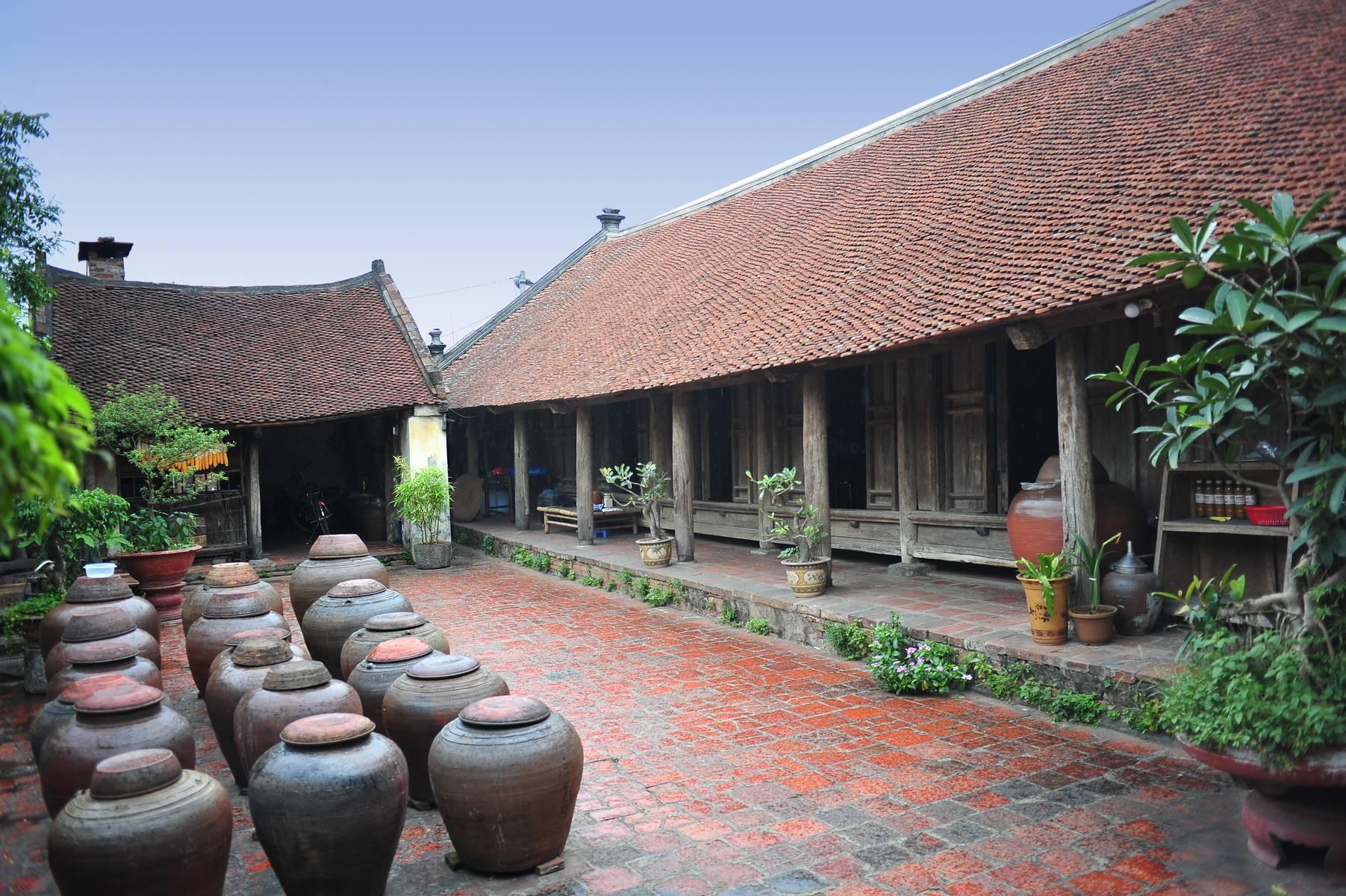
- The ancient Chuong communal house courtyard is covered with white-drying palm leaves; hear stories of the periodic conical hat market from long ago
- Hat maker's house: select leaves, iron leaves, whittle rims, and sew hats with fine nylon thread
- Try a few stitches on the hat frame, then paint and decorate your own conical hat
- Phu Vinh display space and weaving workshop, where artisans make lamps, baskets, and pictures from rattan
- Workshop: whittle bamboo splints, weave a basic pattern, and finish a small basket to take home
Suitable for
- Guests who love traditional crafts and enjoy making handmade souvenirs to take home
- Families and small groups wanting a relaxing countryside day on the outskirts
Services included
- Car transfers according to the program
- Vietnamese-speaking guide throughout the journey (English-speaking guide quoted upon request)
- Sightseeing tickets and workshop fees
- Family-style lunch
- Drinking water on the bus
Services not included
- Drinks outside the set menu
- Shopping and personal expenses
Some photos: Wikimedia Commons — Rin Mamori (CC BY-SA 4.0); Rin Mamori (CC BY-SA 4.0); Rin Mamori (CC BY-SA 4.0); Rin Mamori (CC BY-SA 4.0); Thomas Schoch – www.retas.de (CC BY-SA 3.0); Cyril Doussin (CC BY-SA 2.0); steve the archivist (CC BY-SA 2.0).