
Bai Do Pagoda
5.0Free
5.0Free
Introduction
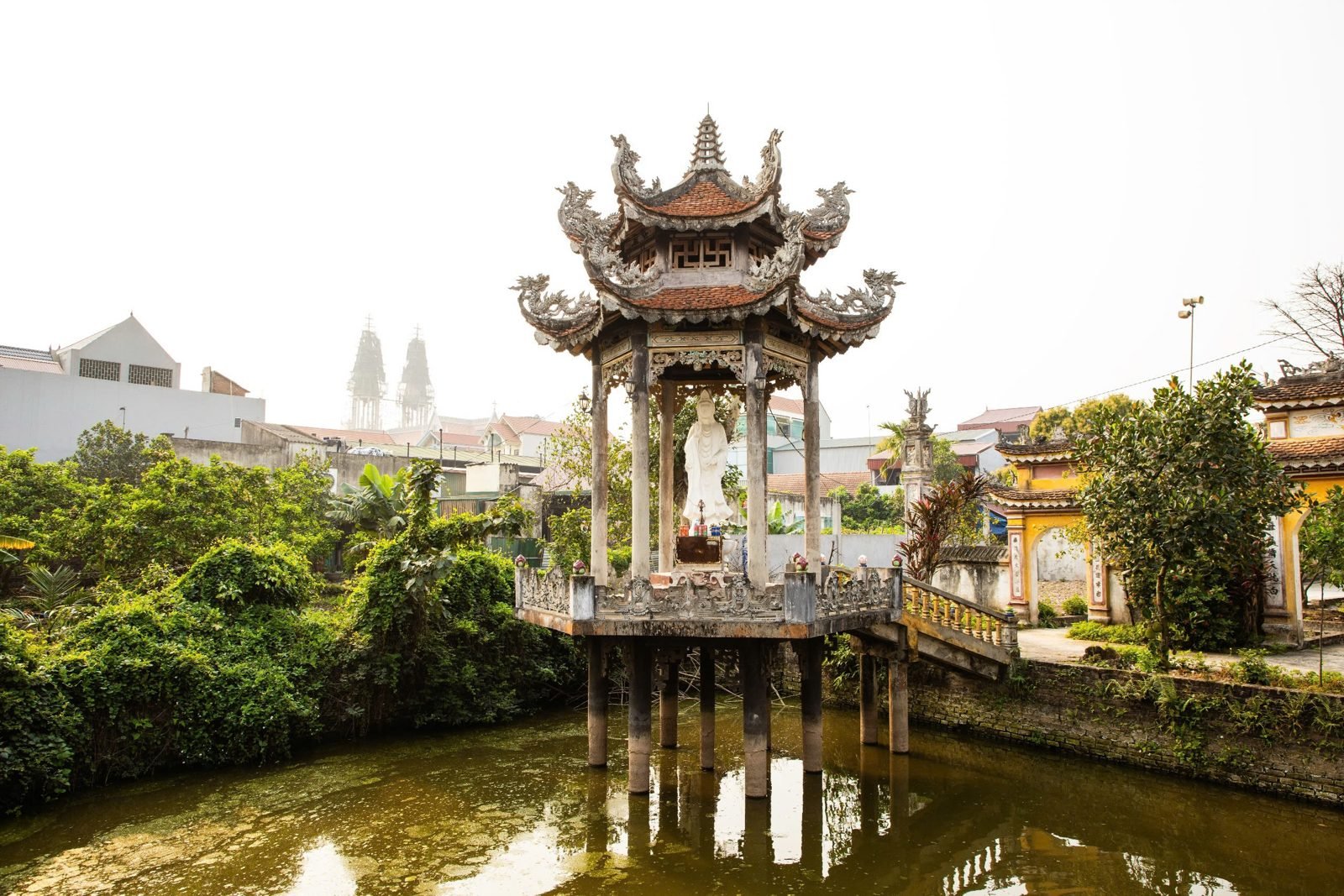
Bai Do Pagoda, Bai Do Village, Dai Xuyen Commune is a City-level ranked relic, in the same cluster as Bai Do Communal House, according to Decision No. 546/QD-UB dated May 20, 2004, of the Hanoi City People's Committee. Bai Do Pagoda is located in Bai Do Village, Dai Xuyen Commune, Hanoi City, and its history is tied to the formation and development of Bai Do Village. The pagoda was formed around the late Le dynasty and early Nguyen dynasty and was rebuilt by local people in 1995. It is a place for Buddhist religious practice and has historical and cultural value and value for the local community's religious life.
Amid the peaceful countryside of Dai Xuyen Commune, Hanoi City, Bai Do Pagoda is a place of Buddhist religious practice associated with the spiritual life of local people. Not too noisy or bustling, the pagoda offers a serene space where people return to peace, sincerely worship the Buddha, and preserve the traditional cultural beauties of their homeland.
The spiritual cultural space of the countryside. Dai Xuyen is a commune in southern Hanoi City, formed on the basis of merging administrative units in the former Phu Xuyen area. The commune has a natural area of more than 51 km² and a population of more than 74,000 people. This is a land with rich cultural and historical traditions and community life. In that cultural picture, pagodas are an important part of people's spiritual life. The pagoda is not only a place for religious practice but also a community space where people come on holidays, full moon days, first days of the lunar month, or important family occasions.
Bai Do Pagoda is also present in the lives of local people as a Buddhist site. Current site information records the pagoda in the Dai Xuyen area and classifies it as a Buddhist establishment.
For many Vietnamese people, going to a pagoda is not simply a religious activity. It is also an occasion for each person to set aside daily worries for a while, find a quiet space in the soul, and turn toward good things.
For the people of Bai Do and nearby areas, Bai Do Pagoda can be viewed within that very cultural space. The pagoda bell, incense smoke, sutra chants, and Buddhist rituals create a solemn and serene atmosphere, contributing to enriching the community's spiritual life. Especially in an increasingly modern pace of life, spaces such as pagodas have even greater meaning in reminding people of traditional values: compassion, tolerance, a spirit of goodness, and connection between people and community. Bai Do – a land rich in cultural identity. The name Bai Do is associated with a long-standing place name in the area. Materials introducing Dai Xuyen Commune state that Bai Do Village was formerly called Bai Do Thuong; this is an area where many families have lived for generations, such as Nguyen, Pham, Do, Dao, Hoang, and Le. Notably, the Bai Do area also has a diverse religious life. Bai Do Parish is a long-established Catholic community in the area; according to the Archdiocese of Hanoi, the parish currently belongs to the Phu Xuyen Deanery and is located in Bai Do Village, Dai Xuyen Commune. This shows that Bai Do in particular and Dai Xuyen in general is a space with rich religious and belief life. Communities coexist, practice, and contribute to creating the distinctive cultural appearance of the countryside in southern Hanoi. The value of Bai Do Pagoda in today's life. In the process of urbanization and socio-economic development, religious structures such as Bai Do Pagoda still have a certain role in maintaining the cultural connection between generations.
For older people, the pagoda is a place to find tranquility and practice spiritual life. For younger generations, it can be a space to learn more about the customs, beliefs, and traditional values of their homeland. For the residential community, the pagoda contributes to creating a cultural and spiritual gathering place and guides people toward a compassionate and harmonious way of life.
The value of a pagoda therefore lies not only in the scale of its architecture or the age of the structure but also in the affection people have for it. Over time, the religious practices that are maintained are also the community's way of preserving the memory and identity of the countryside.
Bai Do Pagoda is a site associated with the spiritual life of people in Dai Xuyen Commune, Hanoi City. In the countryside that is gradually changing, the pagoda contributes to creating a cultural pause, a place where people return to serenity, place their faith, and look toward good things.
If you have the chance to visit Dai Xuyen, stopping by Bai Do Pagoda is not only a journey back to a spiritual place but also an opportunity to experience the countryside atmosphere, learn about the cultural life of local people, and discover traditional values that are still being preserved amid the development of Hanoi today.



