
Bao Lam Pagoda
5.0Free
5.0Free
Introduction
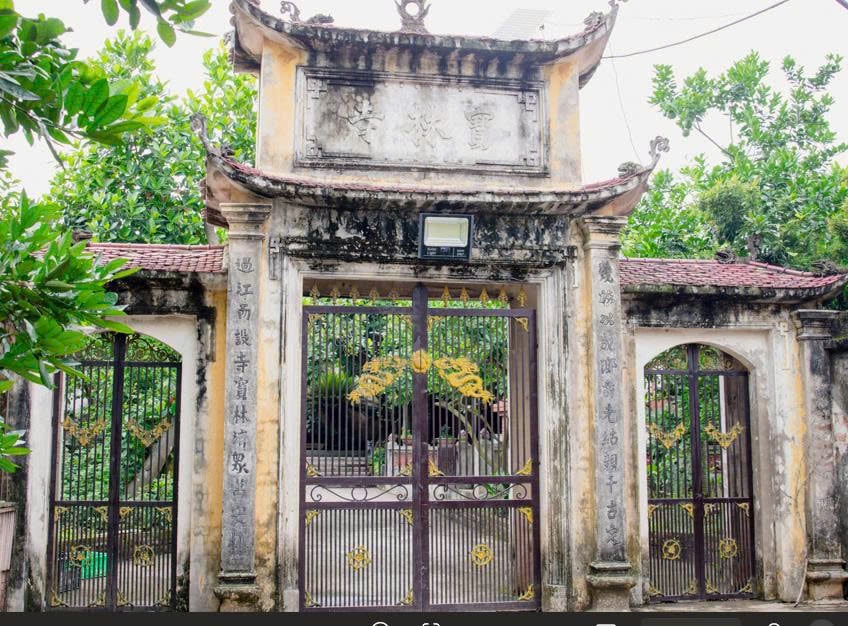
Tho Xuan is an ancient Vietnamese village dating from ancient times; along with settlement and village establishment, a religious system was also formed early, and many architectural works were built to meet the religious and belief needs of the village community while preserving the nation's traditional cultural values. Since ancient times, the image of the banyan tree, water well, and communal house yard has been familiar and indispensable in ancient Vietnamese villages in the Northern Delta. In each village in the commune, a system of historical and cultural relics typical of the Doai region is still preserved, such as Tho Lao Communal House, Co Bong Dac 10 Shrine, Thanh Diem Communal House, and others, which have been ranked by the state. Almost every village has cultural institutions such as communal houses, temples, and pagodas to meet the belief needs of local people.
A survey of the statue system at Bao Lam Pagoda shows the presence of statues such as: Tam The, Amitabha, Avalokitesvara, Mahasthamaprapta, Shakyamuni Holding a Flower, the two Bodhisattvas, Cundi Avalokitesvara, Jade Emperor, Nam Tao, Bac Dau, Shakyamuni with Nine Dragons, Avalokitesvara Sending Children; Duc Ong, Gia Lam, Chan Tu; Holy Monk, Diem Nhien, Great Being; Dharma protectors Khuyen Thien and Trung Ac, who are historical figures of Buddhism. From this, it can be affirmed that Bao Lam Pagoda worships Buddha and Bodhisattvas according to the Mahayana school.
Not only a place of Buddha worship, the pagoda has an ancestral hall, Mother worship, and worship of Saint Tran. This worship is a form of folk belief of ancient Vietnamese people that has been passed down and exists to this day. Although their origins and content of worship differ, religions and beliefs all aim to guide people toward goodness and belief in a better future.
As a pagoda that purely worships Buddha according to the Mahayana school, on festival days and liturgical ceremonies prescribed by Buddhism such as the Thuong Nguyen ceremony, the summer entry ceremony, the Vu Lan ceremony, and the Buddha's Birthday ceremony, cultural activities and very solemn and reverent worship rituals take place at Bao Lam Pagoda. Offerings to Buddha include glutinous rice and oan cakes, cakes and sweets, bananas, fruits, betel and areca, and pure water.
Besides Buddhist holidays, Bao Lam Pagoda also maintains the 'chua' ritual on the days (also called van): the 1st of the 4th lunar month, the 5th of the 5th lunar month, the 1st of the 7th lunar month, and the 27th of the 10th lunar month. The subjects performing this ritual are the vais who study Buddhism under the abbot. The vais prepare vegetarian offerings such as glutinous rice and oan cakes to offer at the altars in the pagoda and perform sutra-chanting rituals under the abbot's guidance.
Although Bao Lam Pagoda no longer retains the architectural appearance of its initial construction, it is a historical and cultural relic located in a land with a thick history rich in patriotic and revolutionary traditions. This place has become a center for the cultural and spiritual activities of the villagers, educating generations living today in a spirit of love for their homeland. Over time, the relic has gathered profound historical, cultural, scientific, and aesthetic values characteristic of the region. Currently, the presence of architectural items, the system of relics, and cultural activities related to the relic have contributed to preserving and promoting the beautiful traditional cultural values of the locality.



