
Bao Thap Pagoda
Introduction
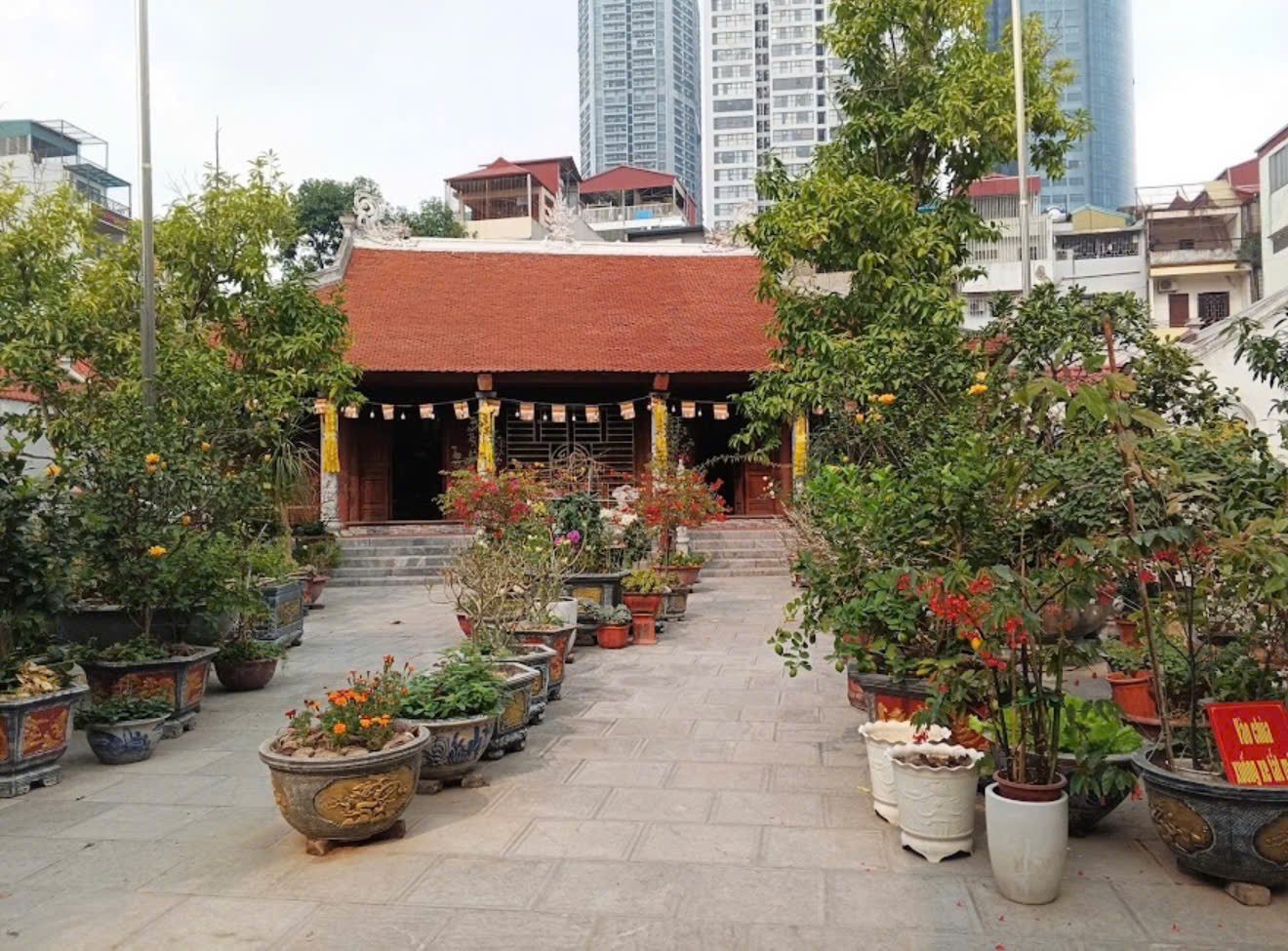
According to folk legend, this land was once a recruitment area for soldiers of Chu Ly Dai Vuong and Trieu Dai Vuong, who continued the cause of Ly Bi (Ly Bon) in the struggle against the Liang invaders in the late 6th century and against the Sui invaders in the 7th century. Relics related to these two figures are still preserved in the deity records and inscribed on stone steles at Tho Thap Communal House, located near Bao Thap Pagoda. This is a distinctive feature of the traditional religious life of local residents, often described by earlier generations as worshiping deities first and Buddha later.
There is currently no documentation to determine exactly when Bao Thap Pagoda was founded. However, based on the history of the formation and development of this land and the religious life of the community, it can be said that the pagoda was formed quite early, tied to the local people's need for religious and spiritual activities.
Buddhism was introduced into Vietnam in the first centuries of the Common Era and gradually came to hold an important place in the spiritual life of the Vietnamese people. In particular, under the Ly and Tran dynasties, Buddhism developed strongly, and many pagodas and stupas were built. After the Le Trung Hung period, from around the 17th century, Buddhism continued to recover and develop. In that context, village pagodas became an important part of the community's religious life and cultural activities. Bao Thap Pagoda also existed and developed within that historical and cultural flow.
Documents still kept at the site show that Bao Thap Pagoda underwent many repairs. Notably, two stone steles dated to Bao Dai 18 (1943), mounted on the pagoda wall, provide specific information about repairs and donations to the pagoda.The first stele, erected in April of Bao Dai 18 (1943), records that Mrs. Nguyen Thi Minh, seeing that Bao Thap Pagoda worshipped the Buddha, donated money to repair the pagoda and also donated rice fields to the pagoda as fields for memorial offerings. Later, she continued to donate money to buy additional fields for the pagoda so that the pagoda could cultivate them and use the produce for incense, offerings, and annual memorial ceremonies.
The second stele, bearing the inscription Bao Thap Tu, Trung Hamlet, Dich Vong Commune, was also erected in April of Bao Dai 18 (1943). Its content records that Mrs. Nguyen Thi Suoi, whose courtesy name was Dieu Tho, saw that the pagoda needed repairs to the Buddha worship area, so she donated money and rice fields to the pagoda; the local giap group agreed to use the fields for memorial offerings for her husband.
These inscriptions are important historical sources, showing that by at least 1943, Bao Thap Pagoda already existed and was repaired and supported by the people. Over time, due to natural conditions, war, and many restorations and repairs, the pagoda's architecture has undergone certain changes compared with the past.
Nevertheless, Bao Thap Pagoda still preserves a number of relics and antiquities of historical, cultural, and artistic value. Notably, the system of Buddha statues is not large in number but has aesthetic value, including the Amitabha statue and the Shakyamuni statue in the artistic style of the 18th century. In addition, there are stone steles and bronze bells dating from the Nguyen dynasty. These are documents and artifacts that help reflect the history of the pagoda's existence, its restoration process, and religious life at the pagoda through different periods.
Bao Thap Pagoda is adjacent to Tho Thap Communal House, forming a relic space with a close relationship between traditional worship and Buddhism. Through many historical changes, the communal house and pagoda complex has not only been a place for religious and spiritual practice but also a cultural activity space for the local community, helping to preserve the historical, cultural, and traditional values of the old Dich Vong area, now Cau Giay Ward, Hanoi.



