
Bao Thap Pagoda (Thuong Phuc Pagoda)
Introduction
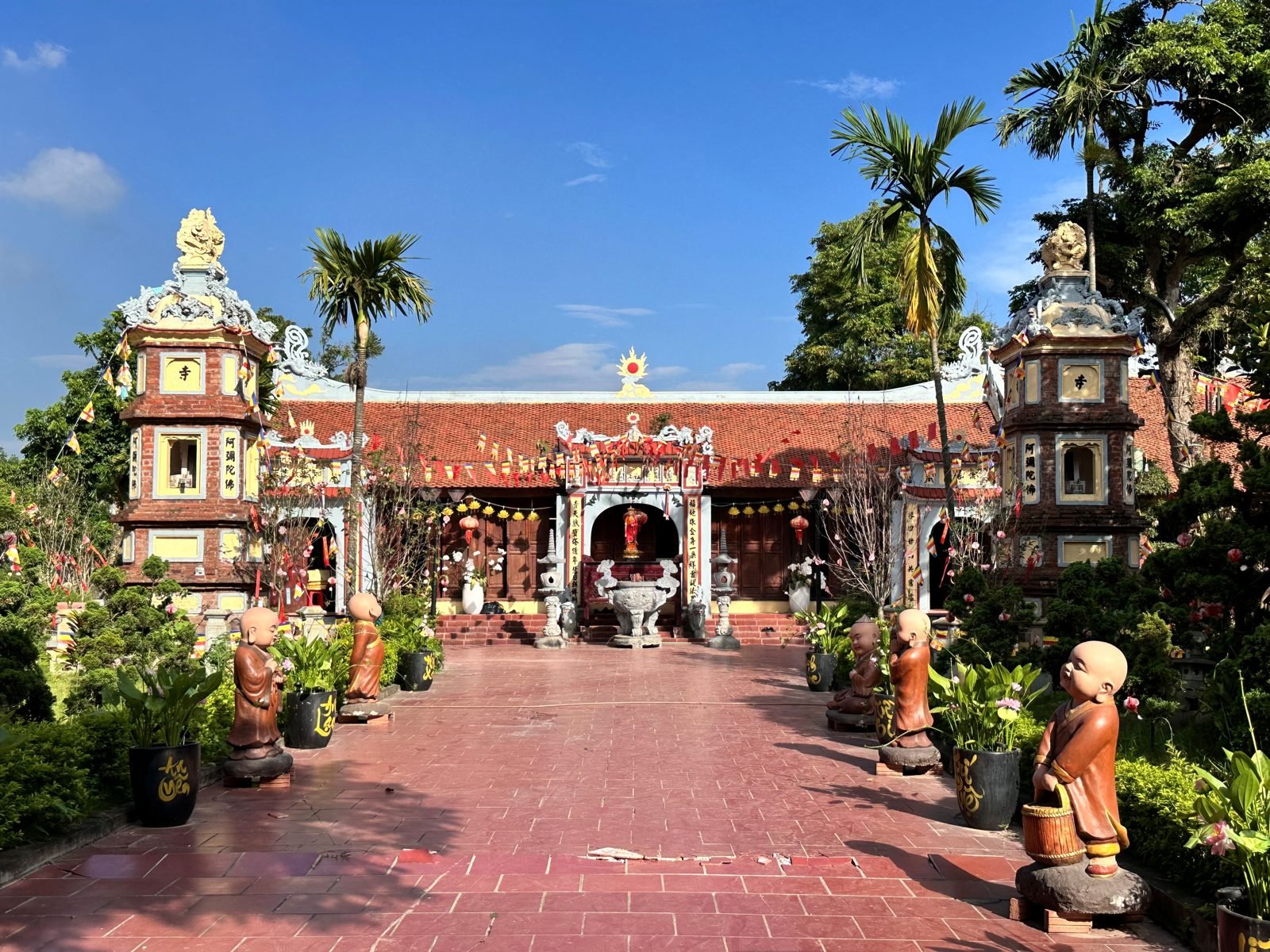
Bao Thap Pagoda’s Sino-Vietnamese name is Bao Thap Tu, located on a spacious, open plot by the bank of the Nhue River, in Thuong Phuc Village, Dai Thanh Commune, Hanoi City. According to legend, the pagoda was founded during the Ly dynasty; its first abbot was Ly Tham, a royal relative of the Ly dynasty (son of King Ly Cao Tong and uncle of Ly Chieu Hoang). In 1328, during the Tran dynasty, the eminent monk Ho Ba Lam came to the pagoda to practice. He was a royal relative of the Ho dynasty; while practicing at the pagoda, he did many meritorious deeds for the local people, especially raising orphans, and was revered by the people as a living Bodhisattva.
Currently, the pagoda still has the Bao Thap Tu Bi stele (Bao Thap Pagoda Stele), erected in the 4th year of Quang Thai (1391) under the Tran dynasty. Based on legend and the artifacts still preserved at the relic site, it can be affirmed that Bao Thap Pagoda is one of the oldest pagodas in Dai Thanh Commune and the above-mentioned stele is one of the few earliest-dated steles still extant at pagodas in the Hanoi area.
Bao Thap Pagoda also preserves many precious artifacts, such as ancient statues of great sculptural value dating from the Le to the Nguyen dynasties, and a system of stone steles, bronze bells, and bronze chimes of historical and cultural documentary value…
As an ancient pagoda founded during the Ly-Tran period, although it has experienced many historical ups and downs, Bao Thap Pagoda remains a beautiful pagoda and still preserves many precious, valuable artifacts. Particularly noteworthy is that it is one of the few pagodas in the region built according to the “front Buddha, rear saint” model that still survives.
Bao Thap Pagoda was classified by the Ministry of Culture and Information (now the Ministry of Culture, Sports and Tourism) as Architectural and Artistic Relicat national level in 1990.



