
Đại Bi Pagoda, Xuân Phương Ward
Introduction
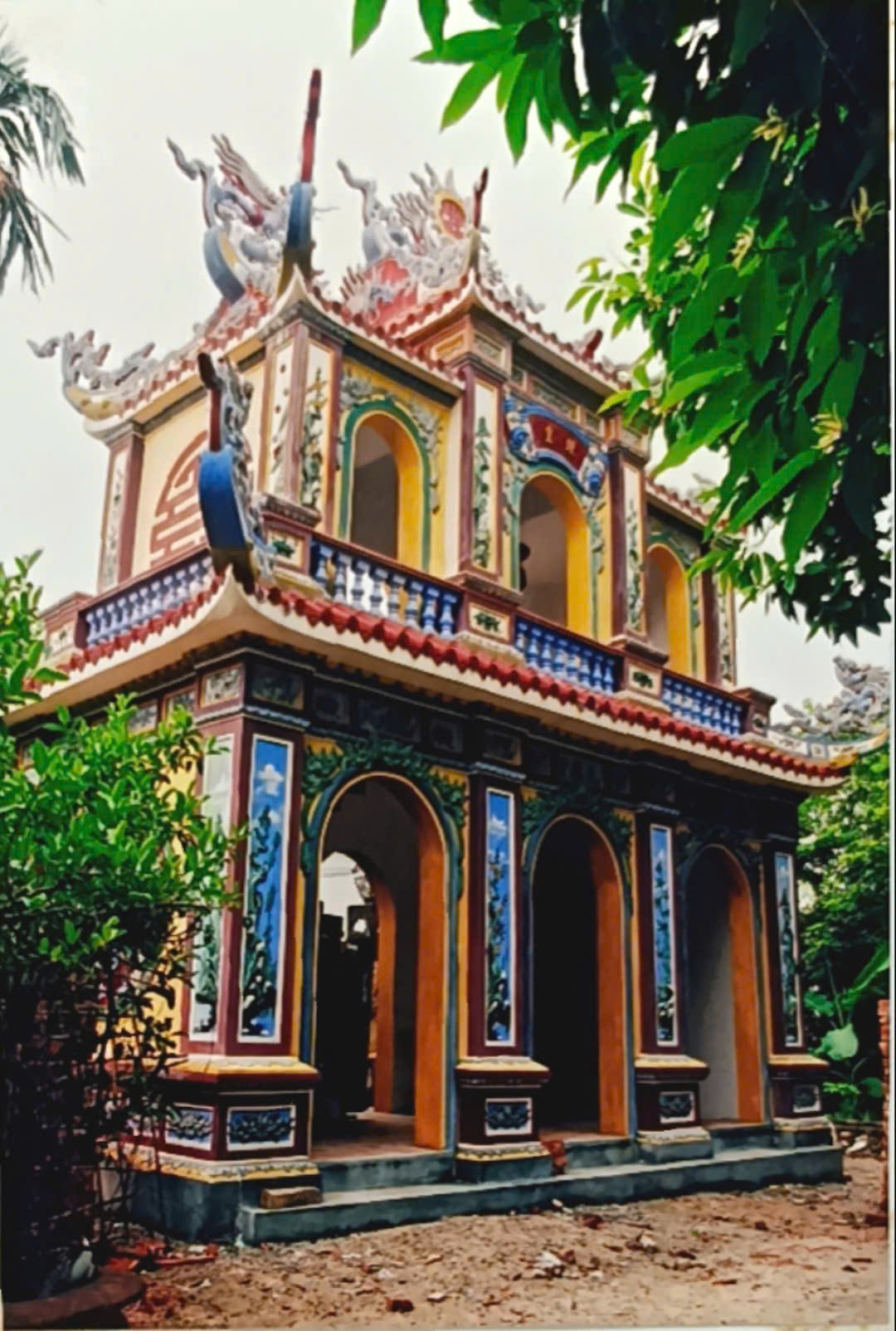
Dai Bi Pagoda, also called by local people Xóm Dưới Pagoda, situated in Miêu Nha Village, now in Xuân Phương Ward, Hanoi City. Previously, the relic belonged to Tây Mỗ Commune, Từ Liêm District. The pagoda lies in the southwestern area of Hanoi and has long been closely associated with the religious life of the Miêu Nha – Kẻ Ngà village community.
The pagoda has the Sino-Vietnamese name Đại Bi Tự. In Buddhism, “Đại Bi” evokes great compassion, the spirit of relieving suffering, and guiding people toward goodness.
The exact date of the pagoda’s founding has not yet been determined through direct written sources. However, based on the system of stone steles and bronze bells from the Nguyễn dynasty and especially the wooden statues bearing the artistic style of the 18th century, it can be determined that the pagoda has existed at least since the Lê dynasty and later underwent several restorations under the Nguyễn dynasty.
The pagoda was built on a high, spacious plot of land adjacent to the villagers’ residential area. Surrounding the structures are green gardens, creating a tranquil space relatively separate from the residential area. Through many repairs, the pagoda complex currently includes the Tam Bảo, the Ancestor House, the Guest House, and the Mother Goddess House.
In addition to its function of worshipping Buddha, Đại Bi Tự is also an important center of religious activity for the people of Miêu Nha. Every year, the pagoda holds many rituals such as prayers for peace, the Thượng Nguyên ceremony, the Buddha’s Birthday ceremony on the full moon of the fourth lunar month, year-end and year-beginning chanting sessions, and Buddhist activities associated with the village’s traditional festival.
Through the upheavals of history, the pagoda has preserved many precious artifacts made of wood, stone, bronze, and ceramics, among which the most notable are the system of Buddha statues and worship statues bearing artistic styles from the 18th to 19th centuries.
On August 27, 2007, Đại Bi Pagoda was recognized by the Hanoi City People’s Committee as a Historical – Architectural and Artistic Relic.
Đại Bi Pagoda was built within a spacious, tree-filled compound, creating the serene atmosphere characteristic of a Northern Delta village pagoda. The main architectural complex includes the Tam Bảo, the Ancestor House – Guest House, and the Mother Goddess House.
The Tam Bảo is relatively large and was built on a floor plan the character Đinh, consisting of the Front Hall and the Upper Hall.
The Front Hall consists of five bays, with a hồi bít đốc tay ngai wall style. In front of the two gable ends are tall biểu pillars, topped with facing nghê statues, and the pillar bodies are decorated with Chinese-character couplets. The wooden frame is linked by large truss sets in the style upper rường – giá chiêng, lower kẻ, creating a sturdy structure for the entire building.
Connecting behind the Front Hall is the four-bay Upper Hall, running lengthwise inward to form the vertical part of the Đinh character layout. Inside, altars are arranged progressively higher from front to back to hold the system of Buddha statues.
Along the right side of the Tam Bảo is the area of the Ancestor House and Guest House. The Ancestor House has five bays; in the central bay is a statue of Bodhidharma, the patriarch revered in the Zen tradition.
On the left is the five-bay Mother Goddess shrine, where the Three Palaces of the Holy Mothers are worshipped, including the Mother of Heaven, the Mother of Water, and the Mother of Earth, along with statues of the Ladies, the Young Lords, and the Princes. This arrangement reflects the interplay between Buddhism and Mother Goddess worship in folk life.
The outstanding value of Dai Bi Pagoda lies in its collection of artifacts. Documentation at the site records about 42 freestanding statues, including about 30 Buddha statues, three Mother Goddess statues, three Patriarch statues, and a number of other worship statues.
Many wooden statues bear the artistic style of the 18th–19th centuries, and are an important source of documentation for studying the art of Buddhist statue-making in the Từ Liêm area.
Besides worship statues, the pagoda also preserves many artifacts made of wood, stone, bronze, and ceramics. Although it has undergone many renovations, these relics, together with the Đinh-shaped Tam Bảo architecture and the green tree landscape, still create the distinctive value of Đại Bi Tự – a long-standing religious space of Miêu Nha village.



