
Đình Quán Pagoda
5.0Free
5.0Free
Introduction
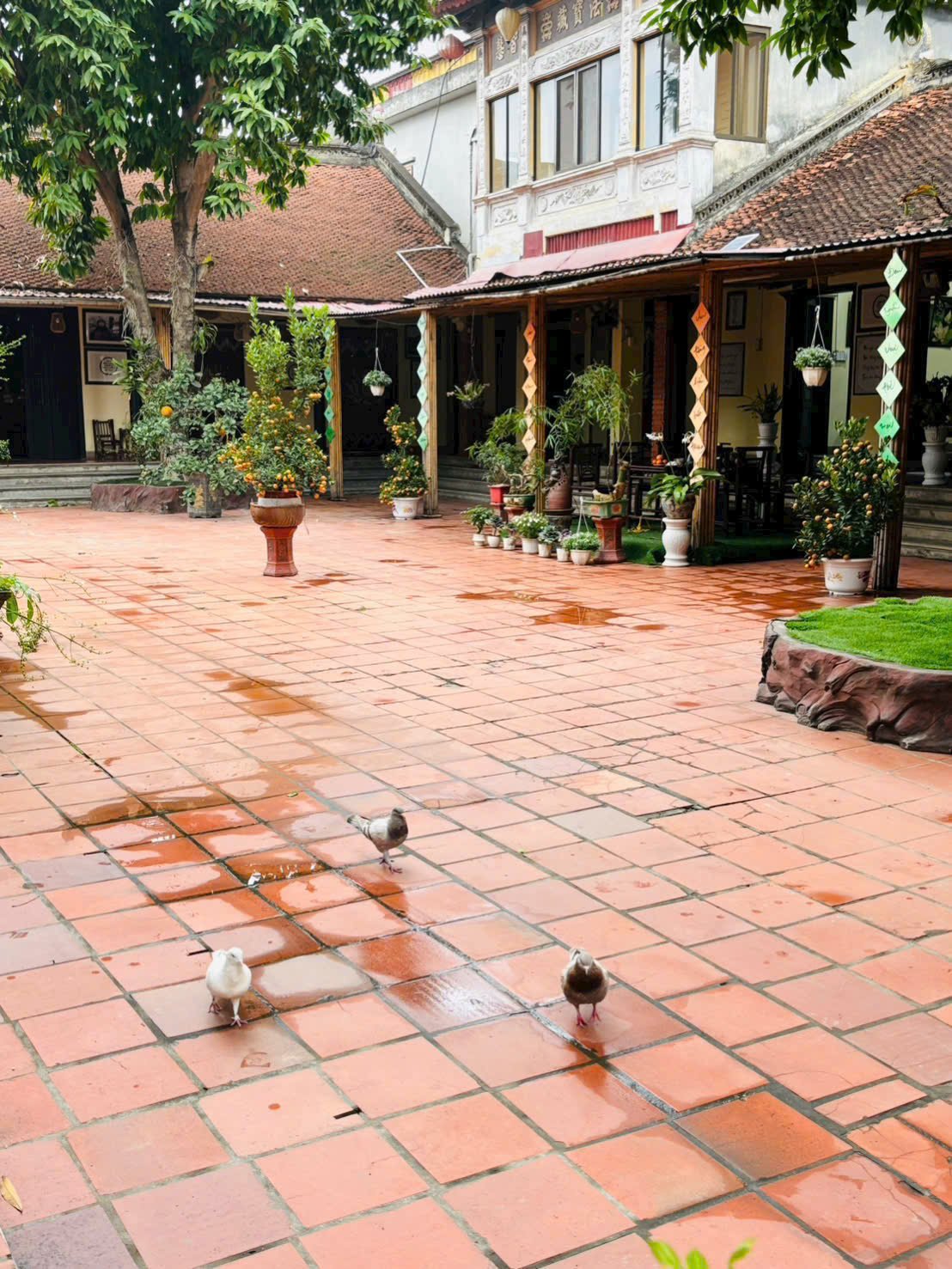
About 12 km west of the capital's center, quietly located on the edge of the ancient Đình Quán village (Phú Diễn Ward, Hanoi City), Đình Quán Pagoda – whose literary name is Phúc Quang Tự – has long been famous as a scenic spot comparable to Quảng Bá, Tào Sách, and Tây Hồ pagodas in the area along the Nhị River.
Not only an ancient spiritual architectural space, Đình Quán Pagoda also preserves a warm story of human kindness through the folk name Bà Bông Pagoda, along with a treasure trove of invaluable sculptural art heritage from the Lê – Nguyễn dynasties.
Đình Quán is an ancient Vietnamese land with a history spanning thousands of years, associated with the Ngọa Long archaeological site dating back more than 2,000 years. Based on the surviving system of stone steles and bronze bells, Đình Quán Pagoda was founded in the Lê dynasty (17th century). The oldest stele at the pagoda, bearing the Chính Hòa reign era (1680), records repairs to the pagoda from that time.
The reason the pagoda also has the affectionate name Bà Bông Pagoda is tied to a moving anecdote: In the past, the pagoda was originally built simply with thatch and leaves. Later, an elderly Buddhist laywoman from Bông Cời village (Thanh Oai district) came and vowed to stay and care for the pagoda, bought 3 mẫu of rice fields to offer to the pagoda, and took the lead in raising money to build a spacious wooden-and-brick pagoda. To remember that charitable heart, local people affectionately called the pagoda Bà Bông Pagoda. Today, the ancient bell cast in the late Lê dynasty bears the inscription "Bà Bông Tự Chung" is still respectfully preserved as a complete historical testament.
Đình Quán Pagoda is located on a large, high, open plot of land, with views out over the peaceful countryside. The entire architectural complex is harmoniously planned, appearing and disappearing beneath the canopies of ancient trees and orchards that stay green through all four seasons:
· A stately Tam quan gate: Notable for its lantern-style pillar structure topped with four stylized phoenixes with touching tails and curved forms, combined with two-tier, eight-roof overlapping-eave architecture covered with imitation tubular tiles. On the top ridge is a dignified relief of a Cửu phẩm tower.
· Grounds and pagoda courtyard: Passing through the Tam quan, one enters an open space with a rock garden, ornamental pond, fragrant orchard, and a statue of Quan Thế Âm Bồ Tát (Avalokiteshvara Bodhisattva) seated majestically in the Zen gate grounds.
· Tam bảo hall (Chữ Đinh layout): The five-bay front hall is built with enclosed gable walls and armrest-shaped ends, roofed with old fish-scale tiles. In the middle of the roof ridge is a raised đại tự plaque with three Hán characters "Phúc Quang Tự" and a pure ambrosia water vase. Connected behind is the four-bay running Thượng điện hall, creating a solemn and warm worship space.
· Tổ House – Mẫu House and two Dải vũ ranges: Quietly located behind the brick courtyard, harmoniously structured with soaring curved blade roofs, enclosing the entire central worship space.
The most outstanding value of Đình Quán Pagoda is its collection of cultural relics and artistic sculptures of very high aesthetic quality:
· System of ancient round statues (24 statues): The masterpiece is the set of Tam Thế Phật statues and the Amitabha Buddha statue (18th-century art) seated in meditation on a three-layered lotus throne, wearing a softly draped cassock, with a dignified face covered in brilliant red lacquer and gold leaf. Beside them are the multi-armed Quan Âm Chuẩn Đề statue forming transformative mudras and the exquisite Cửu Long throne carved with nine dragons spraying water to bathe the infant Shakyamuni.
· Stone – Bronze – Wood treasures: The pagoda preserves 13 ancient stone steles (including a 1.7 m tall turtle-borne stele and a four-sided square stele from the Chính Hòa reign era, 1680); a bronze bell from the Gia Long 18 reign era (1819); and a system of horizontal plaques, couplets, and pierced-carved altar curtains featuring the Four Sacred Creatures and Four Seasons themes from the Nguyễn dynasty, all extremely splendid.
Through the ups and downs of time, Đình Quán Pagoda (Phúc Quang Tự) still retains the complete quiet, pure beauty of a Northern Vietnamese village pagoda. Visiting here, travelers can not only admire invaluable architectural and sculptural values but also find a peaceful stillness in their soul. Come once to Đình Quán Pagoda to fully experience the cultural heritage space in the heart of Hanoi!



