
Duc Dien Pagoda (Sung Khanh Tu)
5.0Free
5.0Free
Introduction
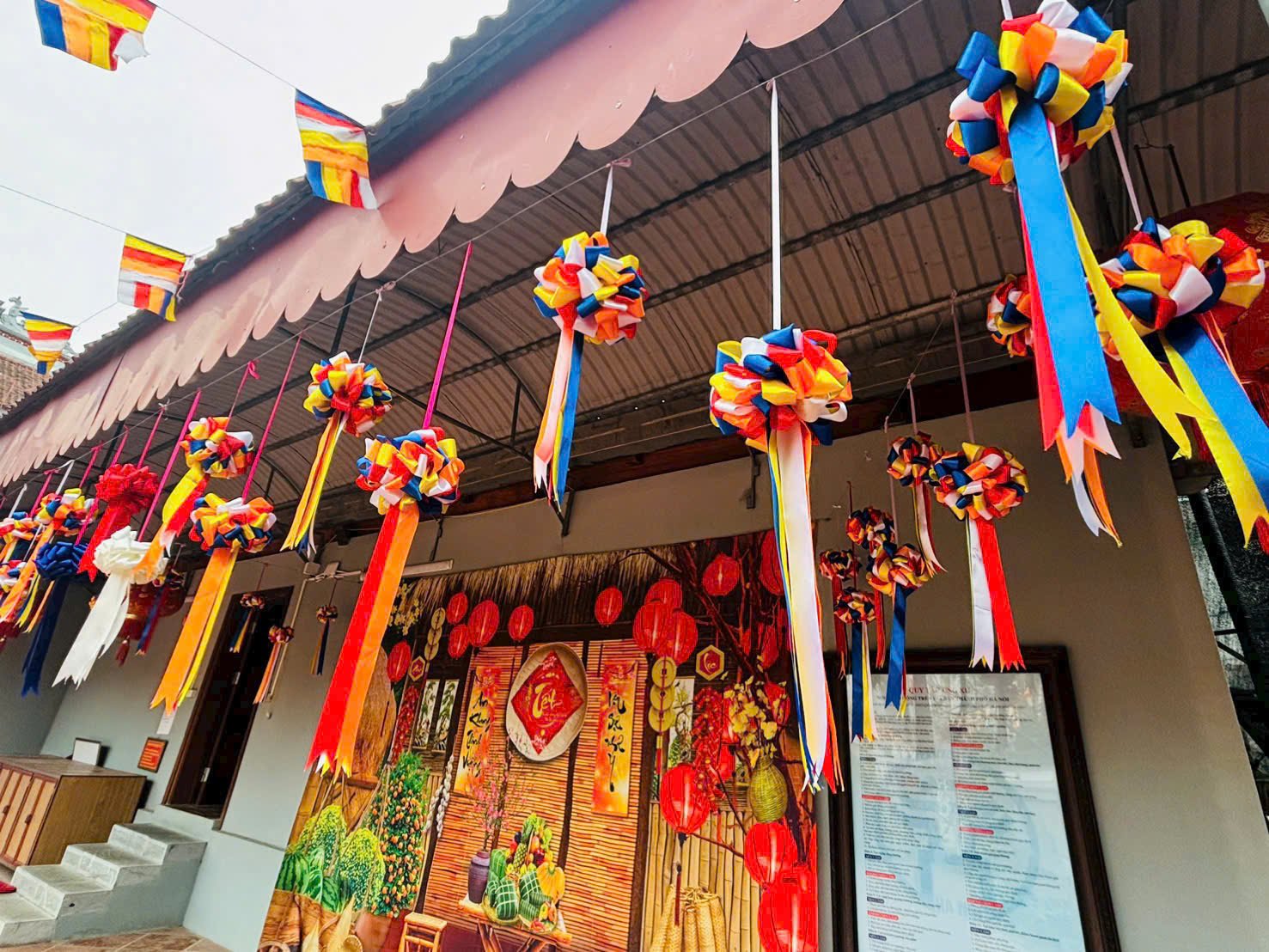
If you are looking for a peaceful spiritual destination where you can cast off all the troubles of city life and immerse yourself in a thousand-year-old ancient space, visit Duc Dien Pagoda (whose Sino-Vietnamese name is Sung Khanh Tu). Located in the ancient village of Duc Dien, in Phu Dien Ward, Hanoi City. The pagoda is not only the center of spiritual life for the ancient land beside the Nhue River but is also likened to an "ancient art museum" preserving invaluable artistic and historical heritage.
Duc Dien Pagoda is located in a land with a long historical depth. Archaeological excavations in the nearby Ngoa Long area have discovered many sites from the early Bronze Age dating back 3,000 to 4,000 years, confirming that this was an ancient settlement area of the Vietnamese people.
According to folk legend, from the reign of the 18th Hung King, the renowned deity Bach Hac Tam Giang (General Dao Truong) once stopped here and established a royal temporary palace. Lying on the strip of land along the Nhue River, Duc Dien was once connected with Kieu Tri and Nguyen Xa on a vital transport route linking splendid Thang Long with the poetic Doai region. At the end of the 19th century, Cu Nhan Vuong Duy Trinh (then Governor-General of Thanh Hoa), when returning to visit his homeland, took the character "Duc" as the root to change the name Phu Dien to Duc Dien, conveying the wish that descendants for generations would preserve moral integrity and humane kindness.
Sung Khanh Pagoda was founded very early to meet the people's needs for Mahayana Buddhist worship. Through many restorations in the 18th and 19th centuries, the pagoda has to this day retained its large scale and its cool, tranquil landscape.
Located on a high, dry mound and hidden beneath the lush canopies of ancient trees, Duc Dien Pagoda appears like an ink-wash painting steeped in nostalgia:
· Tam Quan Gate: A two-story brick structure facing southeast with ancient arched doorways. The upper floor has three arched openings and houses a bronze bell and a bronze gong. The Tam Quan roof is covered with dark red imitation tubular tiles, and the roof ridge is decorated with a detailed relief of "dragons adoring the moon".
· The Tam Bao Hall (Main Pagoda): Built according to the traditional Dinh-shaped structure:
o Tien Duong Hall: Consists of 5 bays and 2 side wings, roofed with ancient fish-scale tiles; the ridge is decorated with a raised panel bearing three Chinese characters "Sung Khanh Tu". The sturdy lim wood frame with a system of main columns using "upper thu - lower thach" placement on smooth white stone bases carved with unique round and square blocks.
o Thuong Dien Hall: Consists of 5 bays and 1 side wing connected directly to the central axis of Tien Duong, notable for bands of lemon-flower patterns running along the roof ridge and both side edges, bearing the artistic characteristics of the 18th century.
· Nha Mau (Mother Goddess House): An extremely unique architecture in the style of a square two-story, eight-roof phuong dinh with stacked ancient eaves, and gracefully curved upturned roof corners. The Mother Goddess hall is carved with the Four Sacred Creatures theme (Dragon - Qilin - Turtle - Phoenix) and exceptionally delicate flowers, leaves, and swirling clouds.
· Nha To & Tang Duong (Patriarch House & Sangha Hall): Peacefully located behind the Thuong Dien Hall, it is where the Patriarchs are worshipped and where the pure monastic way of life is preserved.
Visiting Duc Dien Pagoda, travelers will be amazed by its collection of invaluable relics and ancient statues: the pagoda possesses 39 round statues arranged solemnly, most carved from lim wood and covered with splendid vermilion and gold lacquer:
· Amitabha Buddha statue (18th century): seated on a three-tiered lotus pedestal with layered petals, a gentle and serene face, ears extending to the chin, the character Van () engraved on the chest, radiating brilliant golden light.
· Shakyamuni Buddha Holding a Lotus statue (Le period - 18th century): holding a lotus flower in hand, the face has a naturally portrait-like appearance while still fully retaining a detached, otherworldly demeanor.
· Set of statues of the Three Times Buddhas, Duc Ong, Holy Sages, and Dharma Protectors: elaborately carved, expressing vivid and diverse expressions.
The most distinctive relic at the pagoda is an ancient bronze bell, its handle cast in the form of a majestic dragon, and its body engraved with the Four Sacred Creatures faintly appearing among clouds and lotus flowers and leaves.
What is special is that the inscription recording the date on the bell has been chiseled away. According to researchers, after the Tay Son dynasty collapsed (in 1802), the Nguyen dynasty had a policy of collecting and erasing relics from the Tay Son period. To keep the precious bell as well as protect the heroic "echo of Tay Son" and avoid disaster for the villagers, the people of ancient Duc Dien bravely chiseled off the date line. Thanks to that, the precious bell has continued to ring peacefully through the centuries.
The pagoda also preserves a bronze gong cast in the 19th year of Minh Mang's reign, along with a system of stone steles, horizontal lacquered boards, and gilded vermilion couplets of great value.
Duc Dien Pagoda is not only a city-level architectural and artistic relic but also a peaceful spiritual anchor in the heart of the capital. Visit Duc Dien once to listen to the pagoda bell ringing, rediscover a quiet space for your soul, and feel the ancient Trang An culture still burning brightly through every mossy tile!



