
Hòe Thị Pagoda (Hương Đỗ Tự)
Introduction
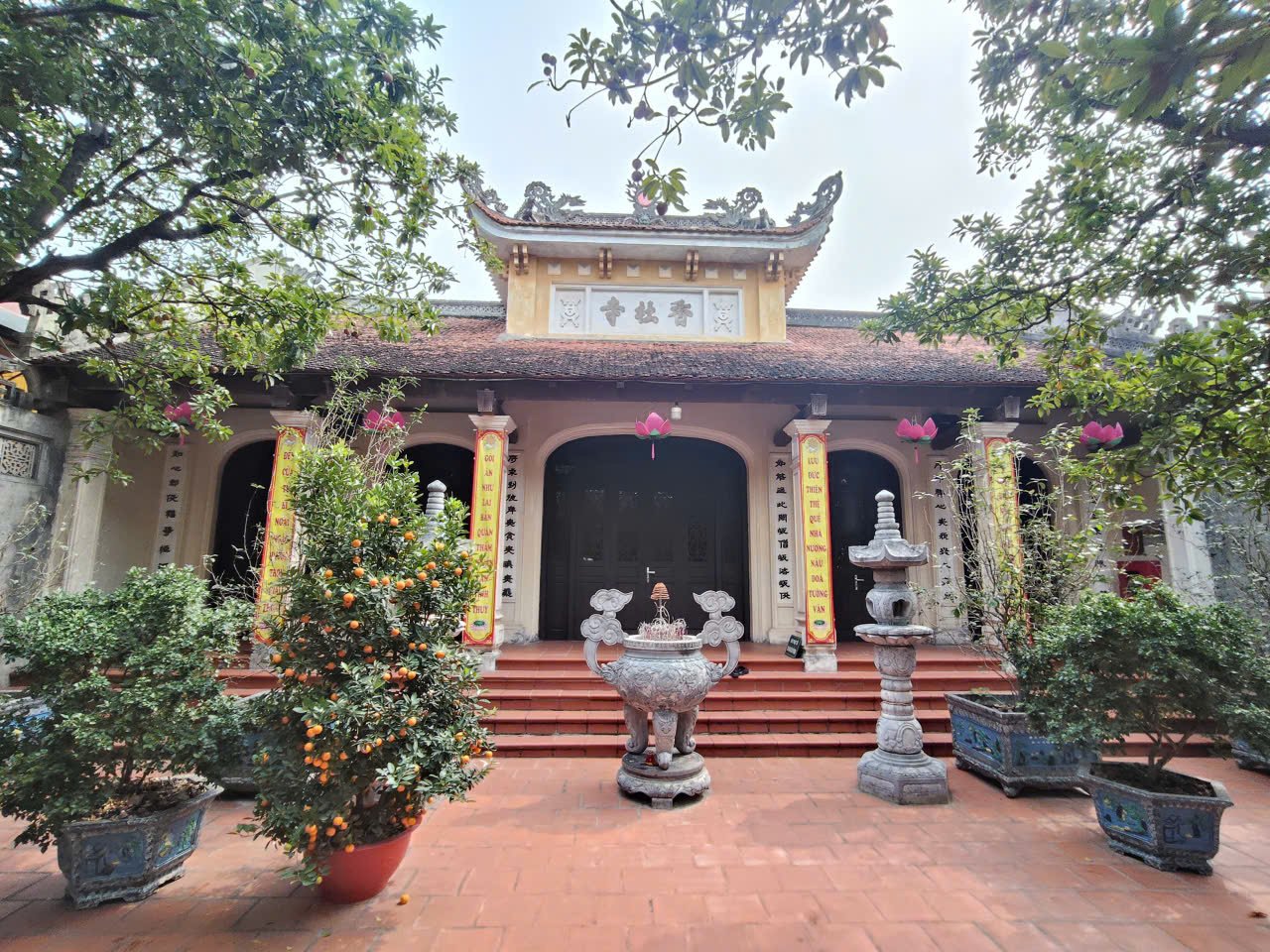
Hòe Thị Pagoda has the literary name Hương Đỗ Tự; it is an ancient pagoda of Hòe Thị Village, whose vernacular name is Canh Chợ, and is now part of Xuân Phương Ward, Hà Nội City. Before 1945, Hòe Thị was a hamlet of Hương Canh Commune, Phương Canh Canton, Hoài Đức Prefecture. Later, the village belonged to Xuân Thủy Commune and then Xuân Phương Commune. This was once an area famous for its forging trade and also lay within the long-standing cultural space of Phương Canh, alongside ancient villages such as Thị Cấm, An Trai, and Vân Canh.
Hương Đỗ Tự stands on a large plot of land with many ancient trees and areas of water that create a tranquil landscape. The pagoda faces west, slightly toward the south. For a long time, the pagoda has been regarded as a scenic spot of the Từ Liêm area.
The exact date of its founding has not yet been determined by direct documentation. Some documents suggest that the pagoda existed from around the 17th century, during the Lê Trung Hưng period. After many upheavals, the building deteriorated and was rebuilt on a large scale in 1928, with Mr. Nguyễn Viết Trứ leading the restoration effort. Therefore, its current appearance is the result of multiple architectural layers and successive renovations.
The pagoda not only worships Buddha but also has a memorial space for Doctor Lý Trần Quán, a famous scholar of the Lê Cảnh Hưng period. The presence of this figure adds another layer of value to Hương Đỗ Tự, associated with the scholarly and literary traditions of the western Thăng Long region.
Over many centuries, the pagoda has maintained familiar religious activities. On the first and fifteenth days of the lunar month, during the Vu Lan festival or other seasonal festivals throughout the year, the people of Hòe Thị often come to the pagoda to offer incense, prepare vegetarian offerings, and share the blessed food. The pagoda is therefore not only an architectural work but also a place that binds the community's spiritual life.
On January 9, 1990, the Ministry of Culture issued Decision No. 34-VH/QĐ, ranking the Hòe Thị Communal House and Pagoda as a national-level historical and architectural art relic.
In the midst of a rapidly urbanizing area, Hương Đỗ Tự still preserves the image of an ancient village pagoda: green trees, tiled roofs, a bronze bell, Buddha statues, and layers of memory associated with generations of Hòe Thị residents.



