
Kim Son Pagoda
Good to know
- It is advisable to arrive early for a spacious experience
- Free
- Convenient to travel by taxi or bus.
Introduction
Story
01Introduction to Kim Son Pagoda, a national historical and cultural relic
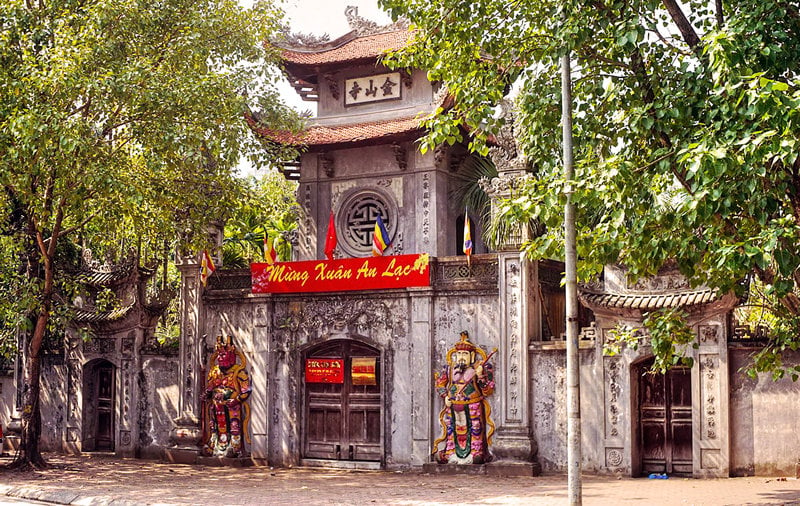
Kim Son Pagoda, also known as Kim Ma Pagoda, Tau Ma Pagoda, or Van Linh Altar, is located at 73 Kim Ma Street, Hanoi. The pagoda was formed during the Ly Dynasty, on the ancient land of Kim Ma camp, one of the Thirteen Camps in the southwest of Thang Long capital. This area was once an execution ground and cemetery; later, local people built a small shrine for worship and prayers for the deceased.
Kim Son Pagoda is closely associated with the Ngoc Hoi - Dong Da victory in 1789 and the burial of Tay Son soldiers who died in the resistance war against the Qing army. In 1932, the pagoda was expanded with three main areas including the Tam Bao hall, the Mother Goddess temple, and the Van Linh altar. In 1985, Kim Son Pagoda was ranked National-level historical and cultural relic.
The relic bears strong imprints of traditional Nguyen-era Buddhist architecture, highlighted by Ngu Mon Quan, a garden with a semicircular lake, Bodhisattva statues, ancient stupas, and an architectural layout of the “inner Cong, outer Quoc” type. Every year, on the 5th day of the first lunar month - the anniversary of the Dong Da battle - the pagoda holds a requiem ceremony to commemorate the Tay Son soldiers and those who sacrificed for the country.
With its historical, cultural, architectural, and spiritual values, Kim Son Pagoda is a site that helps preserve the memory of Thang Long – Hanoi, educates patriotic traditions, and honors heroes and martyrs in the nation's history.
More Other places
- Other placesVerified
Gioi Duc Pagoda (Hong An Temple)
Ung Hoa Commune
5.0Free  Other placesVerified
Hai Giac Pagoda
O Dien Commune
5.0Free Other placesVerified
Phuong Bang Pagoda (Hung Long)
Son Dong Commune
5.0Free Other placesVerified
Sung An Pagoda, also known as Sung Khang Pagoda (Dong Ba Pagoda)
Thượng Cát Ward
5.0Free
