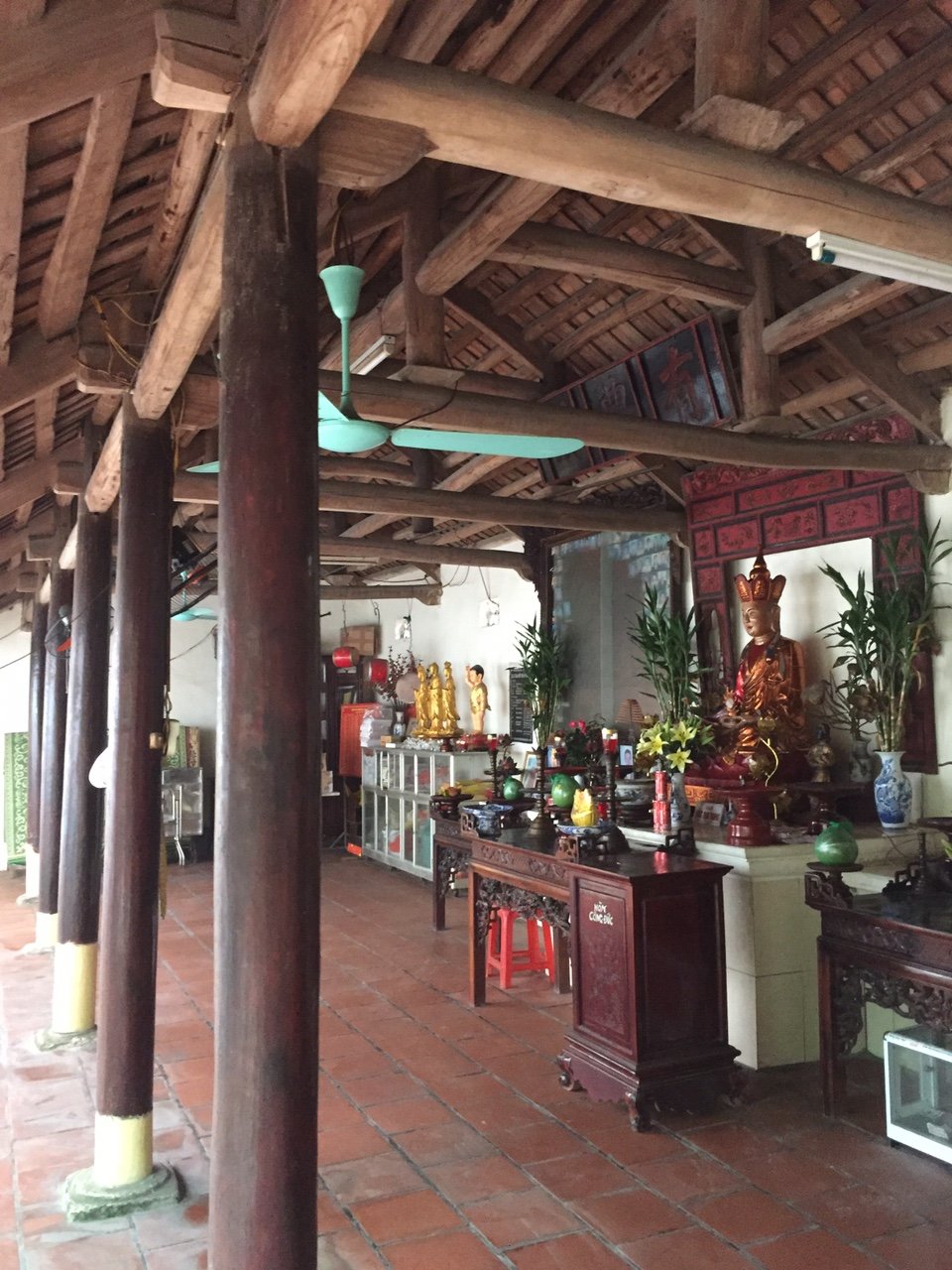
According to tradition and local records, Nam Du Ha Pagoda was founded at the beginning of the Le Trung Hung period, around the Vinh To era (1619–1628). The pagoda's establishment is tied to the formation and development of the community in Nam Du Ha.
Over more than four centuries, Thien Phuc Tu has undergone changes along with history. Many generations of local people have preserved, restored, and maintained religious activities at the pagoda, so that it continues to be a place for cultural and spiritual activities of the community.
The pagoda is located in the Tay Tra Street area, Hoang Mai Ward, near the Red River dike. This location is tied to the long-standing settlement patterns of riverside communities and helps create a cultural space strongly marked by the Northern Vietnamese countryside.
As a pagoda with a history dating from the early 17th century, Thien Phuc Tu carries certain values in traditional Buddhist architecture and art. Through periods of restoration, some elements may have changed, but the pagoda space still reflects the characteristics of a Buddhist site tied to the Northern Vietnamese village community.
The pagoda has a system of worship statues, ritual objects, horizontal plaques, parallel sentences, and decorative elements of cultural and artistic value. Each artifact and architectural detail not only serves religious life but also helps reflect the aesthetic concepts, craft techniques, and spiritual life of Vietnamese people through different periods.
These values make Thien Phuc Tu not only a place of religious activity but also a source of materials for understanding the cultural history and traditional art of the area south of Hanoi.