
NGOC HOI PAGODA
Introduction
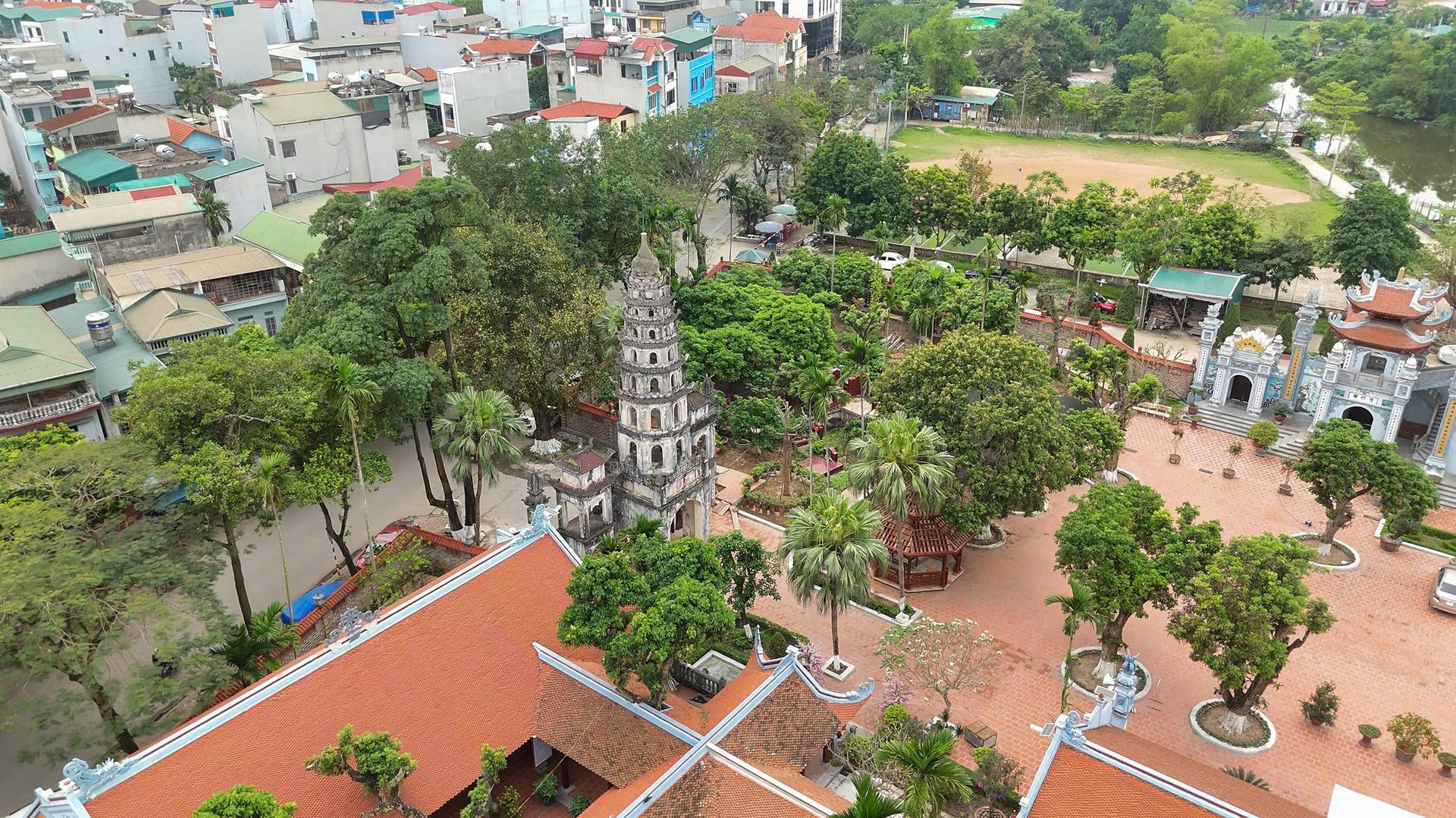
Ngoc Hoi Pagoda is a national-level architectural and artistic relic, ranked in 1990 by the Ministry of Culture – Information (now the Ministry of Culture, Sports and Tourism). The pagoda has the Sino-Vietnamese name Ngoc Hoi Tu and is located along the To Lich River, near National Highway 1A, in Ngoc Hoi Village, Ngoc Hoi Commune, Hanoi City. It is one of the typical religious works of the locality, with outstanding historical, architectural, and traditional Buddhist artistic values.
Ngoc Hoi Pagoda is quite large, with a total area of about 9,000 m². Within the spacious grounds, the structures are harmoniously arranged according to traditional architectural space, including: the Tam Quan (three-entrance gate), the main pagoda built in the Dinh-style layout consisting of the Tien Duong (Front Hall) and Thuong Dien (Upper Sanctuary), along with auxiliary works such as the Ancestor Hall, Mother Hall, guest house, and corridor system. In particular, the pagoda's Tam Quan has a unique architectural form with the Nine Grades of Lotus symbol, creating a distinctive highlight for the overall relic.
The pagoda mainly worships Buddha with a rich system of statues, including the Three Worlds Buddhas, the Three Western Saints (Amitabha Buddha, Avalokitesvara Bodhisattva, Mahasthamaprapta Bodhisattva), Shakyamuni Buddha, Maitreya Buddha, and Cundi Buddha; there are also altars to Nam Tao, Bac Dau, the Ten Courts of Hell, Duc Ong, Holy Monk, Ksitigarbha, Mother Goddess, and Patriarchs. The statue system bears the artistic style of the 19th century, contributing to expressing the relic's distinctive aesthetic and religious values.
In addition to its architectural value, Ngoc Hoi Pagoda currently preserves many precious artifacts such as a bronze bell cast in 1824, a system of steles, horizontal plaques, couplets, and many antiquities of historical and cultural value. With its typical values in architectural art and folk religious life, Ngoc Hoi Pagoda is not only a place of religious activity for local people but also an important cultural relic, contributing to preserving and promoting the traditional cultural identity of Hanoi.



