
Ngoc Mach Pagoda (Quynh Lam Tu)
Introduction
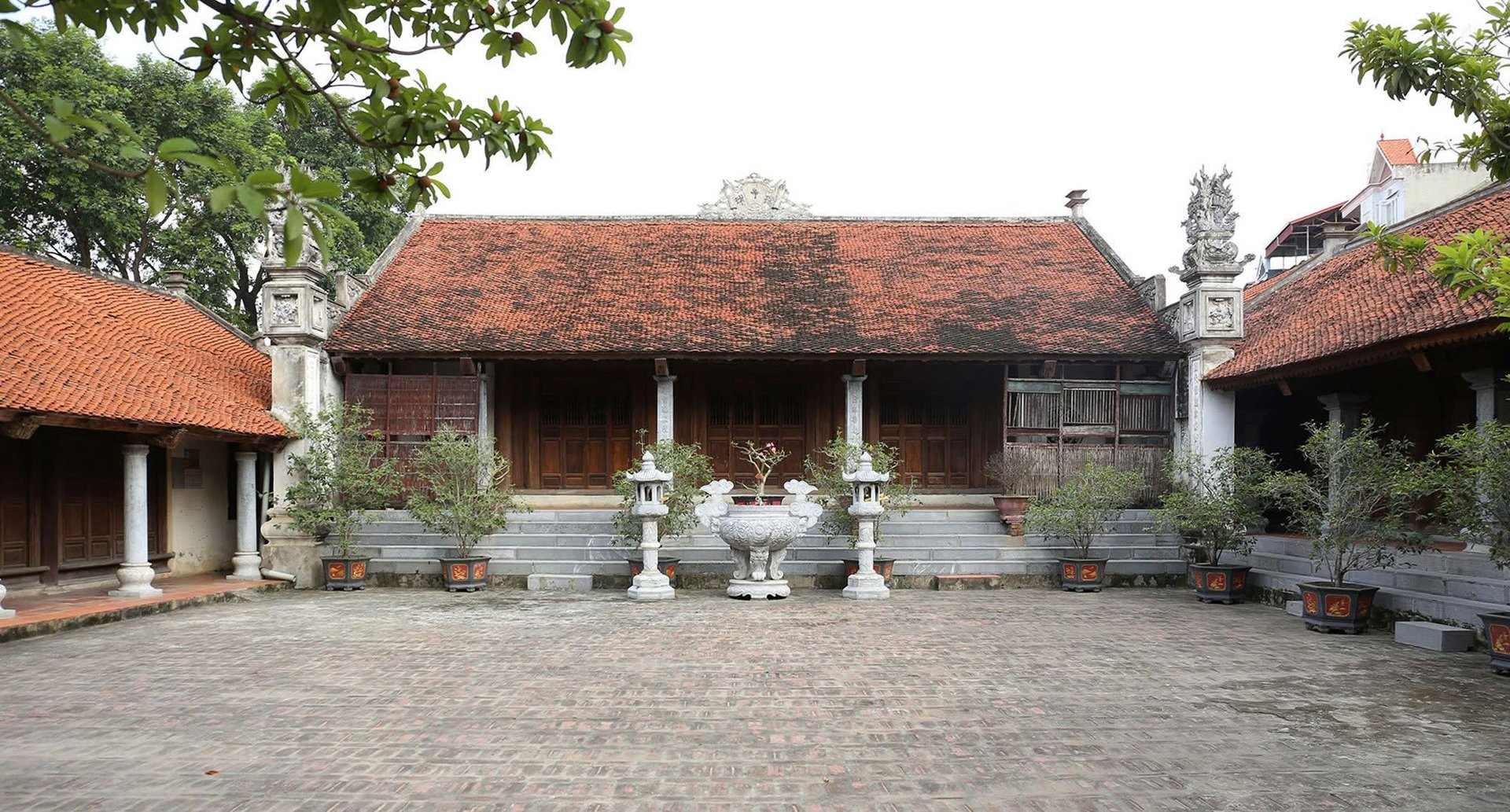
Ngoc Mach Pagoda has the Sino-Vietnamese name Quynh Lam Tu, located in Ngoc Mach Village, now part of Xuan Phuong Ward, Hanoi City. Before 1945, Ngoc Mach was a hamlet of Phuong Canh Commune, Phuong Canh Canton, Hoai Duc District. Later the village belonged to Xuan Thuy Commune; in 1959 it was renamed Xuan Phuong Commune and from 1961 belonged to Tu Liem District, Hanoi.
Ngoc Mach also has the vernacular name Ke Ngoc, an ancient village in the western area of Thang Long. Since ancient times, this place was famous for silver engraving. Many villagers took the craft to make a living in many places, contributing to a distinctive feature in the community's economic and cultural life.
Quynh Lam Tu is located on a high, spacious, and open plot of land in the middle of a residential area. According to legend, this plot of land is called Co Tien Mound. Around the pagoda there are many ancient trees; the roof tiers hidden beneath the foliage create a tranquil and ancient space.
The exact date of the pagoda's founding has not yet been determined. However, based on the system of stone steles, Buddhist statues, and surviving relics, it can be determined that Quynh Lam Tu has existed at least since the Le Trung Hung period.
The stele dated the second year of Vinh Khanh, 1730, records that charitable people donated money and property to build and repair the pagoda. By the year the 19th year of Canh Hung, 1758, the stele “Hau Phat Bi Ky” continued to record a restoration and the establishment of Hau Phat. These materials show that the pagoda had a relatively stable scale from the early 18th century.
In the Nguyen period, Quynh Lam Tu continued to be maintained and repaired. The two bronze bells still extant are dated the first year of Minh Menh, 1820, reflecting Buddhist activities and community donations in the 19th century.
In the modern and contemporary periods, the pagoda is also recorded as a place that once sheltered, hosted meetings for, and served the activities of revolutionary cadres during the resistance wars.
On November 29, 1997, Quynh Lam Pagoda was ranked National Historical-Cultural Relic.
With a history spanning many centuries, a system of stone steles, Buddha statues, bronze bells, and an ancient landscape, Quynh Lam Tu is not only a place of religious practice for the people of Ke Ngoc but also one of the typical relics of the western area of Hanoi.



