
Nguyên Xá Pagoda (Thanh Lâm Tự)
Introduction
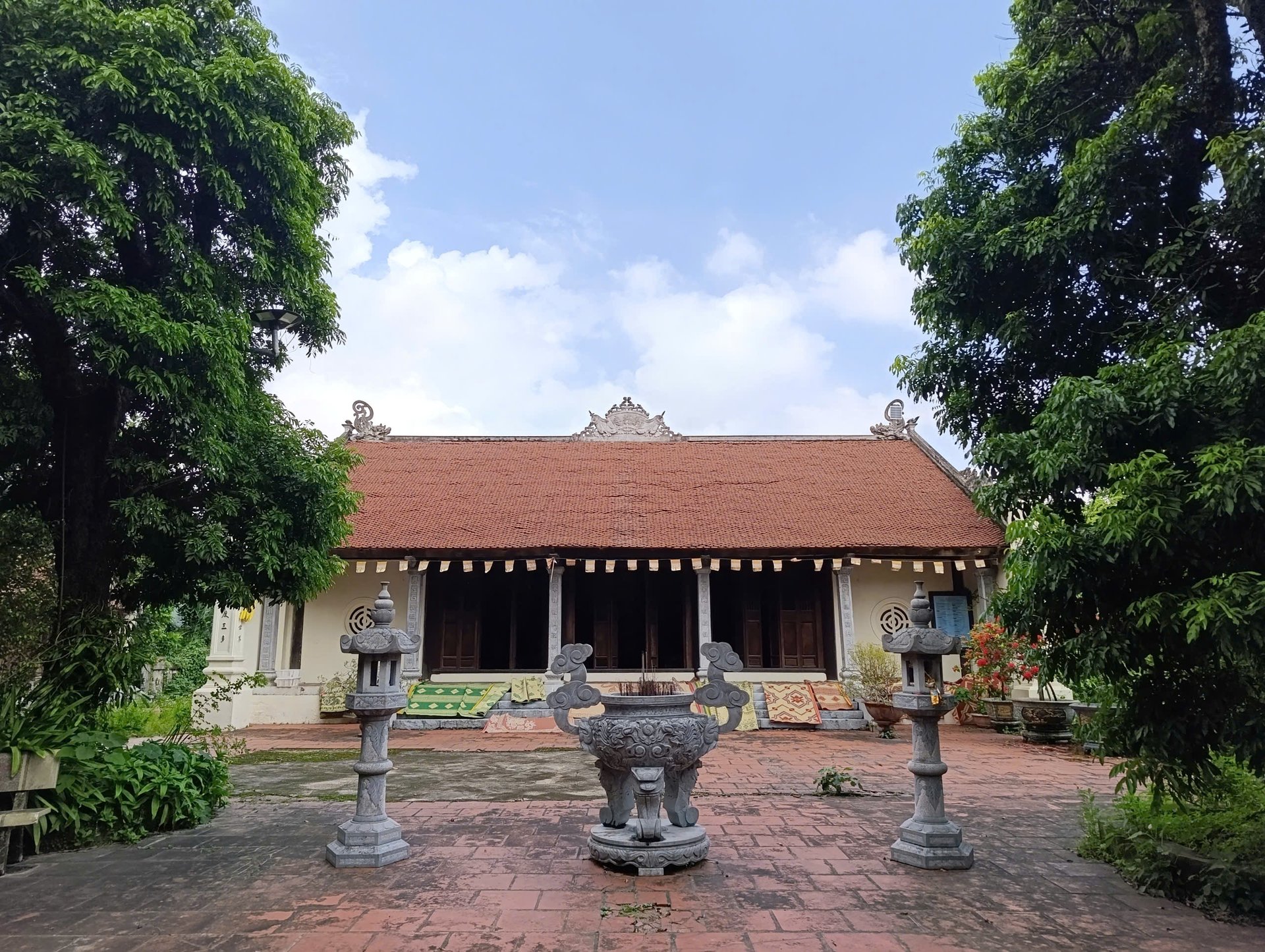
Thanh Lâm Pagoda, literary name Thanh Lâm Tự, is an ancient pagoda of Nguyên Xá village, now in Xuân Phương Ward, Hà Nội City. Previously, Nguyên Xá belonged to Minh Khai Commune, Từ Liêm District. This is an ancient village in western Hà Nội, located in the long-standing settlement area of Red River Delta residents.
The pagoda is located on a high plot of land, surrounded by many green trees and ancient trees. The quiet space, combined with low tiled roofs and wide courtyards, creates the distinctive appearance of a Northern Vietnamese village pagoda.
The exact date of its founding has not yet been determined. However, the architecture, statues, and artifact collection show that Thanh Lâm Tự has existed at least since the Le Trung Hung period.
In the late 18th century, the pagoda went through a period of many upheavals. During wartime, some bronze objects and ritual implements were collected, causing the relic to lose many precious artifacts. The inscription on the bell shows that afterward local people together contributed money and property to restore the pagoda, recast the bell, and revive Buddhist worship.
A special figure associated with this period is Trần Bá Lãm, a doctoral laureate of the Đinh Mùi examination in 1787. He composed the inscription for the bell “Thanh Lâm Tự Chung” cast in the year 1799. The inscription not only records the casting of the bell but also reflects quite clearly the process of restoring Buddhist activities after the war years.
Through the 19th and 20th centuries, the pagoda continued to be repaired and supplemented with worship statues, stone stele, horizontal plaques, and ritual objects. Thanks to this, Thanh Lâm Tự still retains many layers of traces from the Lê, Tây Sơn, and Nguyễn periods.
On January 21, 1989, Thanh Lâm Pagoda and Đồng Cổ Shrine were classified by the Ministry of Culture and Information National historical and architectural-artistic relic.
Today, the value of the pagoda lies not only in its ancient architecture or artifact collection but also in preserving a special layer of memory about the late 18th century, when war interrupted religious life but the local community worked together to restore the pagoda.



