
NGUYET ANG PAGODA
Introduction
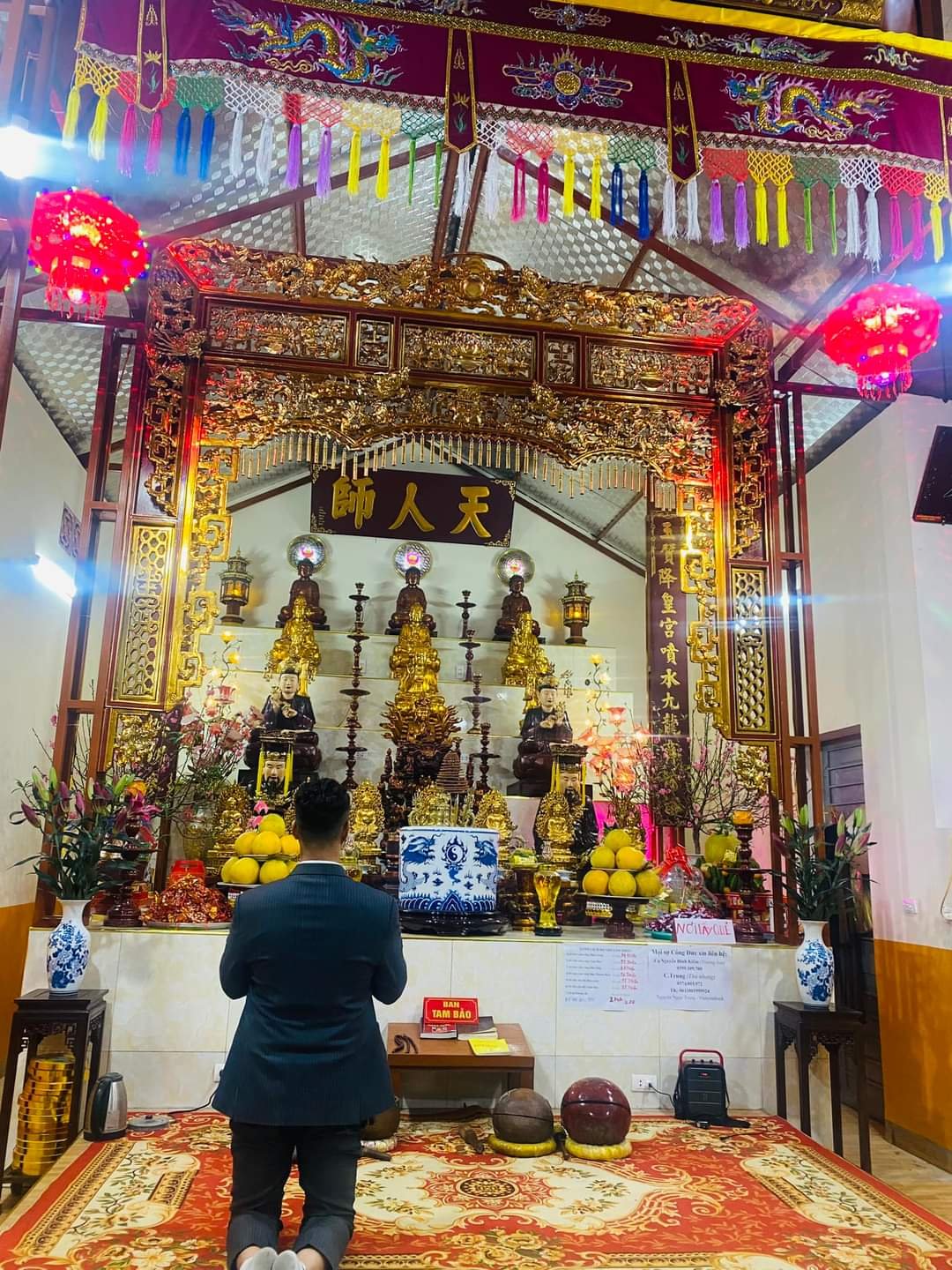
Nguyet Ang village pagoda, whose literary name is Thanh Bao Tu, was built on the southwestern edge of Nguyet Ang village, Ngoc Hoi commune, Hanoi; it lies to the left of Nguyet Ang communal house and faces southwest.
The pagoda grounds are quite spacious, surrounded by a brick wall more than 2 m high; inside are the pagoda courtyard, green tree garden, and structures such as the main pagoda, Patriarch hall, and guest house, creating a serene and harmonious space.
Nguyet Ang Pagoda was ranked as a national historical-cultural relic in 1995 by the Ministry of Culture and Information (now the Ministry of Culture, Sports and Tourism).
Nguyet Ang Pagoda mainly worships Buddha according to the Mahayana Buddhist system, with representative statue groups such as the Buddhas of the Three Times, Amitabha, Guanyin, Mahasthamaprapta, Cundi, the Jade Emperor, and the Infant Shakyamuni. Notably, the set of Three Times Buddhas in late 17th-century artistic style is one of the pagoda's oldest artifacts. In addition, the Patriarch hall also worships Bodhidharma, along with statues of Quan Am Toa Son and a Mother Goddess altar.
In terms of architecture, the main pagoda has a Dinh-shaped layout consisting of the front hall and upper sanctuary, with a traditional giao chien - chong ruong timber frame. The Patriarch hall behind has a Nhat-shaped plan and serves both as a place of worship for the Patriarch and for the Mother Goddess. Although not large in scale, the pagoda has a rich system of statues, a tight layout, and strongly reflects the architectural and sculptural style of the 17th–19th centuries. It can be seen that Nguyet Ang Pagoda is a relic of exemplary historical, cultural, and artistic value, clearly reflecting the religious life of residents of the Northern Delta over many periods. The pagoda currently preserves many precious values, such as a bronze bell cast in 1933, stone steles dating from the Bao Dai period (1932–1933), and a system of ancient statues spanning the 17th to 20th centuries. In particular, the inscriptions record the pagoda's restoration process and the merits of those who contributed to its construction, showing the close bond between the relic and the local community.



