
Phu Khang Pagoda, Phu Yen Village, Hoa Phu Commune, Hanoi City
Introduction
Phu Khang Pagoda, whose literary name is Thang Canh Tu, was built on a plot facing northwest, the same direction as the communal house.
Currently, the pagoda architecture includes the entrance gate, the main pagoda with a dinh-shaped layout, the Ancestor House, other buildings, and the Mother Goddess House behind the Upper Hall, along with a courtyard system and fruit garden.
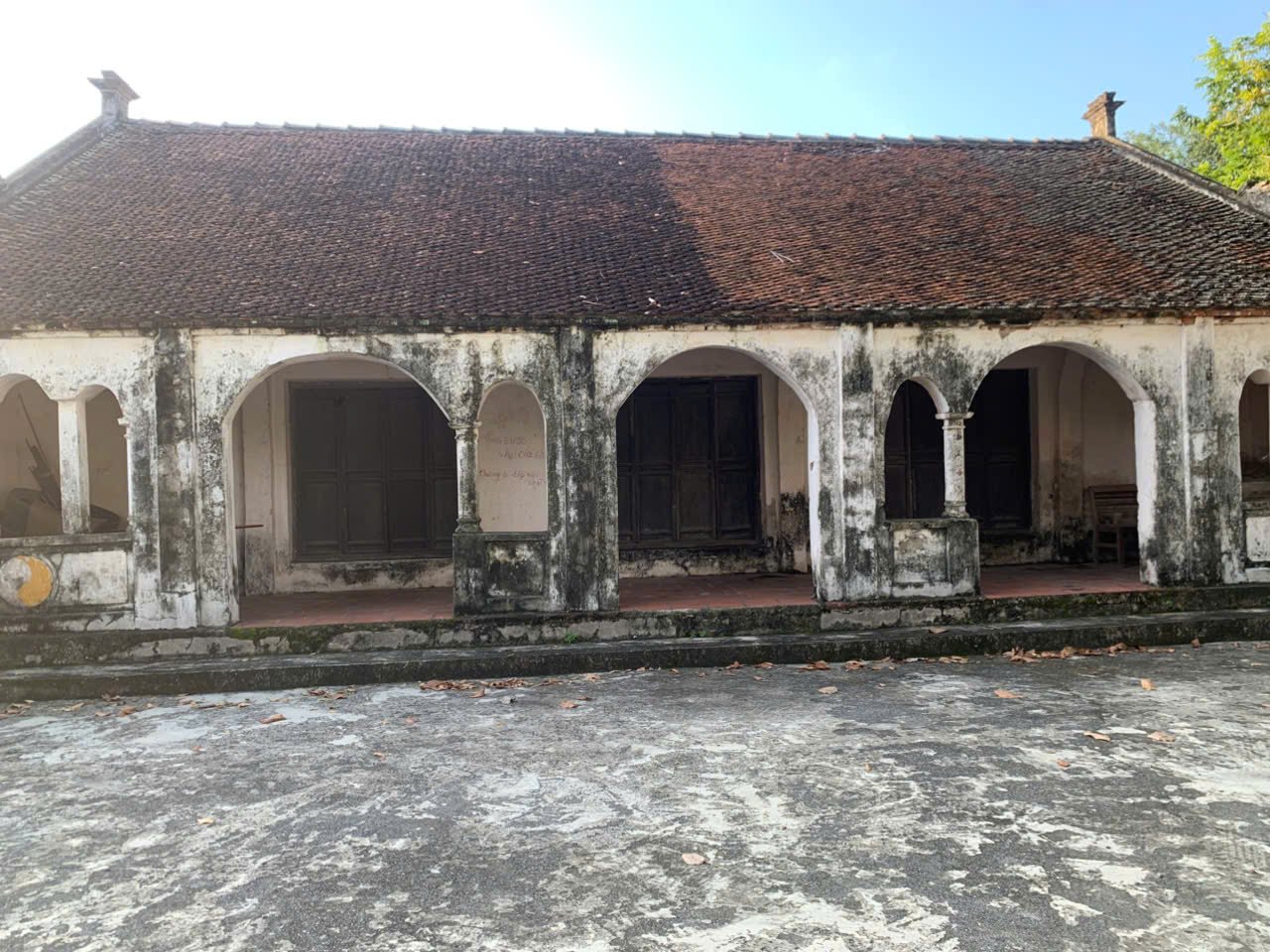
The Front Hall is a five-bay, two-sloping-roof horizontal building with closed gable walls. The roof edges are built with dinh-style borders, and the ends of the roof edges are stepped. At both ends of the ridge are two lime-mortar dinh-shaped ornaments. Due to the effects of time, the relic has deteriorated, so the veranda column system of the Front Hall has been replaced by a wall system built from the veranda edge straight up to support the roof eaves. The walls have arched doors and windows.
The Upper Hall is a three-bay longitudinal building connected to the middle bay of the Front Hall in a chuoi vo (tail-shaped) manner. At both gable ends are two dinh-shaped ornaments; on the side walls, many windows of different shapes were cut to provide ventilation and light for the interior. The roof trusses have also been replaced by a system of arched pillars and walls supporting the roof.
Behind the Upper Hall is the five-bay Ancestor House with closed gable walls. The two gable-end bays of the Ancestor House are partitioned as living quarters for the abbot, and the three middle bays are used for ancestor worship.
The statue system in the pagoda was formerly very rich, but due to the effects of time and war, the pagoda currently preserves 12 Buddha statues, a Nine Dragon throne, and a number of Mother Goddess statues. The freestanding statues are made of wood and fired clay, dating from the 18th century to the present. The remaining statues are not uniform and vary in size and artistic style.
The artistic sculpture in the pagoda is concentrated in the freestanding statues in the Buddha hall. The statues of Phu Khang Pagoda are not large, but each was meticulously and carefully crafted, so they all have high aesthetic value and are worthy of being artistic sculptures of the 19th–20th centuries.
More Other places
- Other placesVerified
Gioi Duc Pagoda (Hong An Temple)
Ung Hoa Commune
5.0Free  Other placesVerified
Hai Giac Pagoda
O Dien Commune
5.0Free Other placesVerified
Phuong Bang Pagoda (Hung Long)
Son Dong Commune
5.0Free Other placesVerified
Sung An Pagoda, also known as Sung Khang Pagoda (Dong Ba Pagoda)
Thượng Cát Ward
5.0Free
