
Thien Khanh Pagoda
Introduction
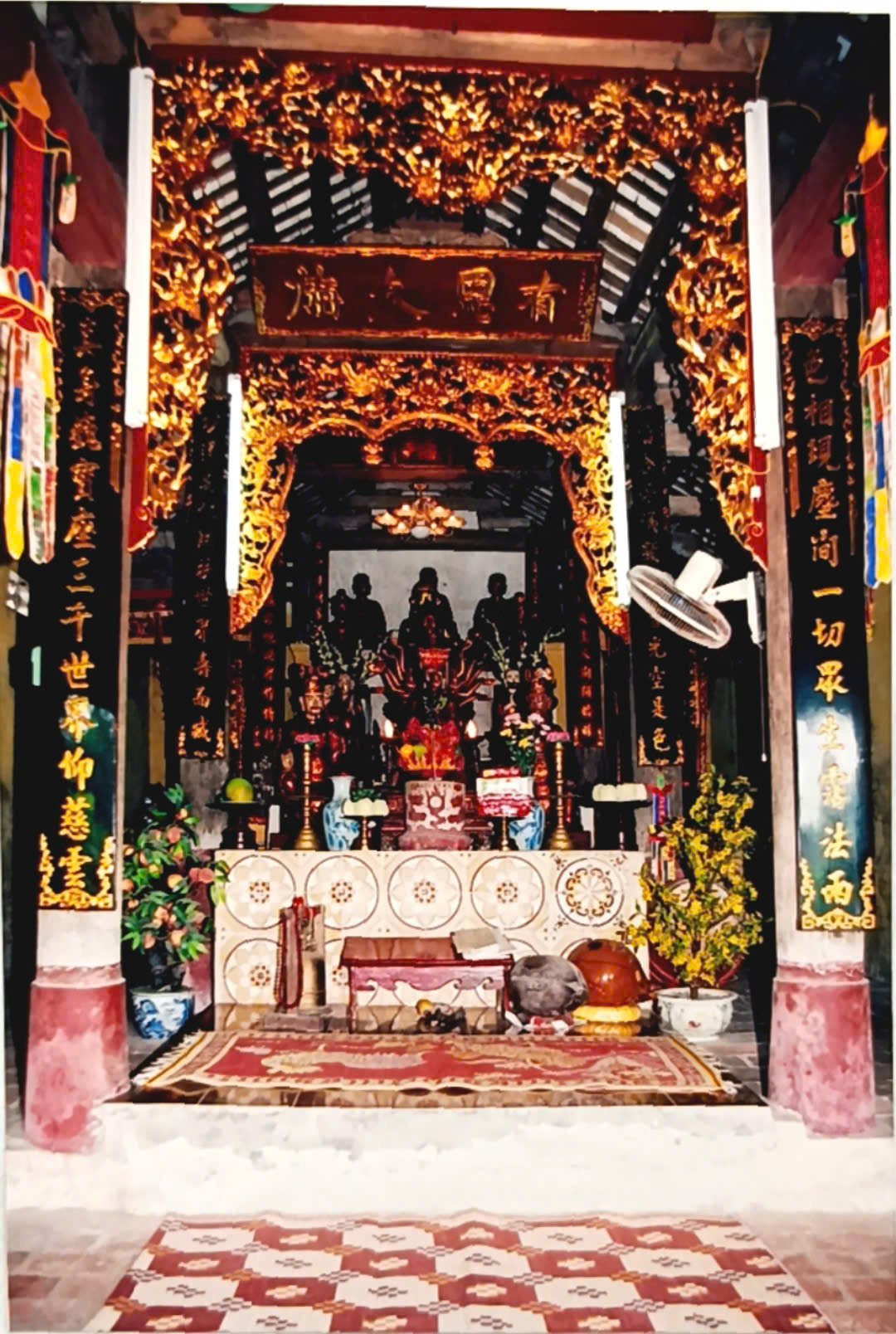
Thien Khanh Pagoda, literary name Thien Khanh Tu, an ancient pagoda of Mieu Nha Village, with the vernacular name Ke Nga, now belonging to Xuan Phuong Ward, Hanoi City. Previously, the relic belonged to Tay Mo Commune, Tu Liem District. Local people still commonly call this place Ba Pagoda or Mieu Nha Pagoda.
Mieu Nha is an ancient village in the southwestern area of Hanoi, where many religious relics are concentrated, such as Mieu Nha Communal House – Temple, Dai Bi Pagoda, and Thien Khanh Pagoda. According to legend, the name “Ba Pagoda” originates from the story of a princess consort who once came here to pray for a child and later gave birth to a son. She donated money to build and expand the pagoda. This is a layer of folk oral tradition; there is currently no direct documentary evidence confirming the identity of the princess consort.
A special milestone that makes Thien Khanh Tu different from many pagodas in the region is the event Le Do – era name Thien Hien in the early 16th century. Historical records state that in 1519, Le Do was elevated by a force opposing the court, given the era name Thien Hien, and established a temporary palace at Do Nha Commune, Tu Liem District. Mieu Nha legend holds that the headquarters in the early days was located at Ba Pagoda, from which the pagoda took the name Thien Khanh.
In July 1519, Mac Dang Dung brought naval and land forces to surround Le Do’s force in Tu Liem. Historical records say the court troops broke the dike and let water flood into the camp; Le Do and Nguyen Su had to retreat and were then captured. This historical event later merged into local memory, with stories about Voi Field, the Horse Bathing Well, and the low-lying land of Mieu Nha.
The pagoda continued to be repaired through many periods. A stele from the Canh Hung era still preserved at the relic records the local name as Do Nha, showing the long-standing connection between the pagoda and the village’s history.
On August 27, 2007, Thien Khanh Pagoda was ranked by the Hanoi City People’s Committee according to Decision No. 3401/QD-UBND. The official list of Hanoi’s cultural sector still clearly records this ranking milestone.
Thien Khanh Pagoda was built on a large plot of land; the main pagoda area faces west. The Three Jewels hall has a layout the character Đinh, consisting of the Front Hall and Upper Hall connected to each other.
The Front Hall consists of five bays and two side compartments, built in the style of gable walls with closed ends, creating two tiers and four roofs and covered with traditional tiles. In front of the two gable ends are two ornamental pillars about five meters high. Between the two roof tiers, three Chinese characters stand out “Thien Khanh Tu”, identifying the pagoda’s Sino-Vietnamese name.
The wooden frame consists of six trusses in the style chong ruong – gia chieng. The rường beams and corner brackets are decorated with traditional motifs such as clouds, curled leaves, question-mark motifs, and seal characters. Some beams are also carved in relief with dragon heads, giving the architecture a soft appearance.
In the side bay hangs a large bell named “Thien Khanh Tu Bell”. The bell does not clearly record its date, but it is one of the pagoda’s notable ritual objects.
In particular, on both sides of the walls there are also ancient paintings about The Ten Courts of Yama. Each panel depicts five Yama kings along with scenes of judgment, hell, and sentient beings. Beside them are relief wood carvings of sentient beings of the Ten Courts, along with statues of the two Dharma Protectors Encouraging Goodness and Punishing Evil, . This group of artifacts gives a distinctive character to the Buddha hall space of Thien Khanh.
The pagoda also preserves a stone stele from the period of Le Canh Hung, many ritual objects, and a system of Buddha statues.
In the Mother Goddess hall at the rear there are also four edicts of investiture related to Mother Goddess worship. The second Duy Tan edict, in 1908, conferred titles on the Heavenly Immortal, Earthly Immortal, Water Immortal, and Thuong Ngan; the ninth Khai Dinh edicts, in 1924, continued to confer titles on the Mother Goddesses. These documents are notable sources for studying the presence of Mother Goddess worship in a Buddhist pagoda.
The combination of the Dinh-shaped Three Jewels architecture, paintings of the Ten Courts of Yama, Dharma Protector statues, a bronze bell, stone steles, and edicts has given Thien Khanh Tu a distinctive appearance, where Buddhism, folk beliefs, and the historical memory of Mieu Nha village are all present in one space.



