
Thuy Linh Pagoda
Good to know
- It is advisable to arrive early for a spacious experience
- Free
- Convenient to travel by taxi or bus.
Introduction
Story
01Dien Khanh Pagoda
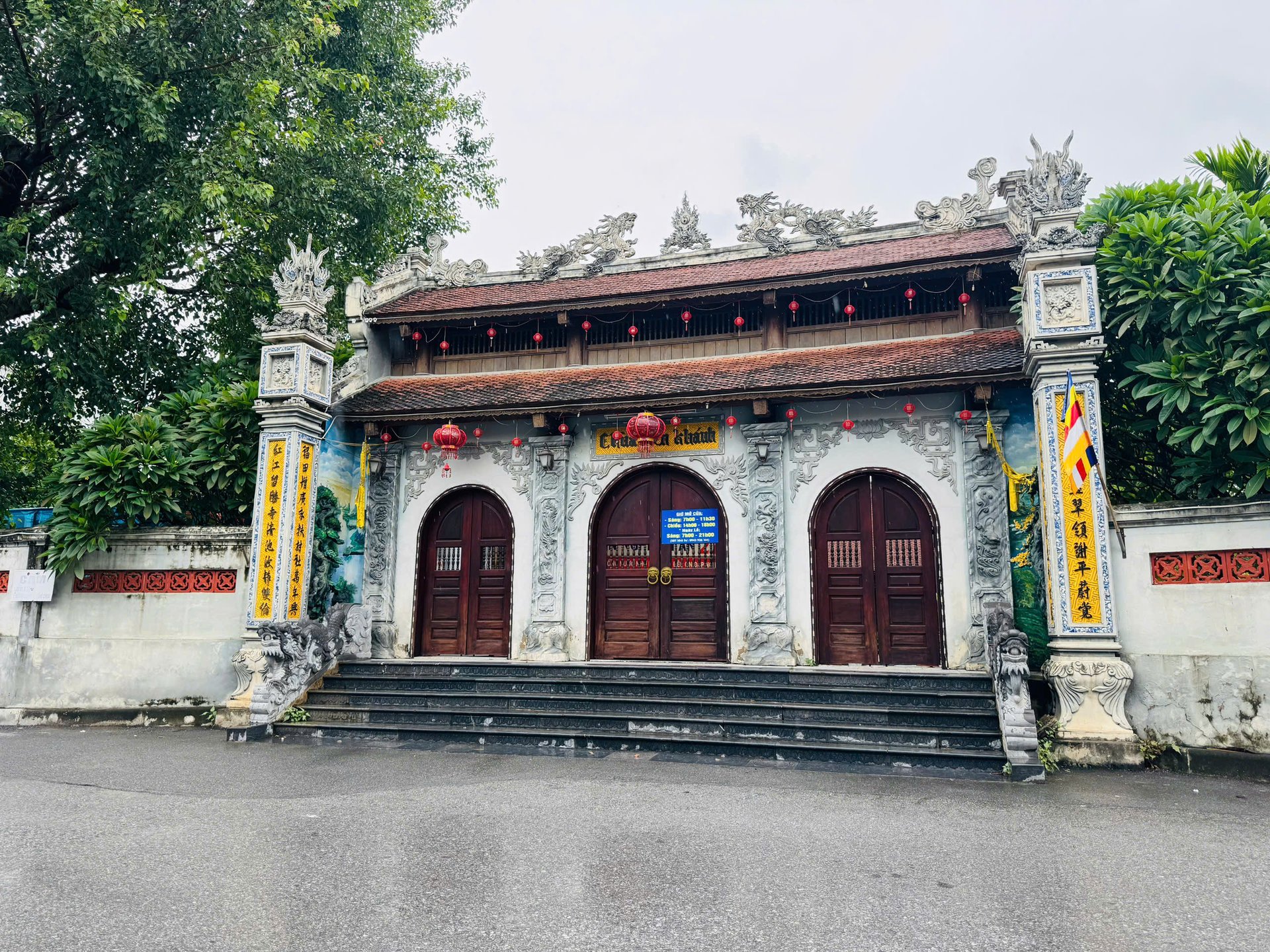
Dien Khanh Pagoda (commonly called Thuy Linh Pagoda) is located in the center of Thuy Linh village; the pagoda is adjacent to the communal house, with an area of 3,333.2m2 and a 700m2 stupa garden, forming an imposing relic complex rarely found elsewhere. The old pagoda was built during the reign of King Le Than Tong (1619-1643), in the third year of the Vinh To era (1622), more than 400 years ago. Based on the assessment of relic managers when the pagoda was dismantled for restoration and renovation in 2017, a damaged beam end about 1m long with Le dynasty decorative carvings was discovered, along with a roof board and columns and a beam end from the communal house that were transferred to the pagoda during the communal house's first restoration. From the above evidence and according to the elders' traditions, Dien Khanh Pagoda is an ancient pagoda built more than 400 years ago.
The pagoda is built in a Dinh-shaped layout, a traditional Vietnamese architectural plan consisting of two main sections joined at right angles: a Tam Bao hall (the large front building) and a Thuong Dien hall behind, forming a shape like a mallet (hammer) or the Chinese character Dinh with the handle above. The long and wide Thuong Dien hall displays dozens of statues from high above down to the nine-dragon throne; on both sides are two rows of statues of the Ten Courts; on both gable walls are two altars; the Goddess of Mercy is on the east, and Quan Am Thi Kinh is on the west. The five-bay front building connected to the rear sanctuary is arranged with the altar of Lord Duc Ong (Duc Chua) and the Dharma protector Khuyen Thien on the east, and the altar of the Holy Sage and the Dharma protector who vanquishes evil on the west. The pagoda architecture is built in the stacked-beam and gong-frame style, with fine carvings; at both gable ends of the five-bay Tam Bao hall are two large columns, with two very beautiful nghe creatures on top.
In front of the Tam Bao hall, beyond a yard paved with Bat Trang bricks, is a flower and ornamental plant garden, followed by the Three-Entrance Gate, built of Bat Trang bricks. In front of the Three-Entrance Gate is a pond; behind the Tam Bao hall are the ancestral hall and the shrine to Saint Tran; to the east is the guest house, and to the west is the kitchen. Over the years, the pagoda deteriorated severely. In 1965 the state built a road through the Tam Bao area, separating the stupa garden and pond from the communal house and pagoda. The Three-Entrance Gate collapsed and was demolished in the early 20th century; the front garden of the gate was dug up for brick production during the cooperative period, and the pond was expanded; the remains of the gate's foundation built with Bat Trang bricks were discovered during the years when the US bombed and devastated North Vietnam.
To preserve an ancient pagoda recognized as a national historical and cultural relic together with Thuy Linh Communal House in 1993, in 2017 the pagoda was restored and embellished by the Hoang Mai District People's Committee and inaugurated in 2019. The invested and embellished items include: the Three-Entrance Gate, the Tam Bao hall, the shrine hall, the ancestral hall, the guest house, and two warehouse rooms. All these items were made of lim wood, following the exact model of the old pagoda, with fine carvings; the columns were sculpted and painted artistically; the door system of all items was made as folding panel doors in the traditional style, using lim wood with decorative carvings.
Socialization component: the people of Thuy Linh and pilgrims donated more than 6 billion VND to build the Tu An house, a three-bay auxiliary house, a kitchen, a restroom facility, and a water tank, and to cast a large bell and two khanh musical gongs with more than one ton of bronze and more than 20 taels of gold. All the old earth and wooden statues were damaged beyond restoration and were donated to other pagodas; 45 statues and the nine-dragon throne were carved from jackfruit wood, new horizontal plaques and couplets were made, and the altars were renewed. The artifacts still preserved include: some ancient couplets, 2 ancient dai tu plaques, and some horizontal dai tu plaques, namely:
“Thien Nhan Su” and a “Dien Khanh Tu” plaque; 2 ancient altars remain preserved.
An ancient bell cast in the Dinh Mao year, 1747, during the reign of King Le Hien Tong, Canh Hung era. By 2025, it is 278 years old.
Dien Khanh Pagoda, together with Thuy Linh Communal House, was ranked as a national historical and cultural relic in 1993 by the Ministry of Culture and Information (now the Ministry of Culture, Sports and Tourism). The communal house and pagoda, together with the water pavilion pond and stupa garden, feature a tall, beautiful relief with a statue of the Goddess of Mercy seated on a lotus throne. All of this creates a splendid spiritual and cultural landscape rarely found elsewhere.
Promoting the value of the spiritual cultural identity of the people of Thuy Linh, they always preserve and restore a religious relic site so that the sound of Dien Khanh Pagoda's bell continues to resound far and wide.
02THE SACRED BELL OF DIEN KHANH PAGODA
In Thuy Linh Street, Linh Nam Ward, Hoang Mai District, Hanoi, there is an ancient pagoda whose literary name is Dien Khanh Tu. The pagoda, together with the communal house, was recognized by the state as a national historical and cultural relic in 1993. To preserve this precious heritage, in 2010, on the occasion of the 1000th anniversary of Thang Long - Hanoi, the state restored and embellished Thuy Linh Communal House, and from 2017 to 2019 the ancient and sacred pagoda was again restored and embellished by the state. The pagoda is adjacent to the communal house; in front of the pagoda is a stupa garden, where 5 stupas preserve the relics of the pagoda's founding monks. The stupa garden is as beautiful as a park, with a mural of more than 100m2 brilliantly molded and painted by artisans. Adjacent to the stupa garden is an exercise and sports recreation area with an outdoor stage. Next to the recreation area is a pond more than 3,000m2 wide, around which the state built stone embankments in 2014. In the middle of the pond is a splendid Water Pavilion like a giant lotus flower. In particular, Dien Khanh Pagoda has a bell weighing nearly 200kg, cast during the reign of King Le Hien Tong, Canh Hung era, in the Dinh Mao year 1747.
Legend has it that when the bell was cast, the villagers held a ceremony, hung it up, and struck it once as a test; they heard a strange bell sound, different from the bells of other pagodas in the area. The bell was not very large, but its sound was loud and carried far, moving the whole region. Everyone was frightened. A geomancer passing by saw a very large crowd of villagers gathered in front of the Three-Entrance Gate. The geomancer stopped and said to the villagers: I heard the strange bell sound, so I came here to talk with the villagers: This is a black bronze bell, and black bronze is the mother of the golden buffalo. If the bell is struck three times, nine sounds, the golden buffalo will hear its mother's call and fly back to destroy a vast area, turning it into a lake like West Lake. Villagers, listen to me: throw this bell into the bottom of the pond. Three years later, drain the pond, bring the bell up, invite a monk to conduct a three-day ceremony, and only then hang the bell. The villagers obeyed. After three years, they brought the bell up from the bottom of the pond, set up an altar and completed the ceremony, then hung the bell on the upper floor of the Three-Entrance Gate and struck it three times, nine sounds. They found that the strange sound was gone, and they heard a buzzing sound that still carried far.
Today the story of the golden buffalo has become a legend. The bell at Dien Khanh Pagoda is still just an ordinary bronze bell, but the ancient bell has become the sacred bell of Dien Khanh Pagoda and a precious legend of the people of Thuy Linh.
A person fond of poetry, while visiting the pagoda and seeing the splendid beauty of a historical and cultural relic worthy of becoming a scenic spot for visitors from near and far to come to worship and admire the beauty here, was inspired by the scene and wrote a poem:
The Bell of Dien Khanh Pagoda
The bell of Dien Khanh Pagoda resounds far
Morning and evening, it deeply moves people's hearts
Homeland beside the alluvial riverbank
River waters rise and fall; heaven and earth change
The pagoda bell urges people's hearts
Praying to the Buddha and Patriarchs for a radiant heart
The ringing bell drives away all evil
The bell rings for a peaceful life in the homeland
The pagoda bell resounds forever far and wide
Loyal and deeply affectionate is my homeland
Seven hundred years of alluvial riverbanks
Seven hundred years on, still the ordinary people
The temple bell stirs a wistful feeling
Hearing the Buddha's scriptures, they sincerely pray.
In 2017-2018, when the pagoda was restored and embellished, the people of Thuy Linh and pilgrims donated money and nearly 20 taels of pure gold, alloy gold, and silver to cast a bronze bell weighing nearly 800 kg and two bronze chimes weighing more than 300 kg in total. The sacred ancient bell sound, together with the sound of the newly cast great bell, will forever resound far and wide, bringing “The compassion, joy, and equanimity of the Tathagata Buddha reach all people and all living beings.”
More Other places
- Other placesVerified
Gioi Duc Pagoda (Hong An Temple)
Ung Hoa Commune
5.0Free  Other placesVerified
Hai Giac Pagoda
O Dien Commune
5.0Free Other placesVerified
Phuong Bang Pagoda (Hung Long)
Son Dong Commune
5.0Free Other placesVerified
Sung An Pagoda, also known as Sung Khang Pagoda (Dong Ba Pagoda)
Thượng Cát Ward
5.0Free
