
Trung Thôn Pagoda
Introduction
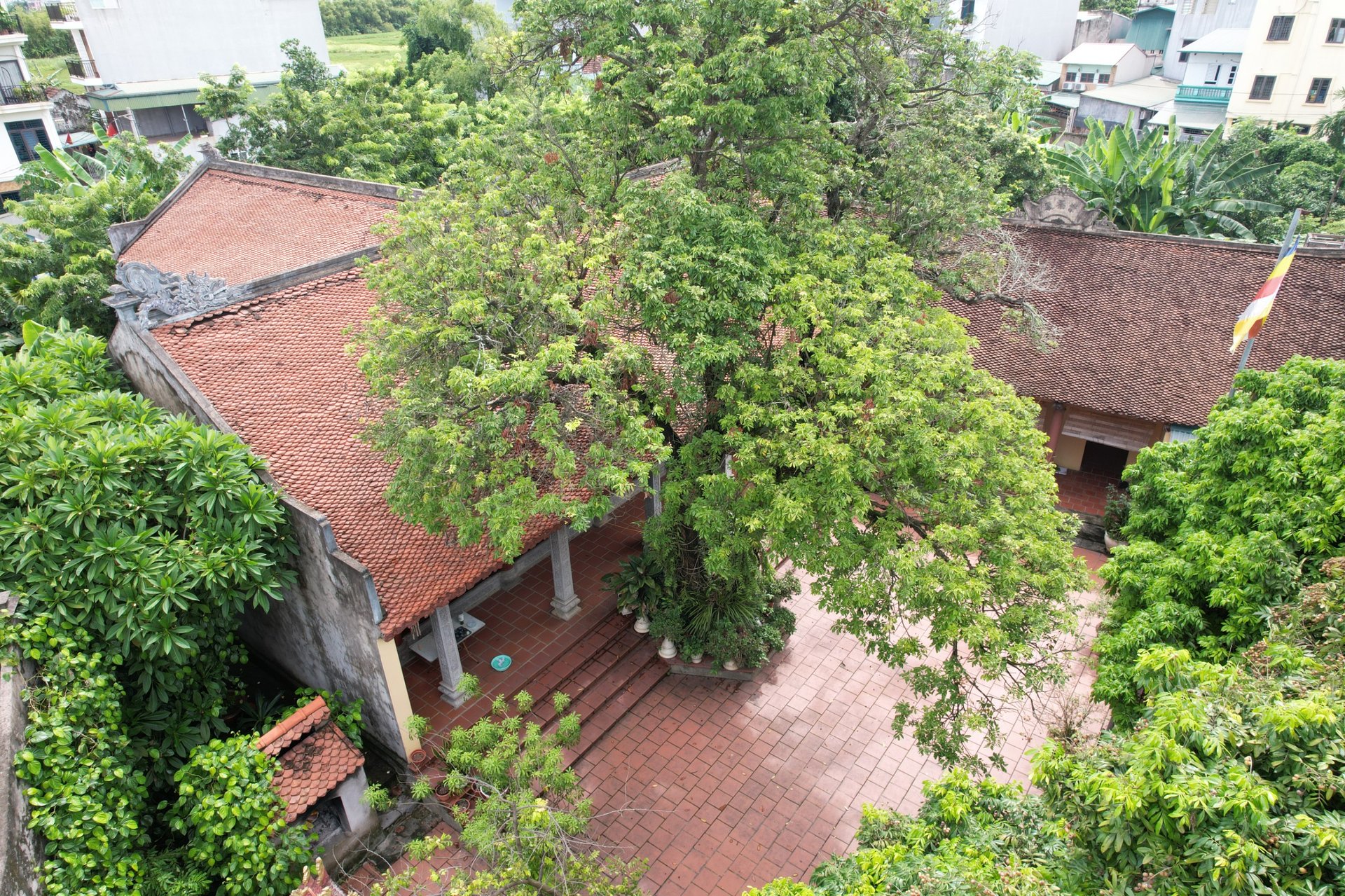
The Trung Thôn Pagoda relic has been closely associated with events of the villagers of Xuân Đỗ Trung hamlet (now called Trung Thôn) since its formation. Through various periods, the relic has been restored to its current state and continues to be a place for the cultural and religious activities of the people of Trung Thôn Residential Group. The relic currently preserves a number of valuable artifacts.
Currently, Trung Thôn Pagoda worships Buddha like many other pagodas in northern Vietnam.
For Vietnamese people in the past and present, coming to a pagoda is a destination driven by spiritual needs. Therefore, Trung Thôn Pagoda, like many other village pagodas, was built with the purpose of using Buddhist teachings to promote the encouragement of good and the punishment of evil, to educate people in compassion, and to help them turn toward what is good and virtuous. In the Front Hall are statues of Encouraging Good and Punishing Evil, the Đức Ông altar, and the Holy Monk altar. On the Buddha altar are arranged the Three Worlds Buddhas, the Amitabha Triad, Cundi Avalokitesvara, Shakyamuni, and others. Therefore, Trung Thôn Pagoda is not only a place of Buddha worship but also a center of religious activity and a symbol of community cohesion in the tradition and present life of the people of Trung Thôn.
Trung Thôn Pagoda (Sùng Phúc Tự) is a Mahayana Buddhist pagoda. Buddhism is one of the three largest religions in the world. It was a religion that developed strongly in India in the 6th century BCE. Buddhism was introduced into Vietnam very early, around the 1st century BCE, through missionary activities; through cultural interchange among major world civilizations, this religion became prevalent in Vietnam. There was once a period when Buddhism was honored as the state religion in our country during the Lý dynasty. The Lý kings were very devout, especially King Lý Thái Tông, who was a patriarch of the Vô Ngôn Thông Zen sect; the religion became popularized and folklorized. By the Later Lê dynasty, Confucianism was regarded as the state religion and Buddhism entered a period of decline. At the end of the 18th century, King Quang Trung tried to revive Buddhism and restore pagoda construction, but because he died early, this did not achieve much. In the 20th century, under the strong influence of Buddhist revival movements in other countries, Vietnamese Buddhism developed strongly again, beginning in southern urban areas with important contributions from monks Khánh Hòa and Thiện Chiếu.
It can be clearly seen that Buddhism in Vietnam includes many different sects and has a rather complex history of development. However, according to local elders, since its construction, Trung Thôn Pagoda (Sùng Phúc Tự) has always been looked after and managed by village elders and villagers, worshipping Buddha according to the Mahayana tradition like most pagodas in northern Vietnam; since 2001, an abbot has come to take care of the pagoda, and to this day Buddha worship is still maintained as before.
Not only is it a place of Buddha worship, the pagoda also jointly worships people who have contributed to the village and commune. In addition to the worship of benefactors in the rear hall, the pagoda also worships the Mother Goddess and the Patriarchs.
A form of folk belief of the ancient Vietnamese people that has been handed down and still exists today. The different forms of worship at this relic first of all aim to meet the spiritual and religious life of local people, but at the same time they also serve to strengthen community cohesion, encourage good and punish evil, educate the tradition of remembering the source when drinking water, and guide people toward good and humane values, which are very worthy of respect and promotion.
Trung Thôn Pagoda was ranked as a Historical Relic by the Hà Nội City People's Committee in Decision No. 1298/QĐ-UBND dated March 8, 2024.



