
Tu Hoang Pagoda (Can Phuc Tu)
Introduction
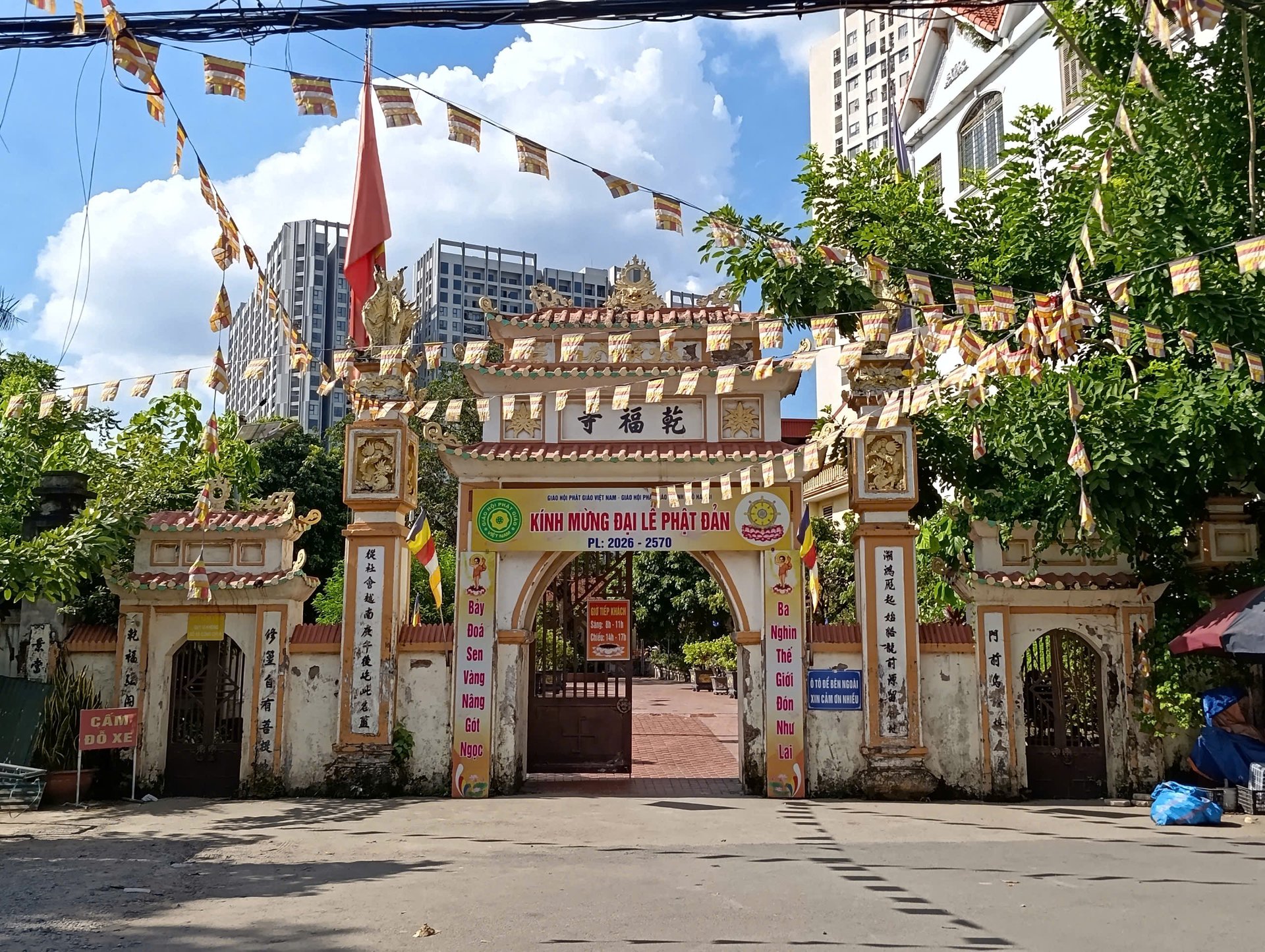
Tu Hoang Pagoda has the literary name Can Phuc Tu, and is commonly called by local people Nhon Pagoda, after the Nom name of Tu Hoang village. The pagoda is near the Nhon market area, now in Xuan Phuong ward, Hanoi city.
Before 1945, Tu Hoang was a commune in Kim Thia canton, Dan Phuong district, Ha Dong province. Later the locality belonged to Xuan Thuy commune, Hoai Duc district. In 1959 it was changed to Xuan Phuong commune, and from 1961 it belonged to Tu Liem district. Through many changes in administrative boundaries, the name Tu Hoang village and the Nom name Nhon have still been widely used in local life.
The pagoda is in the northwest of the village, on a plot of land that traditional documents describe as having the shape of a turtlePreviously, the grounds were surrounded by bamboo ramparts, many old trees and fairly wide green spaces. Although the Nhon area today has been strongly urbanized, Can Phuc Tu still retains a relatively separate space from the surrounding streets.
The exact founding date of the pagoda has not yet been determined. However, a Hau Phat stele with the era name Chinh Hoa 19th year, 1698, records the local people repairing the pagoda. This shows that Can Phuc Tu had existed since before the end of the 17th century and by the Le Trung Hung period was a Buddhist establishment of relatively stable scale.
In the Nguyen period, the pagoda continued to receive care. In the year Minh Menh 19th year, i.e. 1838, local people and devout followers in the village contributed money to cast a large bell for the pagoda. Subsequent repairs in the 19th and 20th centuries helped create its current appearance.
The pagoda still preserves many precious artifacts, especially the system of Buddha statues, stone steles, bronze bells and altar objects dating from many periods.
One point to note about its ranking is that the pagoda was not recognized in 1990 as some old documents record. On April 22, 1992, the Ministry of Culture, Information and Sports issued Decision No. 490-QD, ranking Nhon Pagoda – that is, Can Phuc Tu – as a National-level artistic relic.
With a history of existence at least since the Le Trung Hung period, together with its preserved system of statues, stone steles and bronze bells, Tu Hoang Pagoda is one of the typical Buddhist relics of western Hanoi.



