
Lady A Lanh Temple
Story
01OVERVIEW OF THE NATIONAL HISTORICAL RELIC: TEMPLE OF LADY A LANH
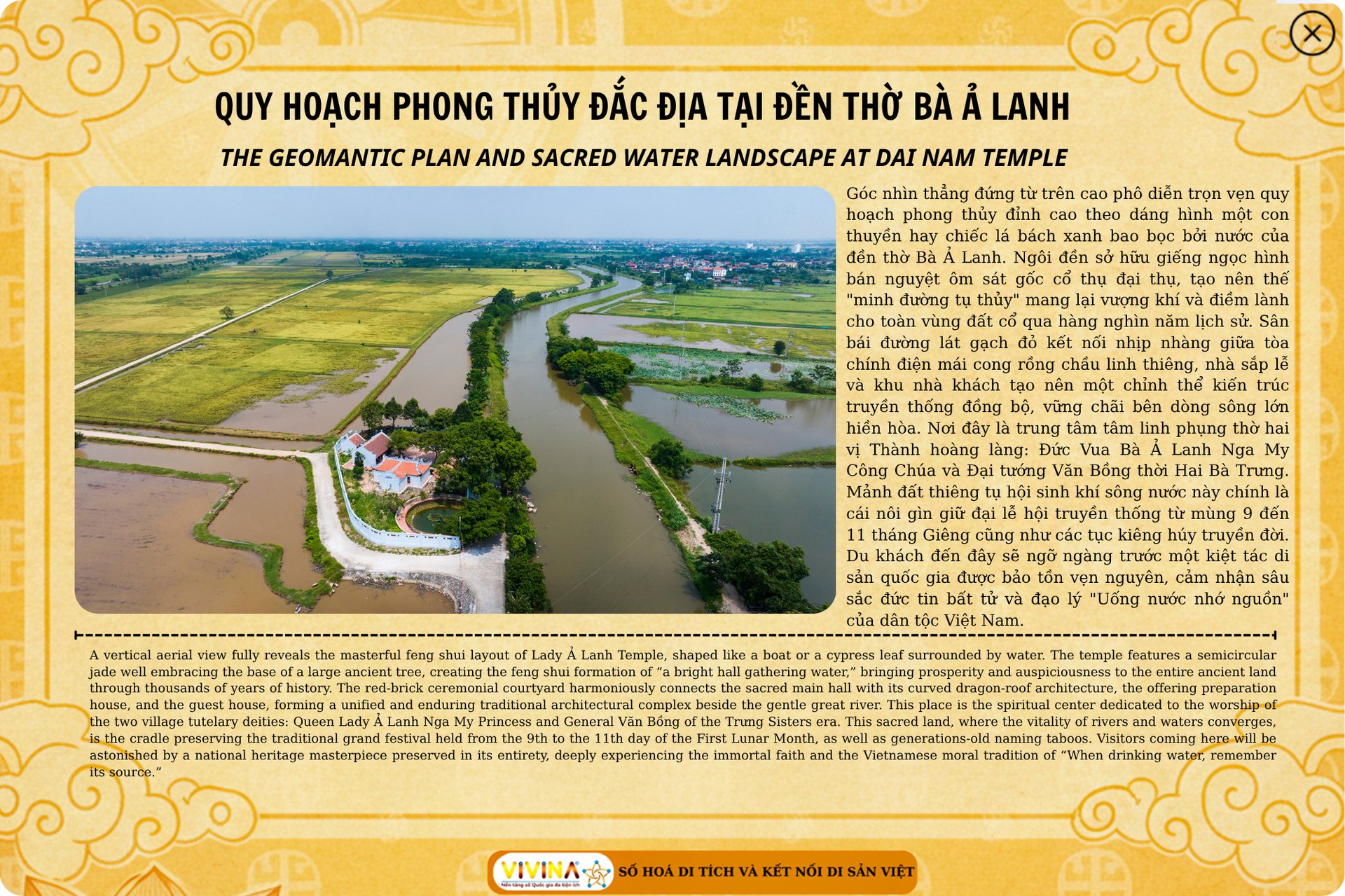
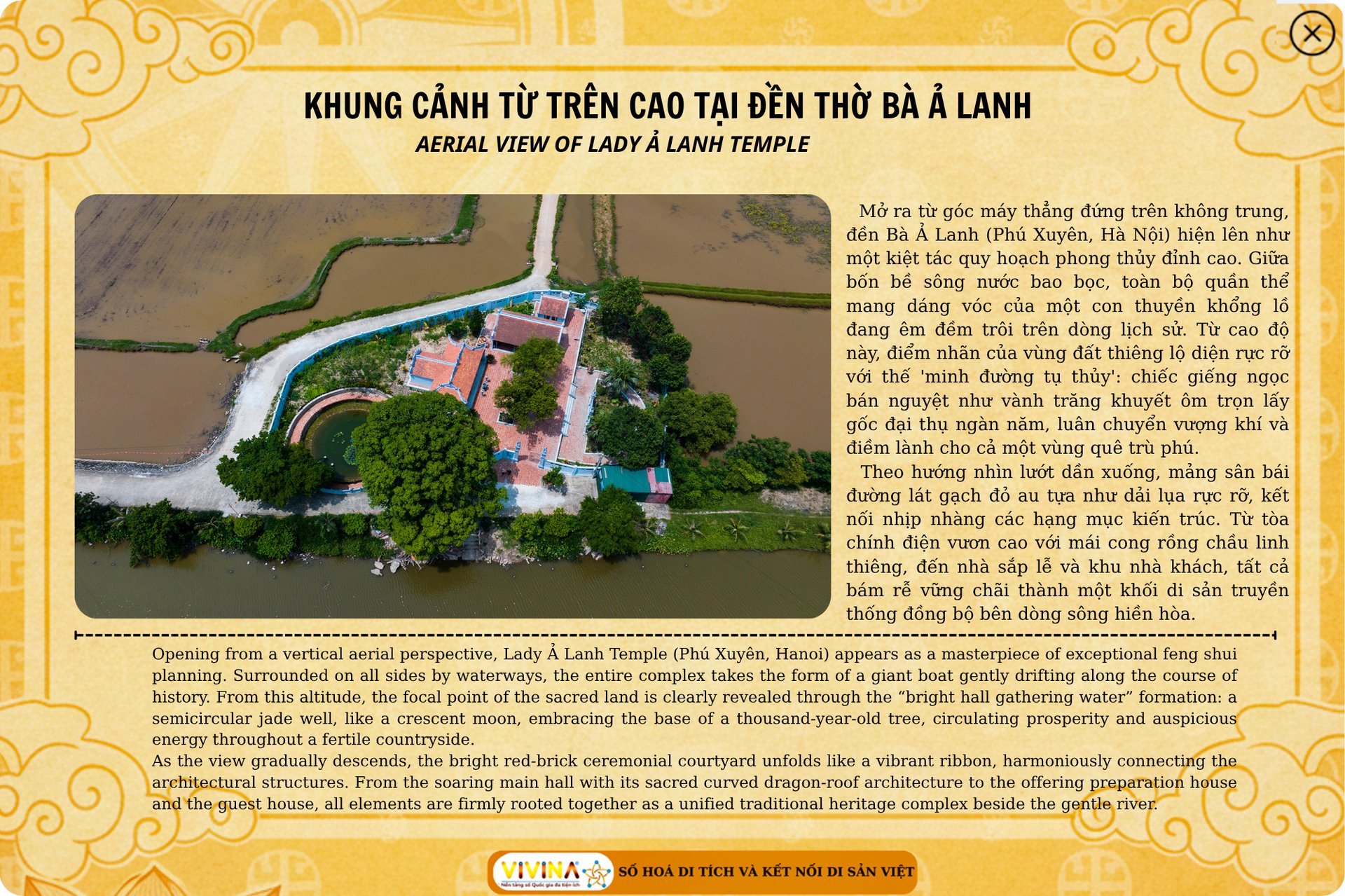
The Temple of Lady A Lanh (located in Dai Nam Quarter, Phu Xuyen Commune, Hanoi) is a vivid testament to the nation's rich culture and patriotic tradition. Recognizing its immense historical value, the temple was honorably ranked as a National Historical and Cultural Relic by the State under Decision No. 97/QD-VH (dated January 21, 1992), becoming a firm spiritual anchor for local people.
Viewed from above, the relic complex resembles the shape of a green banyan leaf floating on the water, positioned in the minh duong tu thuy geomancy layout. In front of the temple is the semicircular Ngoc Well embracing a thousand-year-old great tree and a gentle river; behind is an endless stretch of fields. All harmonize to create a peaceful energy field, fully preserving the site's vitality.
Passing the imposing blue-stone screen, visitors will admire the traditional architecture of the Northern Delta with bright red curved-tile roofs. The highlight in the temple courtyard is a pair of monolithic blue-stone elephants kneeling solemnly, like guardians watching over the sacred place.
The heart of the relic is the inner sanctuary worshiping two heroes: Her Majesty Queen A Lanh Nga My Princess and General Van Bong.
According to the surviving genealogy from the first year of Vinh Huu (1735), bearing the pain of her family being harmed by Governor To Dinh, at the age of 16, Lady A Lanh along with her family retainer Van Bong recruited more than 500 volunteers and advanced to the Hat River to join forces. After the uprising succeeded and reclaimed 65 citadels, she returned to her homeland to teach the people how to make a living, reformed rituals and etiquette, and was honored as Queen. When Ma Yuan's army invaded again, they fought tenaciously to their last breath to protect the territory.
To express gratitude for their merits in protecting the country and bringing peace to the people, the local people built a temple to worship them and have preserved it through generations. The temple still keeps 14 invaluable royal edicts from feudal dynasties.
Every year, from the 9th to the 11th day of the first lunar month, local people joyfully hold a festival with a grand palanquin procession and a solemn communal ceremony. The festival is not only an occasion to preserve local customs and strengthen neighborly ties but also to illuminate the nation's enduring principle of remembering the source when drinking water.
More Other places
- Other placesVerified
Gioi Duc Pagoda (Hong An Temple)
Ung Hoa Commune
5.0Free  Other placesVerified
Hai Giac Pagoda
O Dien Commune
5.0Free Other placesVerified
Phuong Bang Pagoda (Hung Long)
Son Dong Commune
5.0Free Other placesVerified
Sung An Pagoda, also known as Sung Khang Pagoda (Dong Ba Pagoda)
Thượng Cát Ward
5.0Free
