
Cong Thuong Temple, Dang Village, Hong Son Commune, Hanoi City
Introduction
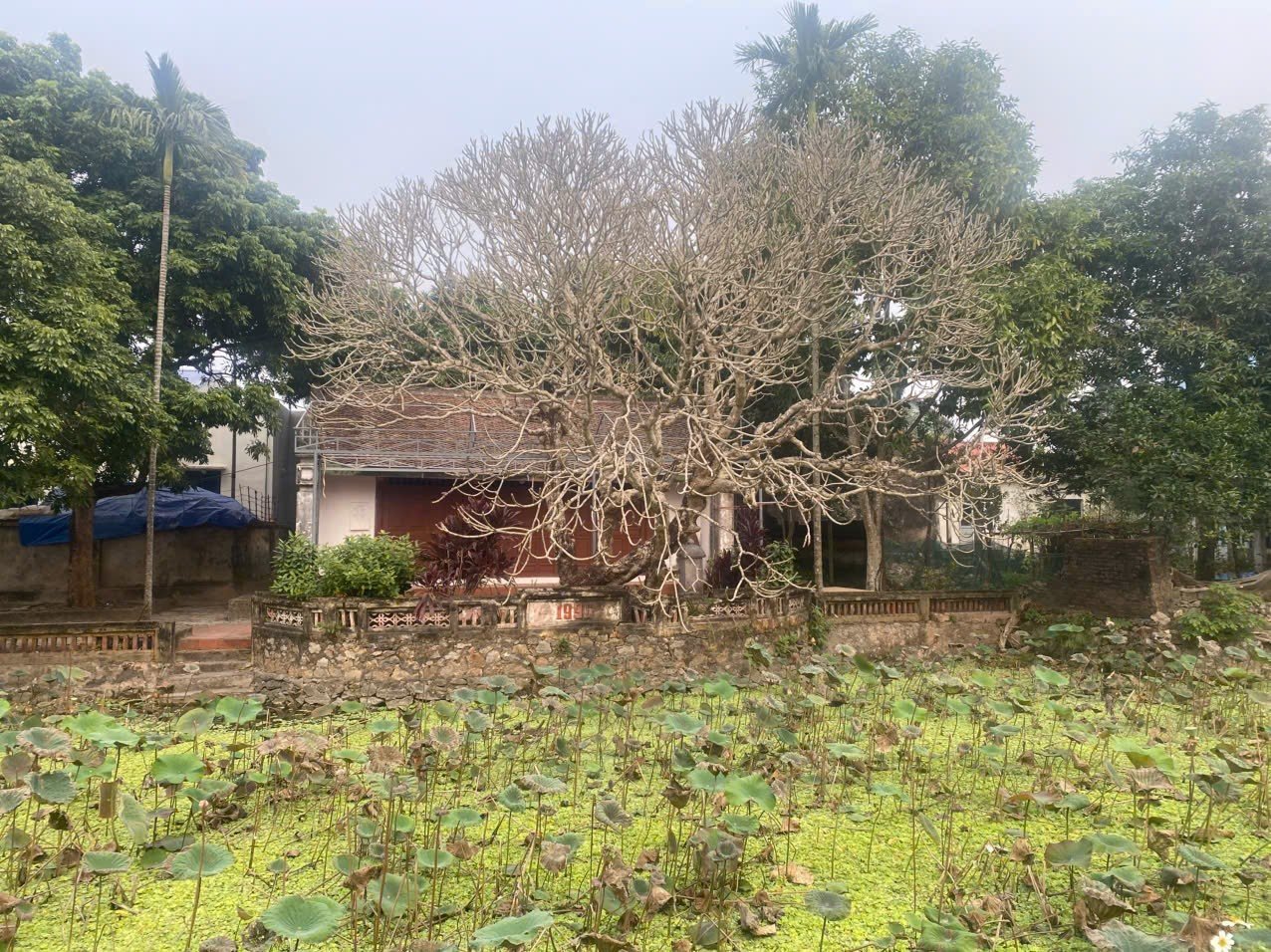
Cong Thuong Temple belongs to Trung Thuong Village, Hong Son Commune, Hanoi City
Cong Thuong Temple was ranked as a city-level historical relic under Decision No. 664/QD-UBND dated June 30, 1998, of the Hanoi City People's Committee
Cong Thuong Temple worships Bui Quoc Hung, a founding meritorious official of the Later Le dynasty. He was one of the 18 heroes who took part in the Lung Nhai oath, the first core of the Lam Son uprising led by Le Loi. During the resistance war against the invading Ming army, Bui Quoc Hung proved his military talent in besieging and pressing citadels. He was also a civil official who undertook important tasks, helping to win people's hearts and speed the resistance to total victory. After the great victory over the Ming army, Bui Quoc Hung held important positions that helped strengthen social discipline and the power of the centralized state and build an independent and autonomous nation, quickly restoring the country after many years of war devastation.
After his death, the people in the commune built a temple for perpetual incense and worship in memory of his merits to the people and the country.
At Cong Thuong Temple, in front of the temple is a square pond. The temple yard is rectangular and planted with ornamental plants, most notably the dai tree. In flowering season, the dai tree gives off a fragrant scent, suggesting the solemnity and purity of a place of worship.
The temple gate is built with square pillars and an openwork upper section forming a square lantern. Cong Thuong Temple was extensively renovated in the early 19th century in the Dinh-character layout, including the main hall, rear sanctuary, and communal house, strongly bearing Nguyen dynasty architectural style. Historically, however, the temple dates from the Le dynasty. The main hall has a three-bay structure, with both gable ends built up to the roof ridge; above are decorative bands, below are three-tiered brackets, and at the porch ends are pillars topped with a carved and embossed nghe in a facing posture. Around the building, brick walls create three rectangular doors; the three inner bays are connected, and three roof trusses support the roof in a hidden-column style. Crossbeams are supported by the walls. The trusses are made in a stacked style with secondary supports. Columns and trusses are smoothly planed and tightly joined, with edges molded in lines or bamboo-shoot patterns for firmness. The roof of the main hall is covered with mui tiles. The main hall is where the elders gather to discuss ritual affairs and where visitors come to make offerings. The rear sanctuary lies lengthwise, with its door connected to the main bay of the main hall. The rear part is a wall built up to the roof ridge. The rear sanctuary holds ritual objects such as a dragon throne and spirit tablet, wine flask, altar, ceremonial objects, and couplets. The trusses of the rear sanctuary are structured similarly to those of the main hall. Nearly 100 years later, the temple was rebuilt on a more spacious scale. This is clearly recorded in an inscription on a stone stele with a square body erected in front of the temple. The inscription reads: "The people of Cong Khe Commune, Bot Xuyen Canton, repaired the temple of General Le; the people set up a stele to pass it down to later generations."
Currently, the temple still preserves 02 royal edicts and many valuable artifacts such as an ancient incense burner, a set of bat bau, a stone stele, a pair of candlesticks, and ceremonial objects.
Every year, the 15th day of the 8th lunar month is the traditional festival day to commemorate his great merits. The temple management board organizes the festival over three days, the 14th, 15th, and 16th of the 8th lunar month, when the local people come to admire and make offerings in a joyful spirit, creating solidarity among the people of Hong Son Commune.



