
Dia Temple
Contents
Story
01Dia Temple Relic
1. 3D panorama
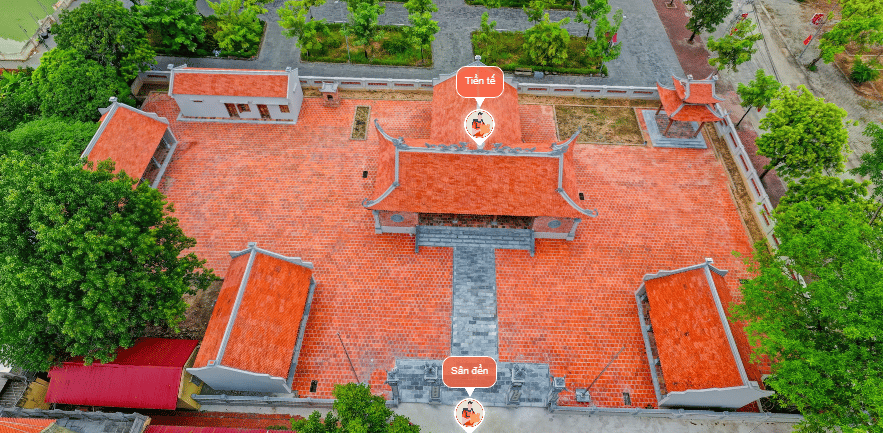
Dia Temple (Phuc Thinh commune, Hanoi city) is an ancient religious work located in the central land of the residential area. Since ancient times, this place has been the cultural activity center of the local village community. The relic complex consists of three main architectural items: the gate, the front hall, and the rear shrine, forming a complete architectural ensemble imbued with the traditional temple style of the Northern Delta. The temple worships Phu Dong Thien Vuong (Saint Giong) and Duc Linh Lang Dai Vuong - two deities with a special position in the minds of the residents of the Red River Delta. Dia Temple is one of the relics that still preserves the unique folk game “hat phet”, associated with the legend of training soldiers by Saint Giong in the past.
The temple's artifacts include altars, spirit tablets, palanquins, horizontal plaques, and couplets, all bearing the artistic style of the 20th century; all are lacquered and gilded, adding majesty to the altar. Below are arranged worship objects such as altars, incense burners, and candlesticks. Dia Temple is a basic architectural work that still retains traditional features, with a sturdy frame and roof trusses, reflecting the architectural and folk art level of the local community.
To commemorate the merits of Phu Dong Thien Vuong, every year Dia Temple holds a festival from the 7th to the 10th day of the first lunar month, and the 6th day is the Saint's descent anniversary at the temple. Here, the folk game “hat phet” is still preserved: young men in the village form a phet team of about 20 people, carefully selected with good moral character, and together with elders enter the temple to perform a ceremony to ask for the phet (made of wood, diamond-shaped, painted red). The hat phet team holds phet in the shape of boat oars and compete to sing and toss the phet out into the temple courtyard. In any year the phet falls to the ground, it is considered a good omen, bringing favorable business and good health to the villagers. Villagers say this game imitates a soldier-training exercise of Saint Giong in the past.
2. 3D interior
The interior space of Dia Temple arranges worship objects according to traditional rites, reflecting the value of worship of Saint Giong and Duc Linh Lang Dai Vuong. In the center of the rear shrine, a brick altar is built with a statue of Duc Phu Dong Thien Vuong - Saint Giong, expressing the image of the national hero in the people's mind. In addition, the rear shrine also jointly worships Duc Linh Lang Dai Vuong - according to legend, a prince son of King Ly Thanh Tong, who when foreign invaders threatened the territory bravely rose up to drive out the enemy and protect the country; after becoming a deity, he was worshipped by people in many places and honored as a tutelary god. The joint worship of two deities at Dia Temple reflects the tradition of honoring anti-foreign-invasion heroes of the Northern Delta residents.
The rear shrine is a single longitudinal house with a wooden roof. Worship objects in the rear shrine include altars, spirit tablets, incense burners, candlesticks, and offerings; all are solemnly arranged according to traditional worship rites, creating a deep and solemn spiritual space.
3. Aerial panorama
Dia Temple belongs to Dia village, Phuc Thinh commune, Hanoi city, located in the ancient land along the Red River, an area with a long history and culture associated with the legend of Saint Giong driving out the Yin invaders. The temple is located on the central land of the residential area, which since ancient times has been the center of cultural and religious activities of the local village community.
In the minds of Vietnamese people, Saint Giong is the pride of the Vietnamese nation, the embodiment of the spirit of great national unity: when enemies come to the house, even the old and the young, men and women all participate in fighting the enemy, contributing effort and property to drive out foreign invaders and firmly protect national independence. In addition, the legend of Saint Giong also contains the philosophical value of survival of the Vietnamese nation, while educating future generations in the tradition of solidarity, patriotism, and love for the people. With deep humanistic meaning and value, in 2010, the Saint Giong festival was recognized by UNESCO as a representative intangible cultural heritage of humanity.
4. Gate
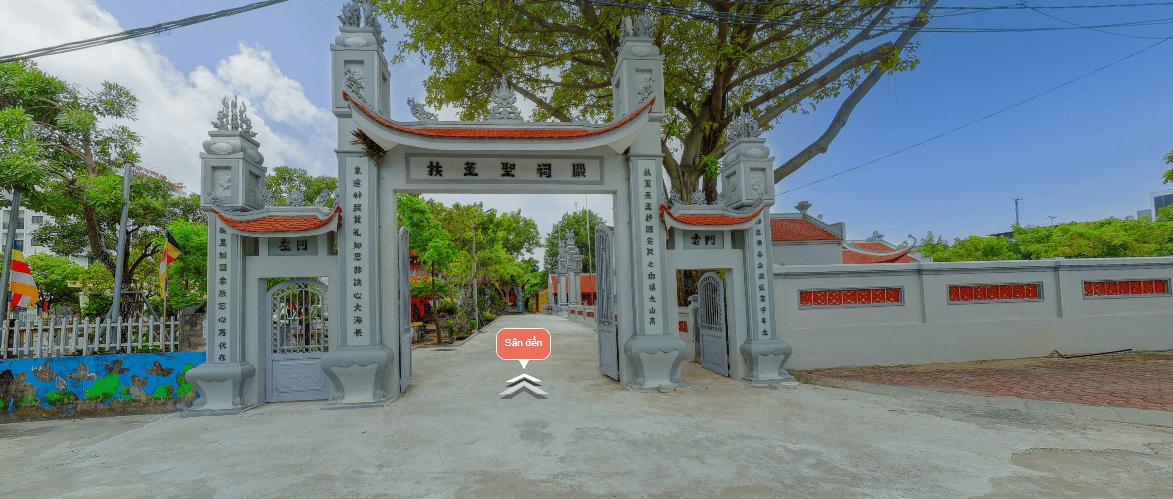
The gate of Dia Temple is built in the four-pillar style, with two large pillars and two small pillars opening three entrances to the relic. This is the opening architectural item, marking the boundary between ordinary space and the sacred place of worship. The pillars are built in traditional style; the tops are decorated with ancient architectural motifs, and the bodies are carved with Chinese-character couplets praising the merits of the deities worshipped at the temple. The gate not only defines the space but also serves as an architectural highlight, guiding visitors and local people into the pure and solemn spiritual space of the temple. Beyond the gate is a wide brick-paved courtyard where community activities and solemn rituals take place during the annual festival.
5. Temple courtyard
The temple courtyard is an open space between the gate and the front hall, serving as a transition between the ordinary space outside and the sacred place of worship inside. The courtyard is paved with bricks, spacious and airy, and is where many religious and community cultural activities take place. During the annual festival (from the 7th to the 10th day of the first lunar month), the courtyard is where incense-offering and deity-worship ceremonies are held and especially the folk game “hat phet” – a precious intangible cultural feature that few places still preserve. Outside the festival, the courtyard is also a space for cultural and sports activities, connecting the local community.
6. Front hall
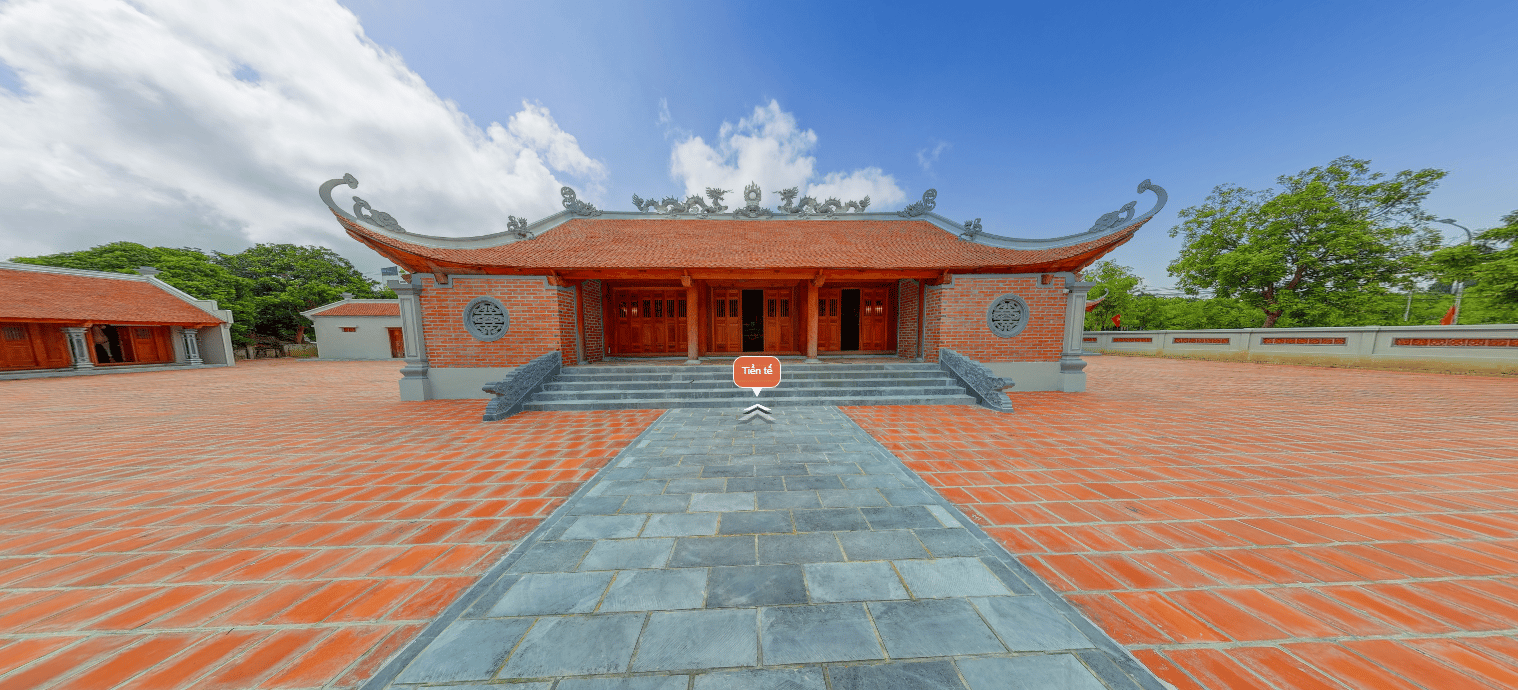
The front hall of Dia Temple is built in the traditional architecture of Vietnamese villages, with three bays and two wings, and a curved roof. In the center of the roof ridge is a decoration of two dragons flanking a sun; the roof edges are decorated with dragons holding the ridge, the corner sections are decorated with nghê figures, and the edges of the four roof corners are decorated with leaf dragons in a running-down posture with heads turned toward the roof ridge. The four roof corners are decorated with curved dao blades with soft, graceful lines – characteristic of Northern Delta communal house and temple architecture. The temple roof is covered with traditional tiles; the front opens with a folding-door system, above which are wooden balusters.
The center of the front hall is made about 40 cm lower than the two sides as a place for rituals. This is the space for organizing the most important worship ceremonies of the temple, where the ritual committee and local people perform incense-offering and deity-worship rites on important occasions. The front hall architecture reflects the skillful hands of folk artisans in building a religious work, harmoniously combining aesthetics and worship function.
7. Rear shrine
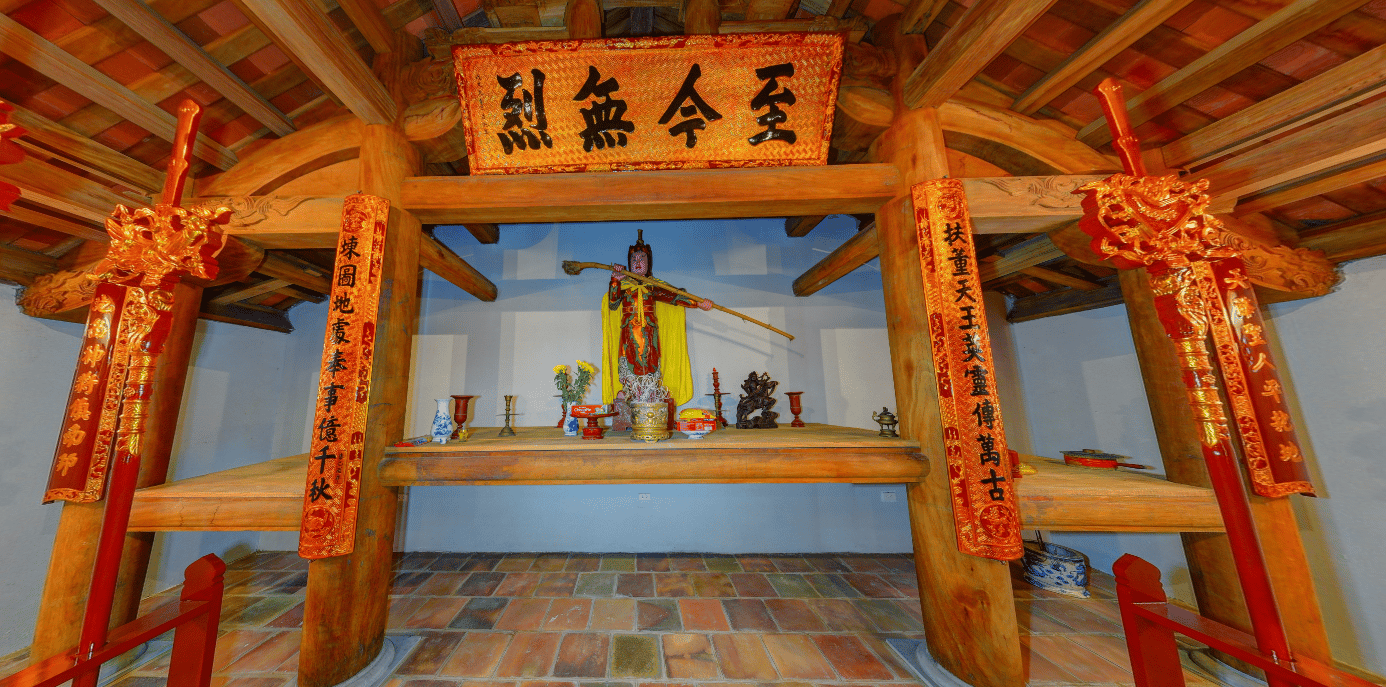
The rear shrine is a single longitudinal house with a concrete roof. In the center of the rear shrine, a brick altar is built with a statue of Duc Phu Dong Thien Vuong – Saint Giong. This is the most sacred space of the temple, where the statue of the legendary national hero who drove out the Yin invaders and protected the territory of Vietnam since ancient times is enthroned. In addition, the rear shrine also jointly worships Duc Linh Lang Dai Vuong, a deity who had the merit of fighting foreign invaders under the Ly dynasty. Worship objects in the rear shrine include altars, spirit tablets, incense burners, candlesticks, and offerings; all are solemnly arranged according to traditional worship rites, creating a deep and solemn spiritual space.
Dia Temple was ranked as a City-level historical and cultural relic under Decision No. 522/QD-UBND dated January 28, 2019.



