
Mang Son Temple
Good to know
- It is advisable to arrive early for a spacious experience
- Free
- Convenient access by taxi or bus. Bus 74.
Introduction
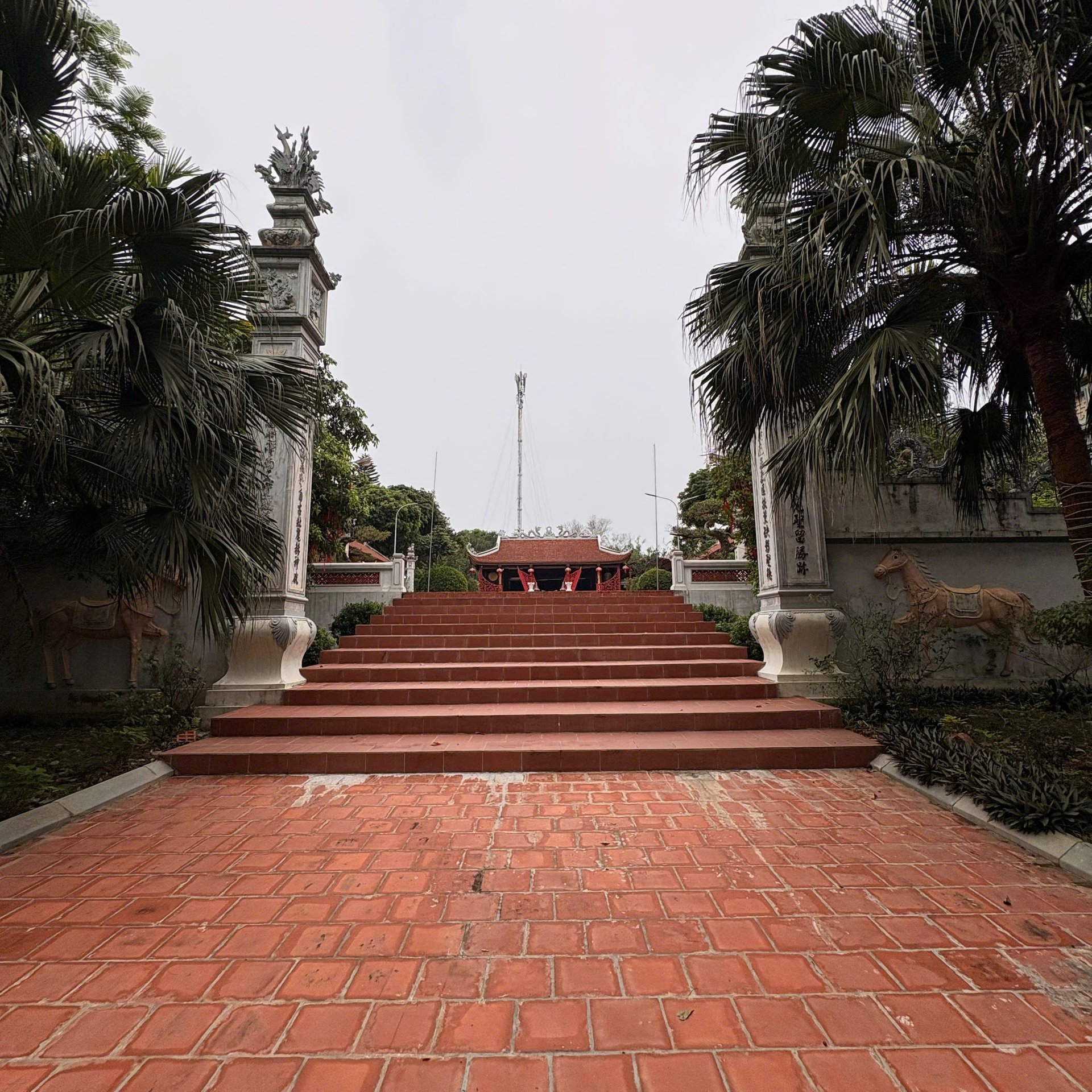
INTRODUCTION TO THE MANG SON TEMPLE RELIC SITE
Mang Son Temple is a historical relic and work of architectural art of outstanding value in Doai Phuong Commune, Hanoi. The temple is dedicated to Saint Tan Vien, one of the deities with a special place in Vietnamese folk religious life, revered as the leading saint in the “Four Immortals” of Vietnamese folk belief. According to tradition, Saint Tan Vien was a deity credited with controlling floods, protecting crops, and helping the people enjoy a peaceful and prosperous life.
Origin and legend
According to local legend, Saint Tan Vien traveled from Ba Vi Mountain to visit various lands. When he arrived in the former Son Dong region, he found beautiful scenery, gentle people, and favorable living conditions, so he stayed and had a palace built in the Mang Son hill area. The surrounding people learned the craft of hunting birds and animals, and their lives increasingly developed.
After the Saint left his homeland, to commemorate his merits, local people established a temple and maintained incense offerings and festivals over many generations. Since then, Mang Son Temple has become an important place of religious activity for the community.
Mang Son Temple is also known as Nam Cung Palace, one of the system of palaces dedicated to Saint Tan Vien Son Thanh associated with the Tan - Ba Vi mountain region. According to folk tradition, the palaces are arranged by direction, including Chinh Cung – Thuong Temple on Ba Vi Mountain; Dong Cung – Va Temple; Tay Cung – Ha Temple; Bac Cung – Tay Dang Communal House; and Nam Cung – Mang Son Temple.
Historical, cultural, and architectural values
Mang Son Temple not only has religious value but also preserves many historical, cultural, and artistic traces from various periods. The relic site still keeps many valuable artifacts, antiquities, and ritual objects, including a stone stele made in the 7th year of Canh Hung (1746), a pair of nghe lions in the artistic style of the 17th century, along with a system of royal edicts, thrones, tablets, incense burners, horizontal lacquered boards, and ritual objects dating from the 19th century to the early 20th century.
The architectural, sculptural, and decorative values at the relic site reflect the formation, development, and preservation of the religious life of the community in the Doai region. Those values have been safeguarded and inherited through many generations and have become an important part of the local cultural heritage.
Mang Son Temple Festival
Every year, the Mang Son Temple Festival is held from the 6th to the end of the 8th day of the first lunar month, with the 7th and 8th days being the main time of the festival. This is an occasion for local people and visitors from near and far to come to the relic site to offer incense, commemorate Saint Tan Vien, and pray for national prosperity and public peace, favorable crops, and a peaceful and happy life.
The Mang Son Temple Festival is a traditional cultural and religious activity with strong reach in the community, contributing to maintaining customs and practices, educating about tradition, and connecting the local community.
In the folk tradition of the Doai region, there is a saying:
“Even if one eats rice mixed with cassava and sweet potato, one should not miss the Doai region festival and Mang Temple.”
The folk verse expresses the people's attachment to the festival and Mang Son Temple relic over many generations.
Values and relic ranking
With outstanding historical, cultural, religious, architectural, sculptural, and artistic values, Mang Son Temple together with Son Trung Communal House and Son Dong Communal House forms a relic complex of outstanding value in the Doai region.
On April 15, 2022, the complex of Mang Son Temple, Son Trung Communal House, and Son Dong Communal House was ranked as a National Relic by the Ministry of Culture, Sports and Tourism under Decision No. 891/QD-BVHTTDL.
Being ranked as a national relic affirms the historical, cultural, and artistic value of the relic site; at the same time, it sets the requirement to continue preserving, safeguarding, and promoting the heritage values, meeting the people's needs for religious and cultural activities and serving traditional education for present and future generations.
Mang Son Temple today is not only a place preserving the historical, cultural, and religious traces of the Doai region but also a spiritual cultural space closely tied to community life, contributing to enriching the cultural heritage system of Doai Phuong Commune and Hanoi City.
More Other places
- Other placesVerified
Gioi Duc Pagoda (Hong An Temple)
Ung Hoa Commune
5.0Free  Other placesVerified
Hai Giac Pagoda
O Dien Commune
5.0Free Other placesVerified
Phuong Bang Pagoda (Hung Long)
Son Dong Commune
5.0Free Other placesVerified
Sung An Pagoda, also known as Sung Khang Pagoda (Dong Ba Pagoda)
Thượng Cát Ward
5.0Free
