
My Tu Temple
Good to know
- It is advisable to arrive early for a spacious experience
- Free
- Convenient to travel by taxi or bus.
Introduction
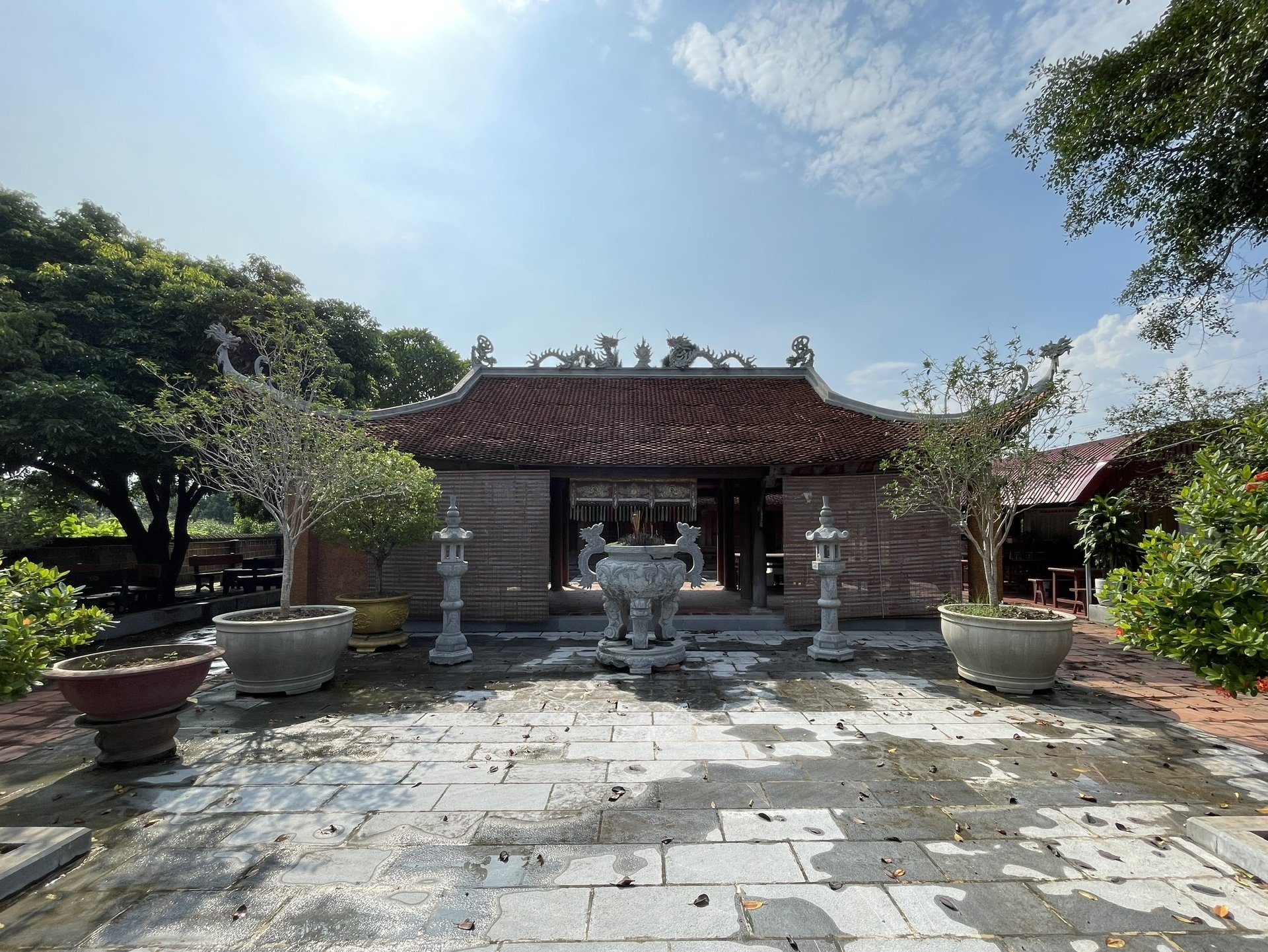
My Tu Temple: A Mark of National-Level Artistic Architecture & Legend of the Holy Mother in the Doai Region
Nestled peacefully in the tranquil space of Kim Bong village, Tan Xa commune, Thach That district, My Tu Temple (also known as Thien Tien Thanh Mau Temple or Anh Linh Temple) is a typical religious architectural work of the capital. It worships Holy Mother Lieu Hanh Thien Tien Princess – one of the "Four Immortals" of Vietnamese folk belief. With outstanding historical and aesthetic values, on November 24, 2001, the temple was officially ranked as a National Architectural and Artistic Monument by the Ministry of Culture – Information (now the Ministry of Culture, Sports and Tourism).
Contents
Story
01Founding Legend and Marks of Royal Dynasties
The genealogy written in 1572 by Nguyen Binh, a senior scholar of the Dong Cac Academy, states that My Tu Temple was founded in the Le era and is associated with miraculous legends. Legend has it that Mr. Nguyen Cong Tai – a son of Kim Bong village who held the position of Diem Binh in the Son Tay region – together with 13 court soldiers, was ordered to destroy the shrines of Lord Tien in Hoanh Son (Van Cat) and unfortunately died. Thanks to Lord Tien's tolerance and power, they were brought back to life. Grateful, he returned to his homeland, chose an auspicious plot of land, and built a shrine. The reigning king granted 100 quan in money for the people of Kim Bong to build the shrine, laying the first foundation for My Tu Temple.
In the reign of King Le Trang Tong, when Grand Marshal Nguyen Xi was on a secret journey to pray to the gods for help in pacifying the Mac dynasty, as he passed through Kim Bong village he witnessed a strange omen: a large snake wearing a five-colored hat fell from the sky and slithered straight into the temple. That night, the Grand Marshal dreamed that Lord Tien appeared and promised divine support. In fulfillment of the dream message, after winning the battle, King Le Trang Tong bestowed many laudatory titles praising the sacred power of the Holy Mother and granted 1,000 quan in money to Kim Bong village to repair and expand the temple more grandly.
02Feng Shui Space and the "Dinh" Character Architectural Art
My Tu Temple sits on a high mound with a beautiful "Golden Turtle's Back" position. The feng shui space around the temple is enclosed by the Azure Dragon guarding on one side and the White Tiger embracing on the other, with a hairpin-shaped cushion behind and two gentle streams converging in front.
The temple's overall layout is built in the shape of the "Dinh" character (丁), divided into four main sections with exquisite woodcarving art:
Main worship hall: It consists of three bays and two side wings with a four-sloping-roof structure, four curved eaves soaring into the air, surrounded by a rustic and ancient laterite wall system. The roof trusses are made in the upper giao chien lower ke chuyen style, carved with leaf and seal-script motifs in a strong Nguyen-era architectural style.
Main Temple (Worship Hall): It consists of three bays built in the gable-ended wall style, roofed with traditional ri tiles. The ridge trusses are structured in the gia chieng, nghe ke style, carved with vivid small dragon heads holding jewels. On the first beam of the Worship Hall, traces of the founding date in the third month of the At Mui year of the Le era are still preserved.
Central Court: Connecting the Main Temple and the Rear Palace, it stands out with the solemn great plaque "Anh Linh Tu". The greatest artistic highlight of the Central Court is the system of carved brackets featuring dancing phoenixes, dragon-horses, and especially a bracket carved with a vividly human face transforming into a dragon, clearly expressing the 17th-century Le dynasty carving style.
Rear Sanctuary: The most sacred space consists of four bays built of sturdy laterite. At the center is a large, dignified wooden shrine with three ancient statues, including Thien Tien Thanh Mau and two attendants. The Chinese characters on the first beam of the Rear Palace continue to record the dates of founding and restoration in the Binh Ty year of the Le era.
03Treasure Trove of Relics and Han-Nom Heritage
Through centuries of change, My Tu Temple has preserved a rich system of relics and antiquities. Beside the three dignified ancient statues are two exquisitely carved wooden incense tables (one in Le style, one from the Nguyen era). The ritual objects also include an 18th-century glazed ceramic incense bowl, embroidered curtains, a van stand, a bronze gong, and a bronze censer.
In particular, the temple still keeps an invaluable treasure of Han-Nom heritage, including: 1 Han-character genealogy, 1 Nom-character genealogy, 2 stone steles for rear worship, collections of ancient ritual texts, and 2 intact Nguyen-era edicts. The worship space is made more splendid by the great plaque and six pairs of parallel sentences lacquered in vermilion and gilded or silvered, the most notable being the couplet praising the Holy Mother's merits:
"The Le dynasty granted edicts and many honorable titles; My Tu protects the southern sky,
Descending into the mortal world in glorious sacred power, she aids the nation and royal house."
Historical Marks and the Preservation Journey
Not only a spiritual mainstay, My Tu Temple was also a red address during the resistance. Throughout the anti-French period (1946–1947 and the temporary occupation phase), the temple was a safe evacuation site for the people, the secret working headquarters of the Tan Xa Commune People's Committee, and a storehouse for documents, weapons, and ammunition of the guerrilla forces and main-force troops.
To preserve this invaluable architectural heritage, in 2014, the Thach That District People's Committee established a project to restore and embellish the entire temple with a total investment of VND 12.96 billion. The restoration process was carried out methodically to preserve the ancient essence intact. On January 30, 2021 (the 18th day of the 12th lunar month of the Canh Ty year), the restoration project was officially inaugurated, restoring My Tu Temple to a spacious appearance. Today, the relic not only meets the religious needs of the people of Tan Xa but is also ready to welcome visitors and researchers to worship and learn about a brilliant cultural and artistic scenic site of the Doai region.
More Other places
- Other placesVerified
Gioi Duc Pagoda (Hong An Temple)
Ung Hoa Commune
5.0Free  Other placesVerified
Hai Giac Pagoda
O Dien Commune
5.0Free Other placesVerified
Phuong Bang Pagoda (Hung Long)
Son Dong Commune
5.0Free Other placesVerified
Sung An Pagoda, also known as Sung Khang Pagoda (Dong Ba Pagoda)
Thượng Cát Ward
5.0Free
