
Thanh Nhan Temple
Introduction
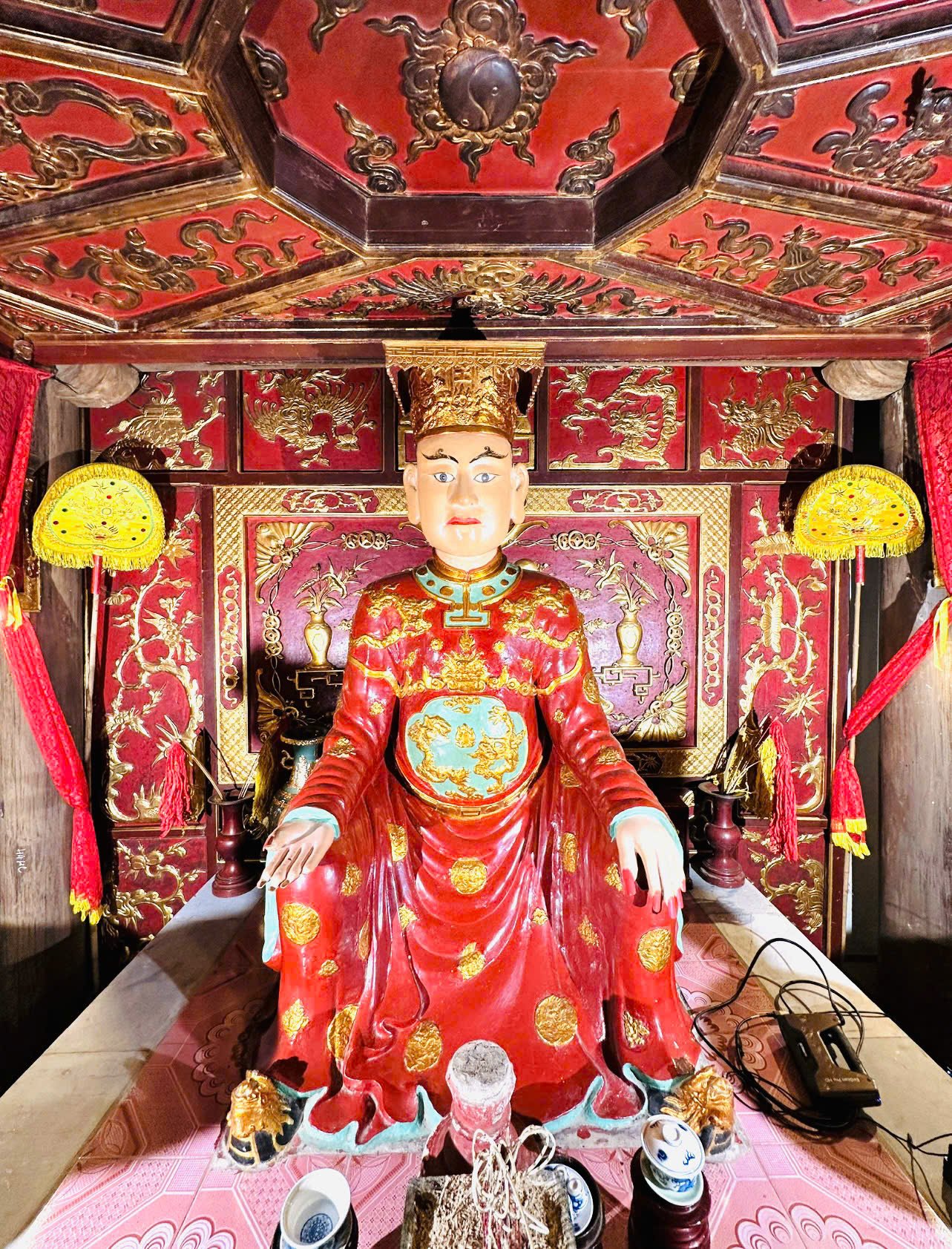
Thanh Nhan Temple was built facing south-southwest on a large hill, looking out toward the Ca Lo River. Since ancient times it has had only one name, Thanh Nhan Temple, although the locality has many times changed its name and administrative boundaries. The temple has existed for a long time; according to royal edicts and inscriptions recorded at the temple, it already existed by the late 16th century. The temple's legend also recounts that it has existed since ancient times, but in 1947 the French colonialists and their lackeys destroyed the temple's architecture. The temple was ranked at national level under Decision No. 168-VH/QG dated March 2, 1990.
Thanh Nhan Temple is also called Tam Tong Temple because it worships Phu Dong Thien Vuong, and three tong (former administrative units) all serve the festival and worship together. Today it involves several villages in three communes: Noi Bai, Kim Anh, and Quang Minh. Due to administrative boundary conditions and ancient custom, Thanh Nhan, Thach Loi, and Trung Na villages still maintain the role of hosts, jointly holding ceremonies and directly preserving the temple.
Thanh Nhan Temple commemorates Phu Dong Thien Vuong, Saint Giong, and preserves the event when, while fighting invaders, Saint Giong came through here to rest and recruit more troops from the villagers.
Every year on the 6th day of the first lunar month, the temple holds a festival commemorating the day Phu Dong Thien Vuong passed through, held a feast for his troops, and stayed on his way to fight the invaders. Villagers still hand down the story of Phu Dong Thien Vuong renaming the village: it is said that the village was previously called Thanh Khon; when he passed through and rested in the village, he saw beautiful scenery, a peaceful and prosperous people, and a cheerful, leisurely atmosphere, so he changed the village's name to Thanh Nhan, and the villagers have kept it ever since.
In the local revolutionary history, the temple is also a witness to many local historical events.
Thanh Nhan Temple has four shrines arranged in the style of the character 'tam', with a rear shrine at the back with a hammer-shaped extension. All four shrines are on ground along the longitudinal axis and follow the rising elevation of the hill, including: the front offering hall, the third shrine, the second shrine, and the first shrine (that is, the rear shrine).
The temple currently preserves many precious artifacts, such as: a bronze statue of Phu Dong Thien Vuong placed in the center of the first shrine, that is, the temple's rear shrine; a pair of white and red divine horse statues cast in bronze and a wooden horse groom; 01 book of legends written in the first year of the Hong Phuc era (1574); 07 of the oldest royal edicts made in the 4th year of Chinh Hoa (1683), along with other edicts from the 10th year of Vinh Thinh (1710), 2nd year of Vinh Khanh (1730), 1st year of Canh Hung (1740), 1st year of Chieu Thong (1787), 2nd year of Minh Menh (1821), and 4th year of Thieu Tri (1844). The edicts of the kings all confer on Phu Dong Thien Vuong the title of upper-grade deity with many honorific titles; 01 book of village conventions and local customs; 02 sets of eight-carrier palanquins lacquered and gilded, 19th century; 01 beautifully carved palanquin; 02 pairs of Le dynasty stone dragons; 01 pair of clouds transforming into dragons; 01 pair of dragons with horse saddles. According to a stele erected in the Duc Long era (1634), these dragons are mentioned and were erected in 1629; and many other valuable worship objects.



