
Upper Temple
Introduction
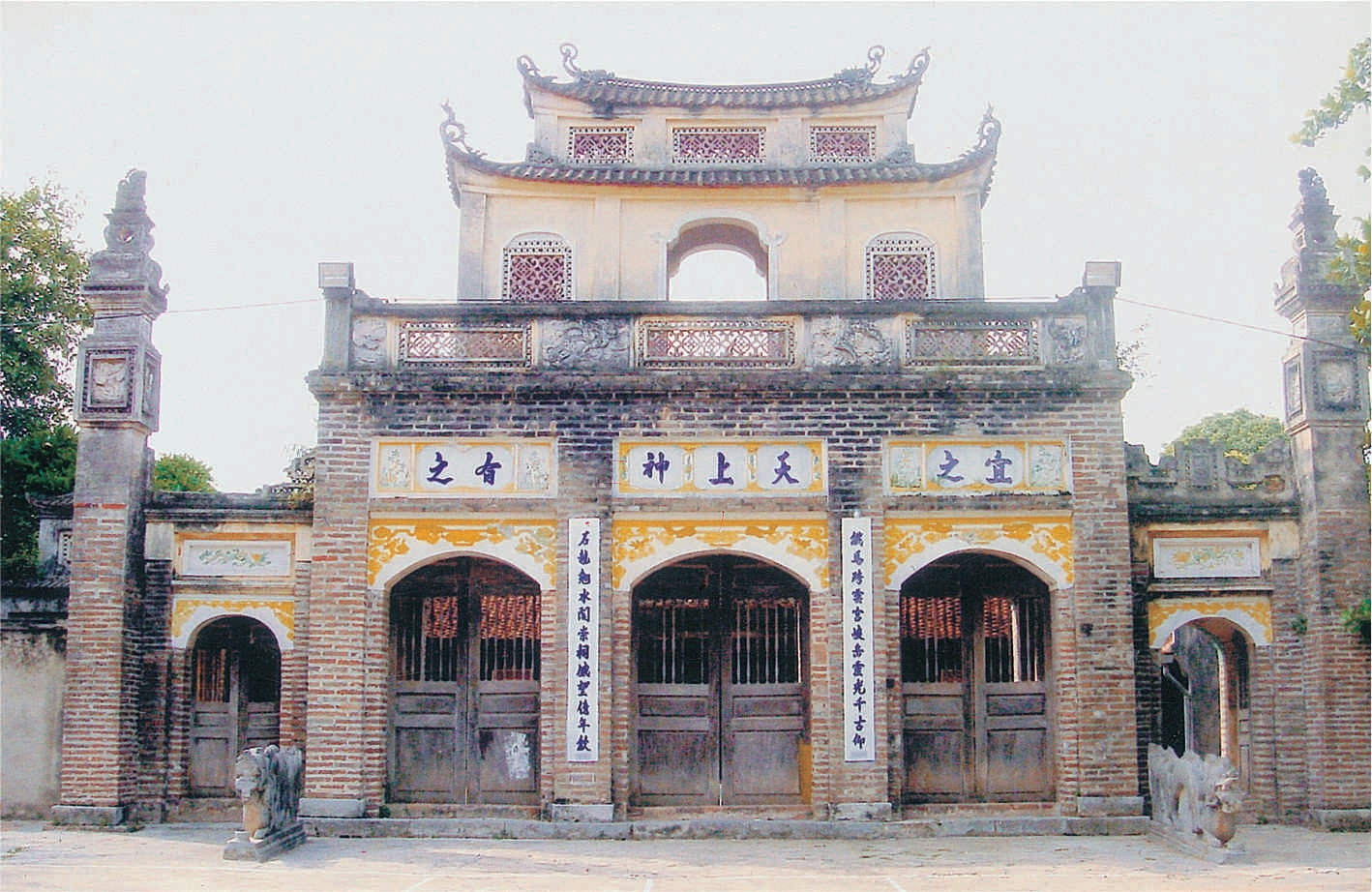
Upper Temple, also known as Giong Temple or Phu Dong Temple, is the place of worship of Saint Phu Dong Thien Vuong. Upper Temple covers an area of 26,581.2 square meters in Phu Dong 1 hamlet. According to legend, the temple dates from the Hung King period and was built on the foundation of Giong’s mother’s old house. After moving the capital to Thang Long, King Ly Cong Uan bestowed on the hero of Giong village the title Xung Thien Dong Thien Vuong Thanh Vi and ordered the repair of this place of worship under the name Hien Linh Hall, and also decreed that local dignitaries and people annually organize the Saint Giong battle festival to remember and acknowledge his merits, granting the people of eight giap 100 mau of rice fields so that the proceeds could be used for offerings throughout the year.
The Upper Temple complex includes a water pavilion, five gates, a square pavilion, two front halls and a rear sanctuary. In front of the temple courtyard is the large Roi Pond, where folk games and water puppet performances take place during the festival. The Thuy Dinh water pavilion was built in the Ly dynasty and renovated in the Le dynasty. Across the brick courtyard is the Nghi Mon gate, in the center above which hangs the great inscription Thien Thuong Than. On either side are a pair of imposing, sturdy stone dragons, along with a pair of stone lions dated to the year At Dau, Vinh Thinh era, i.e. 1705, under King Le Du Tong. In the 12-bay rear sanctuary is a 3 m high statue of Saint Giong, flanked by six statues of civil and military mandarins, two kneeling figurines, and four attendants of the four guardians.
The temple still preserves 21 royal edicts (12 from the Le dynasty, 3 from the Tay Son dynasty, and 6 from the Nguyen dynasty). The earliest edict dates to the 5th year of Duc Long (1634). The temple also has many valuable artifacts, such as: a throne from the Le Trung Hung period (17th century) with intricate carvings; a pair of birds in Chinese art style donated by Dang Thi Hue; an incense burner; bronze nghe lions; two swords; and a couplet donated by the poet Nguyen Du and his brother in 1818, ...



