
City-level relic, Cau Tro Temple, Phuc Tho Commune
Good to know
- You should arrive early for an open and airy experience
- Free
- Convenient access by taxi or bus.
Introduction
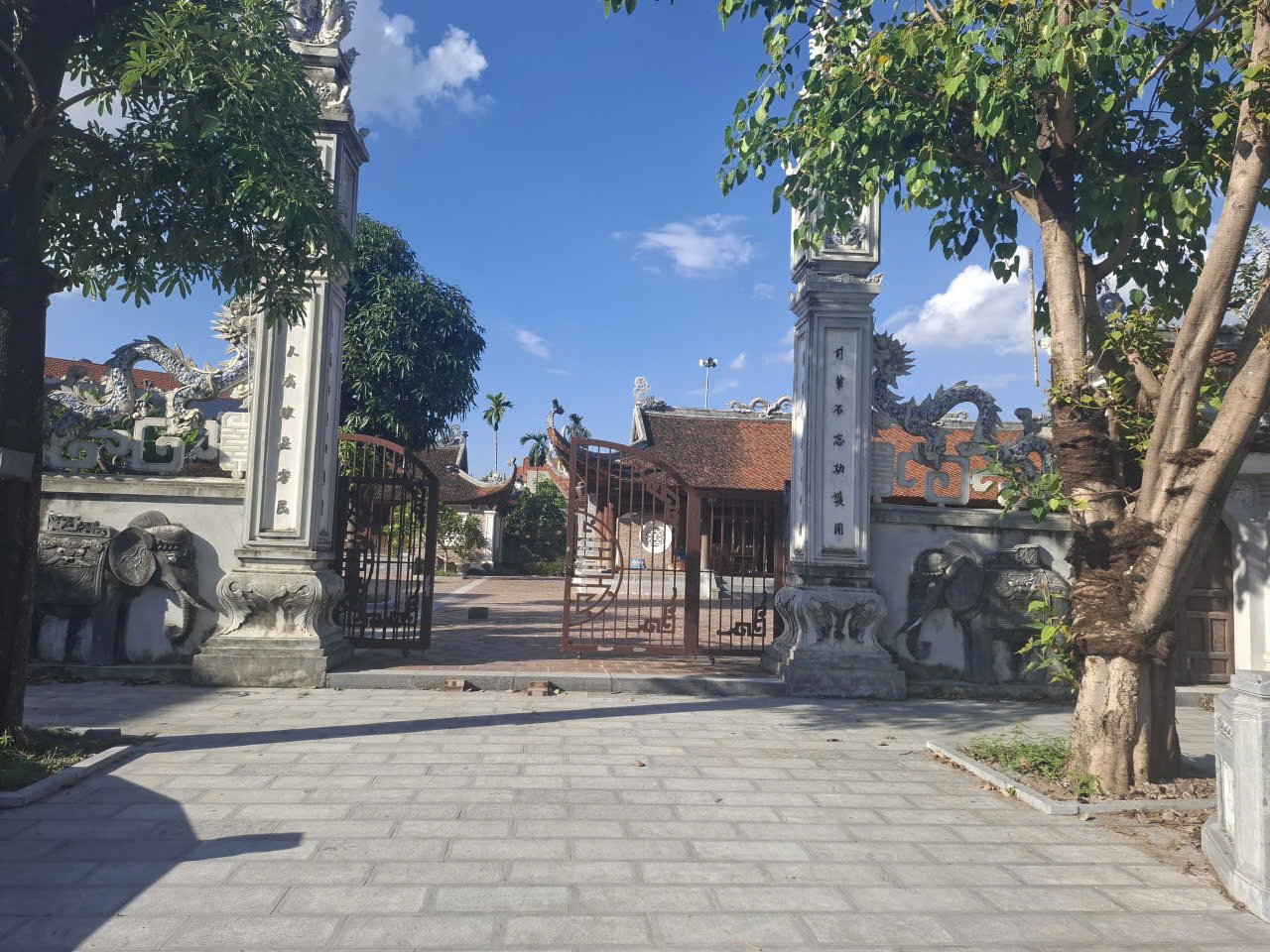
City-level relic, Cau Tro Temple, Phuc Tho Commune
Cau Tro Temple, Gia Hoa Village, now in Hoa Trung Hamlet, Phuc Tho Commune, Hanoi City, is located on a plot of land opposite the headquarters of the Party Committee, People's Council, People's Committee, and Vietnam Fatherland Front Committee of Phuc Tho Commune.
Cau Tro Temple stands on beautiful land and faces southwest. According to accounts by elderly residents of Gia Hoa Village and some documents about Cau Tro Temple, the original Cau Tro Temple was located close to Cau Tro, with a structure in the 'tien dao, hau doc' architectural style. In particular, at the temple gate there was a large, tall, wide-canopied ancient banyan tree that created a truly picturesque landscape, so every passerby stopped here to rest.
In 1947, due to the scorched-earth resistance policy, Cau Tro Temple was left with only its foundations, along with the legend of Cau Tro to the present day. After the August Revolution of 1945, in order to restore traditional culture and promote national cultural identity, Cau Tro Temple was rebuilt on the grounds of Gia Hoa Village Communal House—which had also been destroyed under the scorched-earth resistance policy (this is the current grounds of Cau Tro Temple relic)—using funds donated by local people and visitors from near and far.
By 2023, the State had invested in the overall restoration and embellishment of the relic with state budget funds, including: the ceremonial gate, front ceremonial hall, main temple (Great Worship Hall and Rear Sanctuary), Great Communal House (Cau Tro Communal House), left and right side pavilions, ritual preparation house, joss paper burning shrine, auxiliary items, and technical infrastructure throughout the relic grounds. After more than a year of restoration and embellishment construction, the relic was completed and put into use in 2024 to serve the local people's spiritual and cultural needs.
According to documents of the Ministry of Rites of the Le Dynasty about the legend of Princess Trung Tien in the Gia Hoa area: Cau Tro Temple worships Princess Trung Tien Y Duc, daughter of King Hung Chieu Vuong (the seventh Hung King). King Hung Chieu Vuong had 33 princes and 18 princesses. Among the 18 princesses was one named Y Duc, titled Trung Tien. The princess was the daughter of the king's third wife, named Dam Huyen Van. When the princess was 15 years old, her mother passed away. After completing the three-year mourning period, the princess asked her father the king for permission to travel through different regions of the country. When she arrived in the Gia Hoa area, she saw that the rivers here wound beautifully and the scenery was lovely, so she stopped and stayed. The princess bought land and established a royal residence here. The princess returned to the Court after a long time and then died. In the Tran Dynasty, the Yuan invaders attacked. King Tran Thanh Tong led troops to resist at Bach Hac; during the retreat, he became stuck in a swamp near the shrine of Princess Y Duc. King Tran Thanh Tong then performed a ceremony praying to heaven, earth, and the deities for assistance, and suddenly a white cloud descended, and within that cloud was a goddess. The king asked, and the goddess replied: I am the daughter of King Hung Chieu Vuong, named Y Duc, titled Trung Tien, and in a previous life was conferred as a beneficent deity here. Now the country faces calamity, and I ask to be allowed to help and establish some merit. As soon as she finished speaking, a Cho tree trunk rose up and spanned the swamp; the king and his generals and soldiers in turn walked on that trunk and crossed safely. When the entire army had crossed, the Cho tree disappeared, and the king was amazed. After defeating the Yuan invaders, King Tran Thanh Tong ordered all officials to come to her temple to perform a thanksgiving ceremony, and also approved for the surrounding settlements to worship and offer sacrifices on her death anniversary, the 22nd day of the third lunar month every year.
Within the grounds of Cau Tro Temple relic, there is also Cau Tro Communal House, dedicated to Ta Tran Tau. According to legend, he had the merit of fighting invaders and defending the country, bringing the people a life of plenty and happiness. He was revered by the people as the village tutelary god.
Cau Tro Temple is the cultural activity center of Gia Hoa Village during traditional festival days and a meeting place for villagers and children of the village living far away to gather. The traditional festival of Gia Hoa Village is held at Cau Tro Temple on the 7th day of the second lunar month every year. During the festival, in addition to rituals, local people also organize artistic performances and folk games such as competitive rice cooking, catching loaches in jars, tug of war... The traditional festival of Gia Hoa Village is a necessary spiritual and cultural activity, reminding local people to remember their roots, be grateful to their predecessors, and awaken love for their homeland and country and a spirit of solidarity. In addition to the main festival day, Gia Hoa Village also organizes several important ceremonies such as: the 10th day of the first lunar month, the birthday of Princess Trung Tien Y Duc; the 22nd day of the third lunar month, the death anniversary of the princess; and the 12th day of the third lunar month, the death anniversary of the village tutelary god Ta Tran Tau...
To preserve and promote the value of the relic, Cau Tro Temple was ranked as a Provincial/City-level historical and cultural relic under Decision No. 1210/1999/QD-UB dated 09/11/1999 by the People's Committee of the former Ha Tay Province (now Hanoi City).
More Other places
- Other placesVerified
Gioi Duc Pagoda (Hong An Temple)
Ung Hoa Commune
5.0Free  Other placesVerified
Hai Giac Pagoda
O Dien Commune
5.0Free Other placesVerified
Phuong Bang Pagoda (Hung Long)
Son Dong Commune
5.0Free Other placesVerified
Sung An Pagoda, also known as Sung Khang Pagoda (Dong Ba Pagoda)
Thượng Cát Ward
5.0Free
