
Lễ Pháp Pagoda Relic
Introduction
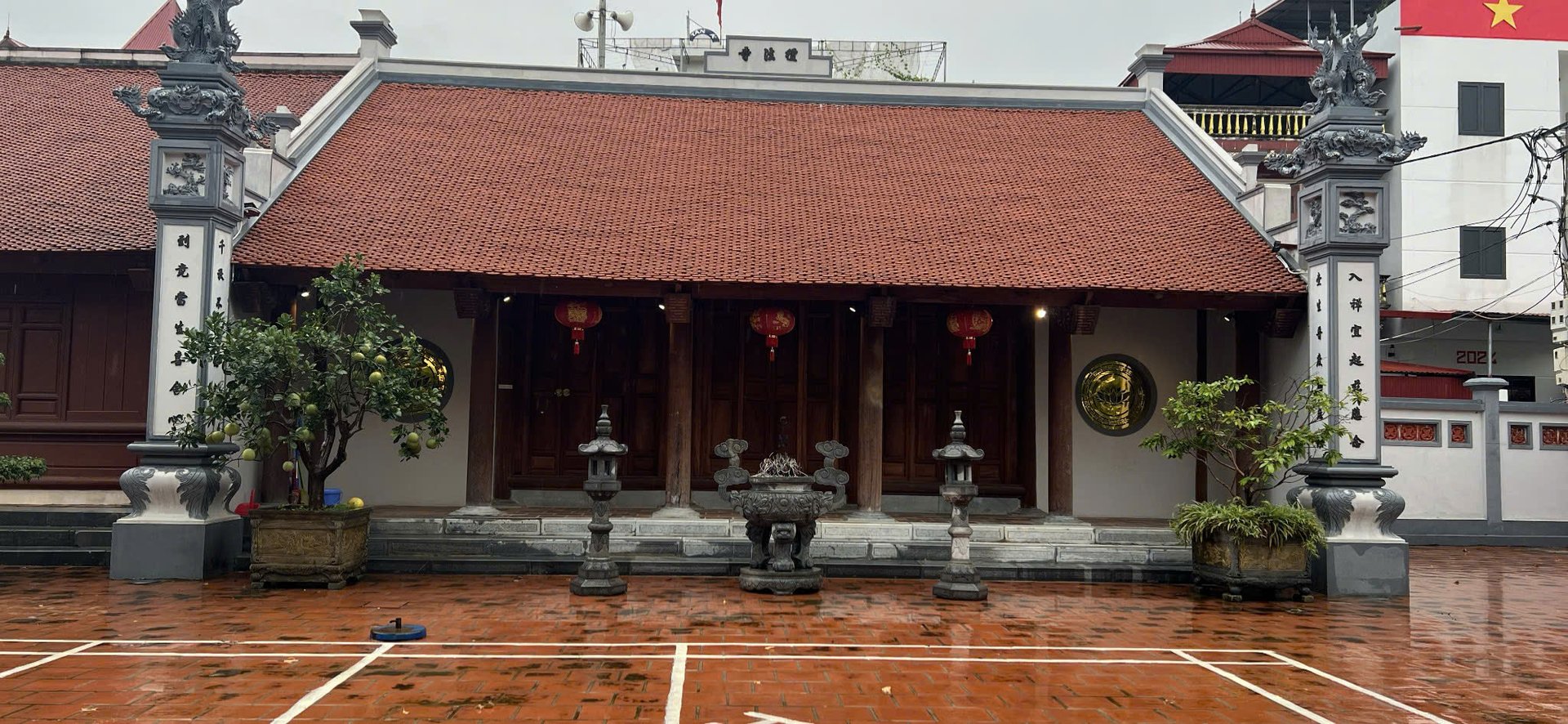
Tam Bảo building area - Lễ Pháp Pagoda
1. PANORAMA
The pagoda was rebuilt in 1998, built with closed gable walls and roofed with mũi hài tiles. The pagoda has a “Đinh” layout, including a front hall and a rear sanctuary. Although rebuilt, the pagoda still preserves traditional architecture with elaborate decorative carvings.
Located in a picturesque setting by the Thiếp River, Lễ Pháp Pagoda is a serene spiritual place where the local community's Buddhist religious life is entrusted. The combination of communal house and pagoda in a relic complex following the “front deity, rear Buddha” pattern has created a distinctive cultural-religious space, both solemn and close to rural village life.
2. INSIDE
Stepping into the interior space, visitors will admire a rich system of Buddha statues - the relics of greater value than all else in the pagoda. The statues are solemnly arranged according to the standards of a traditional Northern Vietnamese pagoda, including three main groups: Buddha statues, Mother Goddess statues, and Patriarch statues.
In the front hall, the right compartment houses statues of Thánh Tăng and Hộ Pháp; the left compartment houses statues of Đức Ông and Hộ Pháp. In the upper sanctuary, the Buddha statue system is arranged in multiple tiers on a stepped platform, from the Tam Thế statues on the highest tier, down to the Amitabha, Thousand-Hand Thousand-Eye Guanyin, the Ngọc Hoàng - Nam Tào - Bắc Đẩu set, and finally the Cửu Long throne on the outermost tier. In addition, the pagoda also has an altar to the Mother Goddesses and an altar to the Patriarchs.
Along with the system of worship statues, the pagoda preserves many decorative carving panels with themes of dragons, clouds, flowers and leaves, and the four seasons on the corbels and beam ends. The solemn interior space, with faint incense smoke, creates a pure and peaceful place where Buddhists and local people come to worship and pray.
3. ELEVATED PANORAMA
Lễ Pháp Pagoda, also known by its Sino-Vietnamese name Pháp Linh Tự, is located immediately behind and to the right of the communal house, within the Đình - Chùa Lễ Pháp relic complex, Lễ Pháp village, Phúc Thịnh commune, Hanoi city. The pagoda faces the same direction and looks out onto a brick yard shared with the communal house; the relic complex is arranged according to the “front deity, rear Buddha” orientation - a common layout in Vietnamese villages.
The system of Buddha statues is the most valuable relic of the pagoda, comprising three types: Buddha statues, Mother Goddess statues, and Patriarch statues. In addition, the pagoda also keeps a number of other artifacts such as: 1 hậu stele dated to the 21st year of the Minh Mệnh reign (1840) with content on memorial offerings; a small bronze bell; 1 terracotta incense burner decorated with two dragons flanking the moon; 02 pairs of lamp stands along with altars, incense burners, and large and small porcelain flower vases. These are precious antiquities and relics, contributing to affirming the historical and cultural value of the relic site.
Lễ Pháp Pagoda together with Lễ Pháp Communal House forms a “front deity, rear Buddha” relic complex, facing south toward the Thiếp River, creating a religious architectural ensemble in harmony with the natural landscape.
With special historical, architectural, and artistic values, Đình - Chùa Lễ Pháp was ranked as a National-level Historical, Architectural, and Artistic Relic under Decision No. 310-QĐ/BT dated February 13, 1996.
4. FRONT HALL
The front hall of the pagoda consists of 5 bays with 2 side wings; the two gable-end bays have enclosing walls and only two small windows; the three central bays have three doorways. The pagoda preserves traditional architecture, with decorative carving panels featuring dragons, clouds, flowers and leaves, and the four seasons on the corbels and beam ends. Especially, the most valuable is the system of Buddha statues in the main sanctuary. The right compartment of the front hall houses statues of Thánh Tăng and Hộ Pháp.
5. UPPER SANCTUARY
The three-bay upper sanctuary connects to the front hall; inside, a stepped platform is built to arrange worship statues. The top altar is the Tam Thế statues, the eternal Dharma body, representing the Buddha in three worlds: past, present, and future. The second tier is the Amitabha statue seated in the lotus position on a lotus throne. The third tier is the Thousand-Hand Thousand-Eye Guanyin with two attendants on both sides. The fourth tier is the Ngọc Hoàng, Nam Tào, Bắc Đẩu set. The outermost tier is the Cửu Long throne with nine dragons spraying water, supporting the infant Shakyamuni walking on lotus petals.
6. MOTHER GODDESS ALTAR AND PATRIARCH ALTAR
The Mother Goddess altar is placed on the altar platform in the right side wing with three statues of Mẫu Thượng Thiên, Mẫu Thượng Ngàn, and Mẫu Thoải carved in a seated position, beside them are three smaller statues of attendants. The left compartment houses statues of Đức Ông and Hộ Pháp, and at the gable end is the Patriarch altar with statues of abbots who passed away at the pagoda.
The combined worship of the Mother Goddesses and Patriarchs alongside Buddha worship is a characteristic feature of many traditional Vietnamese pagodas, reflecting the harmony between Buddhism and indigenous Mother Goddess worship and the moral principle of “remembering the source when drinking water”, honoring the patriarch monks who had the merit of preserving and maintaining the pagoda. The full presence of the altars has created a rich religious space, meeting the diverse spiritual needs of the local community.likes the profile picture



