
Nhan Tai Forest Pagoda (Tinh Minh Tu), Duong Nhan Hamlet, Thu Lam Commune, Hanoi City
5.0Free
5.0Free
Introduction
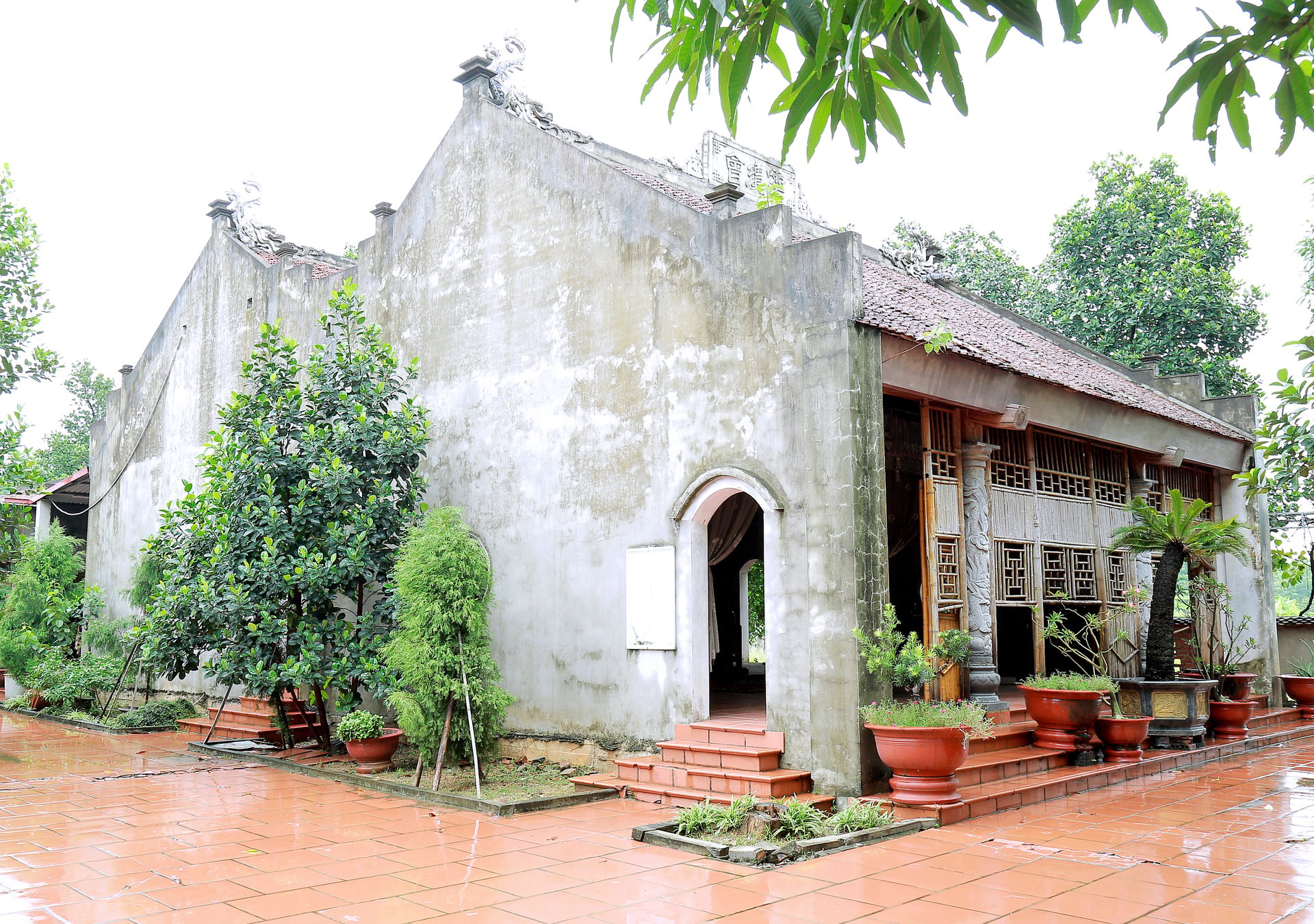
Duong Nhan Hamlet, Thu Lam Commune, Hanoi City
Nhan Tai Pagoda Relic was ranked as a National Relic under Decision No. 95/1998/QD-BVHTT dated January 24, 1998.
The pagoda’s Sino-Vietnamese name is “Tĩnh Minh Tự” – meaning “Tinh Minh Pagoda.” Its vernacular name is Nhan Tai Pagoda. This name comes from the name of Nhan Tai village. Legend has it that formerly the villagers lived on a piece of land shaped like a swallow, in the posture of spreading its wings and flying east with its head turned back. Therefore, the ancients named the village after the shape of the land. The pagoda is also called “Forest Pagoda.” The site where the pagoda stands was formerly the Nguyet Lam forest adjacent to the dike (south side) of the Nguyet Duc River, hence the name Forest Pagoda.
Nhan Tai Pagoda currently belongs to Duong Nhan Hamlet, Thu Lam Commune, Hanoi City. In the Nguyen dynasty, Xuan Non was originally the land of Duong Yen and Luong Quy communes, Co Loa canton, and Nhan Tai and Xuan Non communes, Xuan Non canton, Dong Ngan district, Tu Son prefecture, Bac Ninh province. In 1905 it belonged to Dong Anh district, Phuc Yen province. In 1946 a new commune was established, initially called Dao Nguyen (Dao Thuc and Nguyen Khe). In 1946 a new commune was established named Tu Do Commune. In 1995 Tu Do Commune was split into two communes: Phuc Thinh and Tu Do. In 1961 Dong Anh was merged into Hanoi. In 1965 Tu Do Commune was renamed Xuan Non Commune, and since then this place name has remained unchanged up to the time the file was compiled.
Nhan Tai Pagoda was built on the land of Nhan Tai village – an ancient area with a history of around 2,000 years up to the present. In the past, this place had forests, streams, hills, and all kinds of birds and beasts. There was the pine forest of Be village, a stream flowing from Van Khe ravine (Nguyen Khe), vast guava forests at Ong Thieu field commonly called Dong De, a grassland of cockscomb grass along the Nguyet Duc River extending to the present Phu Lo bridgehead, the winding Nguyet Duc River surrounding the north, and a large road from Luong Quy junction to Vu Duong Mountain (Sai Mountain) leading to Kinh Bac (Bac Ninh). According to legend, this road dates from the Au Lac period, when An Duong Vuong ordered the people to dig and build it so that each year the king could go to worship the mountain god of Vu Duong, who helped An Duong Vuong destroy the Ke demon and build Loa Thanh.
Xuan Non is an ancient land with a patriotic tradition. According to the village’s records, from the reign of Hung Due Vuong (6th century BC), in Luong Quy village there were three men Thong, Duy, and Giang with 49 young men who followed Mr. Giong to fight the enemy. In 40–43 (1st century AD), in Duong Yen, Ms. Le Thi Hoa together with the Trung Sisters rose up to drive out the Han invaders. In 1860–1884, in Nhan Tai, Mr. Dai Tau and Mr. Chinh Tien rose up to fight the French. In 1884–1910, during the Can Vuong movement, 36 people from Nhan Tai joined the insurgents; the famous brave one was Doc Bieu, a valiant general of Mr. De Tham’s insurgent force. North of Nhan Tai village was the Nguyet Lam forest running along the south bank of the Nguyet Duc River. In the Ly dynasty, this was the second defense line against the Song invaders. Dong De field and Gia field in Nhan village were, in the Tran dynasty, the site of a raid that annihilated a Yuan army.
The glorious historical tradition of Nhan Tai village is closely linked with the ups and downs of the pagoda’s development. The book “History of the Revolutionary Tradition of the Party Committee and People of Xuan Non Commune, 1945–1990,” compiled by the Executive Committee of the Xuan Non Commune Party Committee, together with documents and accounts by elderly villagers, states: formerly Forest Pagoda was a place where insurgents took shelter and had their wounds treated. The monks in the pagoda were all accomplished practitioners and contributed greatly to helping the people protect and build this countryside, such as the two monks Thuan Hoa and Dai Hung. Elder Dai Hung had a shrine built and stone bridges built over streams and channels for the people to travel and hold meetings. Because of his great contributions, he was bestowed by the king the title “Dai Hung, great strength, great compassion,” which was recorded on a gilded horizontal plaque hung in the pagoda’s Ancestor Hall, but when the pagoda was destroyed the plaque was also lost.
In February 1941, the ATK (Central Party Safe Zone) was established in Chai village (Vong La) and Ngoc Giang (Vinh Ngoc) and developed strongly throughout the cantons and communes, including Xuan Non. In Nhan Tai, at the beginning of 1944, comrades Tran Van Thien and Hai Chup, Viet Minh cadres, came to establish a base. At the end of 1944, comrade Truong Chinh came to explain clearly the goals of the Viet Minh revolution and the Japanese fascists’ plot to destroy rice and grow jute. From then on, national salvation youth teams were established and operated actively.
After the successful August Revolution of 1945, Forest Pagoda and the area in front of it were spacious and convenient for meetings and training. In 1946–1947, a company of comrade Khiem was stationed at the pagoda and attacked Gia Thuong post and Cau Duong post. During this time, the pagoda’s walls were whitewashed to paint the slogan “Long-term resistance will certainly succeed, all-people resistance, comprehensive resistance.” The Forest Pagoda area was also used to set up a resettlement camp with over 40 huts for nearly 1,000 households who came here to evacuate. In 1947, our army won a victory over the enemy in Cao Bang; Dong Anh district held a victory congress; in the evening at the pagoda, plays and cultural performances were organized.
When the enemy returned to occupy the area, they had the pagoda destroyed. At that time, the abbots of the pagoda, Venerable Thanh Thao and Thanh Phuc, continued to support the revolution, shelter and secretly feed cadres operating in the area. They helped Unit C476 with reconnaissance to prepare for attacking the enemy at Nhan Tai post. Therefore, after peace was restored, Venerable Thanh Thao was commended by the district and included in the Executive Committee of the district Buddhist Association, recognizing Nhan Tai Pagoda as a base with many contributions helping the revolution achieve success quickly.
Like many ancient village pagodas in Vietnam, Nhan Tai Pagoda was built to serve the Buddhist beliefs of the working people. Nhan Tai Pagoda is an ancient religious and belief site worshipping the Buddha. Based on the values of the relic still preserved today, Nhan Tai Pagoda belongs to the type of relic with historical and artistic value.
The time when Nhan Tai Pagoda was built has not yet been identified in written documents or inscriptions. According to local records, the pagoda dates from the Ly dynasty (11th century). Most documents about the relic were lost during the resistance war. Nevertheless, Nhan Tai Pagoda has preserved 13 stupa tombs three to four stories high. According to elderly villagers, each stupa contains four to six sets of remains.
The book “History of the Revolutionary Tradition of the Party Committee and People of Xuan Non Commune, 1945–1990” writes: “The pagoda in Duong hamlet (lower Duong), commonly called Forest Pagoda... was built in the Ly dynasty; by the Le dynasty (Later Le), the pagoda was repaired and expanded to a scale of as many as a hundred compartments on an area of seven to eight mau.” The pagoda had a full set of Buddha statues, mostly lacquered and gilded. An important basis today is the pagoda’s Buddha statues. Based on decorative patterns, style, and size, the Niem Hoa Buddha statue bears the artistic style of around the 17th century; the Manjushri and Samantabhadra statues, the Amitabha set, and the set of Three Ages Ever-Abiding Wonderful Dharma Body all have the artistic style of around the 18th century. From this it can be affirmed that the pagoda existed before the 17th century – the Le dynasty.
Nhan Tai Pagoda was formerly a pagoda with a grand and beautiful architectural and landscape scale. According to elderly villagers, the pagoda included a front hall, upper sanctuary, three-entrance gate, bell tower, Ancestor Hall, two rows of side buildings, a large brick yard, and a stupa garden, all forming an enclosed compound. Outside in front was a row of ancient queo trees; around the pagoda was the Nguyet Lam forest, and to the north was the Nguyet Duc River. Behind the pagoda was a large plot of land used as a cremation platform for abbots who had practiced and attained the Way.
During the resistance war against the French, because the pagoda was a revolutionary base, the enemy had it burned. It was not until 1993 that local people rebuilt the pagoda. Nhan Tai Pagoda stands on the old land of the pagoda. The architectural works include the main pagoda area with a chuoi vo shape, facing south, the stupa garden to the left of the pagoda, a guest house, and a kitchen. The front hall is built on a foundation 0.30 m above the yard, with a roof of ri tiles. In the middle of the roof ridge is a large inscription bearing three Chinese characters “Tĩnh Minh tự” – meaning “Tinh Minh Pagoda.” The entrances are folding doors in the three central bays; the two side bays have enclosing walls with windows.
Over time, the ancient pagoda no longer remains. The people built a five-bay pagoda for worship, but because it was made of non-durable materials it deteriorated severely; the Ancestor Hall and Mother Hall built next to it also deteriorated. In 2013, the people and the abbot restored the pagoda on the foundation of the ancient pagoda with a ground plan of the character “nhat” in front and “dinh” in back. The Ancestor Hall and Mother Hall were built to the east of the pagoda.
The arrangement and placement of statues and worship objects in the pagoda are like many pagodas in Vietnam. The highest place in the three treasures Buddha hall is the set of Three Ages, also called the Three Ages Ever-Abiding Wonderful Dharma Body, representing three times: past, present, and future. The statues bear many artistic imprints of the 17th, 18th, and 19th centuries. Among them, the Niem Hoa Buddha statue is elaborately made; the Maitreya statue is quite standard and beautiful. According to the revised file, the sets of statues in the pagoda were lost in previous years; currently 4 Ancestor statues, 1 Mother statue, the Holy Monk statue, 4 Four Heavenly Kings statues, and 1 ancient Earth God statue are preserved.
Nhan Tai Pagoda was only restored in 1993 with simple architecture, but the precious artifacts remaining in the relic play an important role and deserve preservation. The file records a system of Buddha, Ancestor, and Mother statues including 27 wooden statues lacquered and gilded; one bronze bell; a wooden incense burner carved with a multi-petaled lotus; 10 porcelain incense burners decorated with dragons facing the sun; a pair of lamp stands; two pairs of porcelain vases painted in blue; two wooden trays; a stand for wine cups with relief carvings of dragons, flowers, and leaves; and a stupa garden with 13 stupas three to four stories high.
Nhan Tai Pagoda has a very long history of construction. Documentary sources say the pagoda dates from the Ly dynasty; the evidence currently in the pagoda confirms the pagoda’s existence at least from the Le dynasty. Over its long existence, the relic has preserved historical and artistic values. The pagoda is located in an ancient land that has marked many historical events. Especially during the resistance war against the French colonialists, Nhan Tai Pagoda contributed significantly to the revolution: it was a base for hiding documents, sheltering operating cadres, a gathering place for army units, and a place for organizing activities serving the resistance.
Regarding artistic value, through changes and the ups and downs of history and war, the ancient architecture of the pagoda is no longer intact, but the artifacts preserved show the true value of the pagoda. Many statues bear artistic imprints of the late 17th and early 18th centuries; the sets of Three Ages, Amitabha, and Four Heavenly Kings are works made elaborately and carefully. Notably, the Maitreya statue has high artistic value. In addition, the pagoda preserves 13 stupa tombs three to four stories high in a separate stupa garden, showing in part the grandeur of the ancient pagoda in the past and the imprint of the Zen masters who once practiced here.
In addition to the above values, the Nhan Tai Pagoda relic also preserves a number of other artifacts such as stone stele attached to stupa tombs and incense burners, including a wooden incense burner carved with a lotus flower and a ceramic incense burner with traditional decorative themes. All the preserved artifacts contribute to affirming the historical, cultural, and artistic values of Nhan Tai Pagoda – Tinh Minh Tu, a National Relic in Duong Nhan Hamlet, Thu Lam Commune, Hanoi City.



