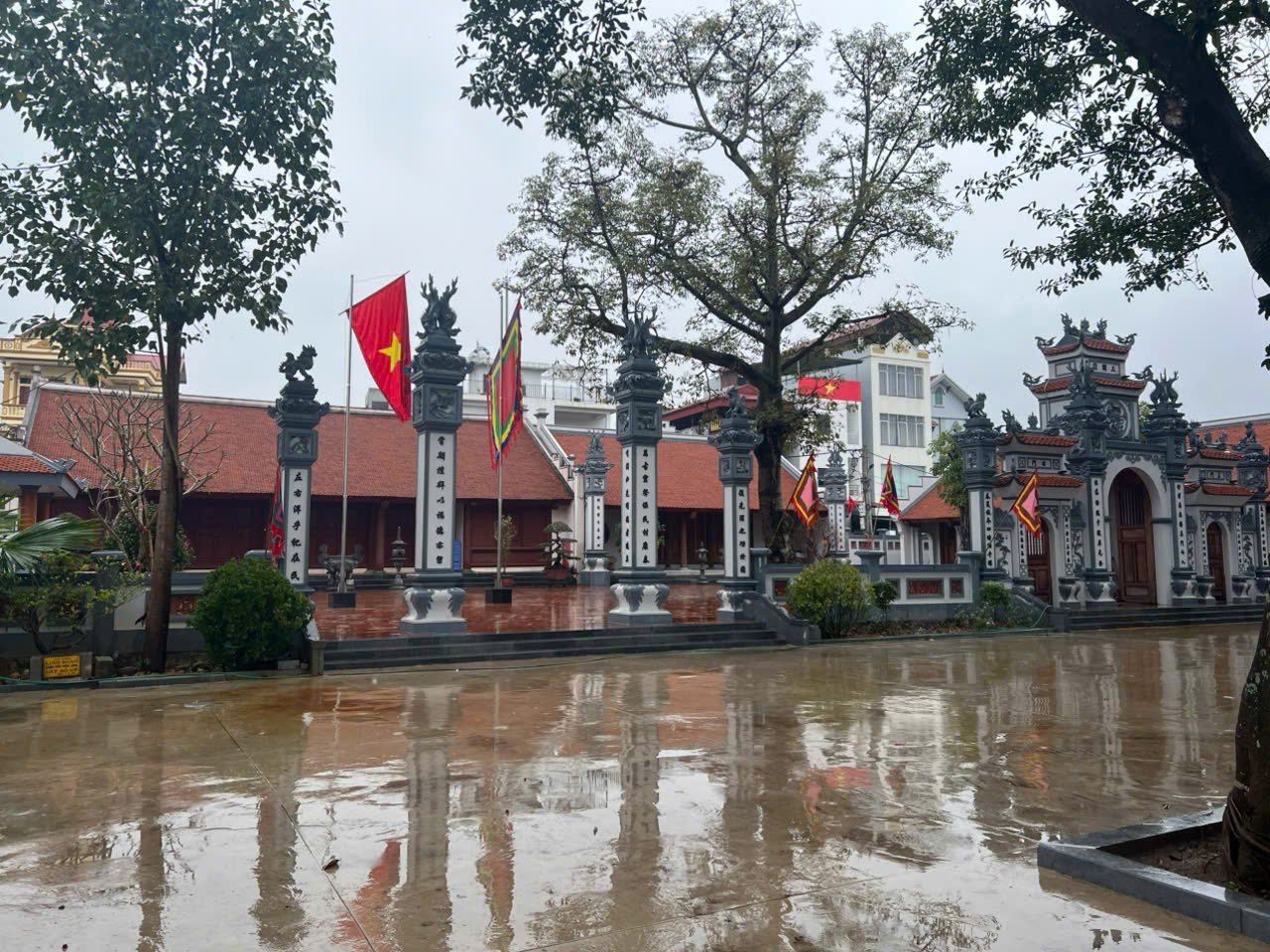
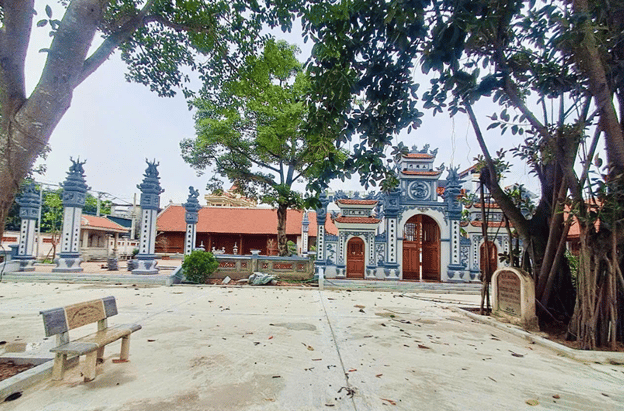
According to the elderly, Le Phap Communal House was originally located on the other side of the Thiep River. Later, it was moved and rebuilt on this side, right within the village residential area. Le Phap Communal House was built on high, open ground with very beautiful natural scenery: in front is the winding, curving Thiep River; behind is a prosperous and peaceful village hamlet.
According to the inventory of deity records, Le Phap Communal House worships the village tutelary deity whose taboo name is Dong Vinh. According to the deity genealogy, Dong Vinh is a tutelary spirit who helped Quy Minh fight the Shu army and protect the court; two royal edicts still kept at the communal house state: 'Royal edict granting Le Phap Village, Tuan Le Commune, Dong Anh District, Phuc Yen Province permission to worship the honored deity Dong Vinh Dai Vuong, who saved the country and helped the people with great efficacy...', Later, successive dynasties issued royal edicts conferring on Dong Vinh the title of Superior-Grade Deity.
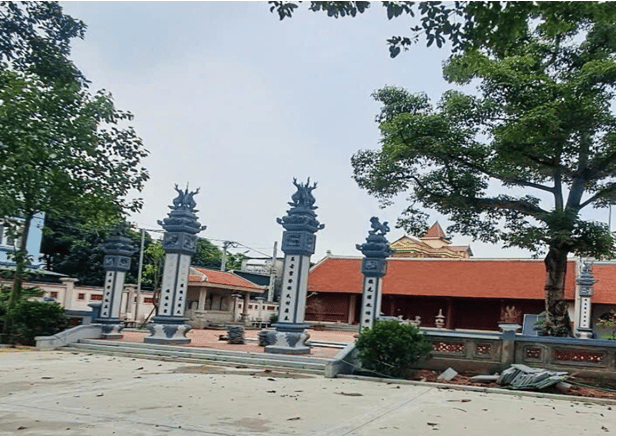
At present, in front of the communal house there is a pond planned and restored into a semi-circular lake; through a large courtyard one enters the main communal house, which has a Dinh-character ground plan consisting of the main hall and rear sanctuary.
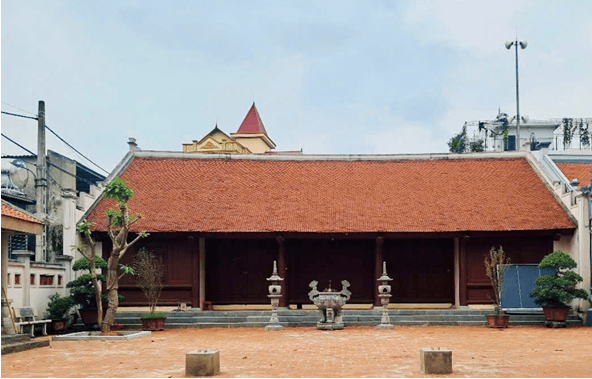
The communal house still preserves valuable relics and ritual objects. These include four stone steles, one large stele in the courtyard and three small steles attached to the rear wall of the main hall. The three small steles date to the 20th year of Minh Menh (1839) and the Giap Dan year of Duy Tan (1914); two deity edicts date to the 2nd year of Khai Dinh (1917) and the 9th year of Khai Dinh (1924); one deity genealogy recorded on the 10th day of the 3rd month in the 13th year of Bao Dai (1938); two sets of palanquin poles decorated quite beautifully with dragons as the main theme, with a dragon head at the front and a dragon tail at the rear, and small dragons attached to the poles; two dragon thrones in two different styles. Both dragon thrones are carved with dragons, phoenixes, tiger-face motifs, floral scrolls, and are splendidly lacquered and gilded. The carving lines are deep, fine and skillful, with rich themes, bearing the artistic style of the 18th-19th centuries. In addition, the communal house has other ritual objects such as manuscript stands, incense bowls, altar couches, offering trays, and so on.
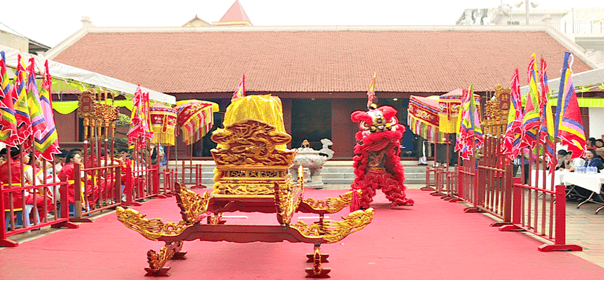
The village festival takes place on the 19th day of the second lunar month every year, the day when Duc Quy Minh dreamed of the deity. In the past, the festival also included the very unique custom of casting fishing nets.