
Hậu Dưỡng Communal House, an architectural and artistic relic
Good to know
- You should arrive early for an open and airy experience
- Free
- Convenient access by taxi or bus.
Introduction
Contents
Story
01Hậu Dưỡng Communal House belongs to Hậu Dưỡng village, Thiên Lộc commune, Hà Nội.
In ancient times, Hậu Dưỡng was called Thiên Dưỡng (Hối Nguyên hamlet) in the reign of the 17th Hùng King; Hối Tân (Hối Độ) hamlet was founded by Mr. and Mrs. Quốc Tế Lang and Lã Nương when they were sent by the Hùng King to this place to build granaries for the royal court and, seeing the picturesque landscape, established Hối Nguyên hamlet (that is, Thiên Dưỡng). According to the royal edict still kept at the communal house, Hậu Dưỡng village worships Lord Quốc Tế Đại Vương and his wife, who had the merit of giving birth at one time to three brothers who were water deities reincarnated to help the country in the reign of the 18th Hùng King.
The three water deities were named Nhất Lang, Nhị Lang, and Tam Lang. After their parents died, they were appointed by the royal court to the position of Đới Linh Long Châu Thủy Đại Tướng Quân and resided in Hối Độ hamlet; the three brothers joined Saint Tản Viên in fighting invaders and defending the country. After winning the battle, the king summoned the three men to the court; when they reached Chu Diên, they suddenly vanished. The Hùng King mourned them, bestowed on them the title Linh Tố Đại Vương, and permitted Hối Độ hamlet to be exempt from taxes and corvée; he had temples built to worship their parents and the three water deities, who were revered as tutelary deities, and maintained the cult through to the present.
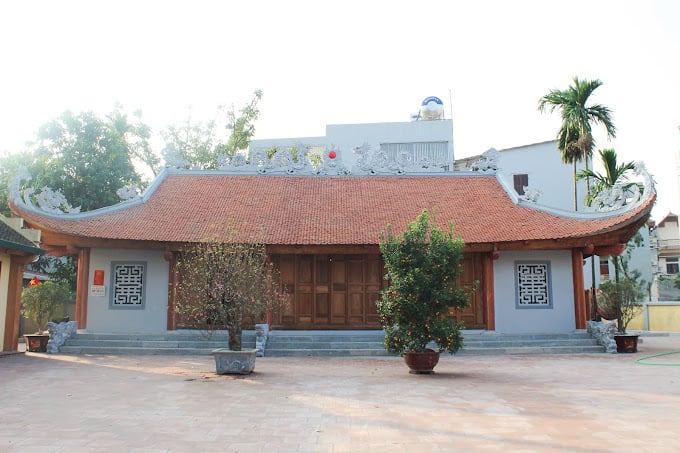
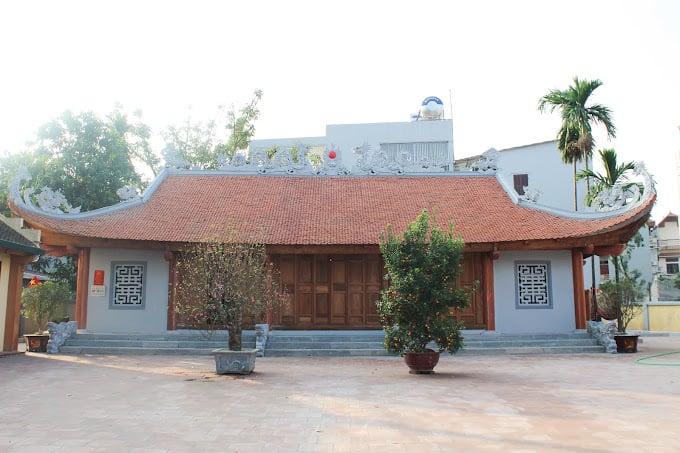
The Hậu Dưỡng Communal House relic is located in the center of Hậu Dưỡng village. The communal house faces southeast and has a “đinh”-shaped structure consisting of a Front Ceremonial Hall and a Rear Sanctuary. The Front Hall has three bays and two wings, with four curved roofs; in the middle of the ridge is an embossed dragon facing the moon, the roof corners are curved, and the two gable ends are decorated with kìm figures with twisted tails and heads turned toward the center.
Hậu Dưỡng Communal House is one of the long-established historical relics of Thiên Lộc commune. It worships figures who seem legendary but in fact are closely associated with each place name and village name here. The blessed deities are honored as bright examples and a source of pride for generations in Hậu Dưỡng to follow. Although the communal house has undergone many restorations and repairs, it still preserves distinctive beauties characteristic of a religious and belief architectural work. The houses with curved roofs, half-hidden beneath the canopy of ancient trees that stay green in all four seasons, create a solemn and tranquil atmosphere for the relic.
The collection of artifacts still preserved at the relic, such as the dragon throne, ancestral tablets, eight treasures, and ornamental door screen, are valuable works of art. Written materials such as deity records, royal edicts, horizontal plaques, and couplets—especially the royal edict dated to the 47th year of the Cảnh Hưng era (1786)—are precious documents contributing to the study of the history, customs, and habits of the people through the dynasties.
Hậu Dưỡng Communal House was ranked as a historical and architectural-artistic relic by a decision of the Hanoi People’s Committee in 2005.
More Other places
- Other placesVerified
Gioi Duc Pagoda (Hong An Temple)
Ung Hoa Commune
5.0Free  Other placesVerified
Hai Giac Pagoda
O Dien Commune
5.0Free Other placesVerified
Phuong Bang Pagoda (Hung Long)
Son Dong Commune
5.0Free Other placesVerified
Sung An Pagoda, also known as Sung Khang Pagoda (Dong Ba Pagoda)
Thượng Cát Ward
5.0Free
