
National-level historical and cultural relic: An Phu Communal House, Phuc Loc Commune, Hanoi City.
Introduction
National-level historical and cultural relic: An Phu Communal House, Phuc Loc Commune, Hanoi City.
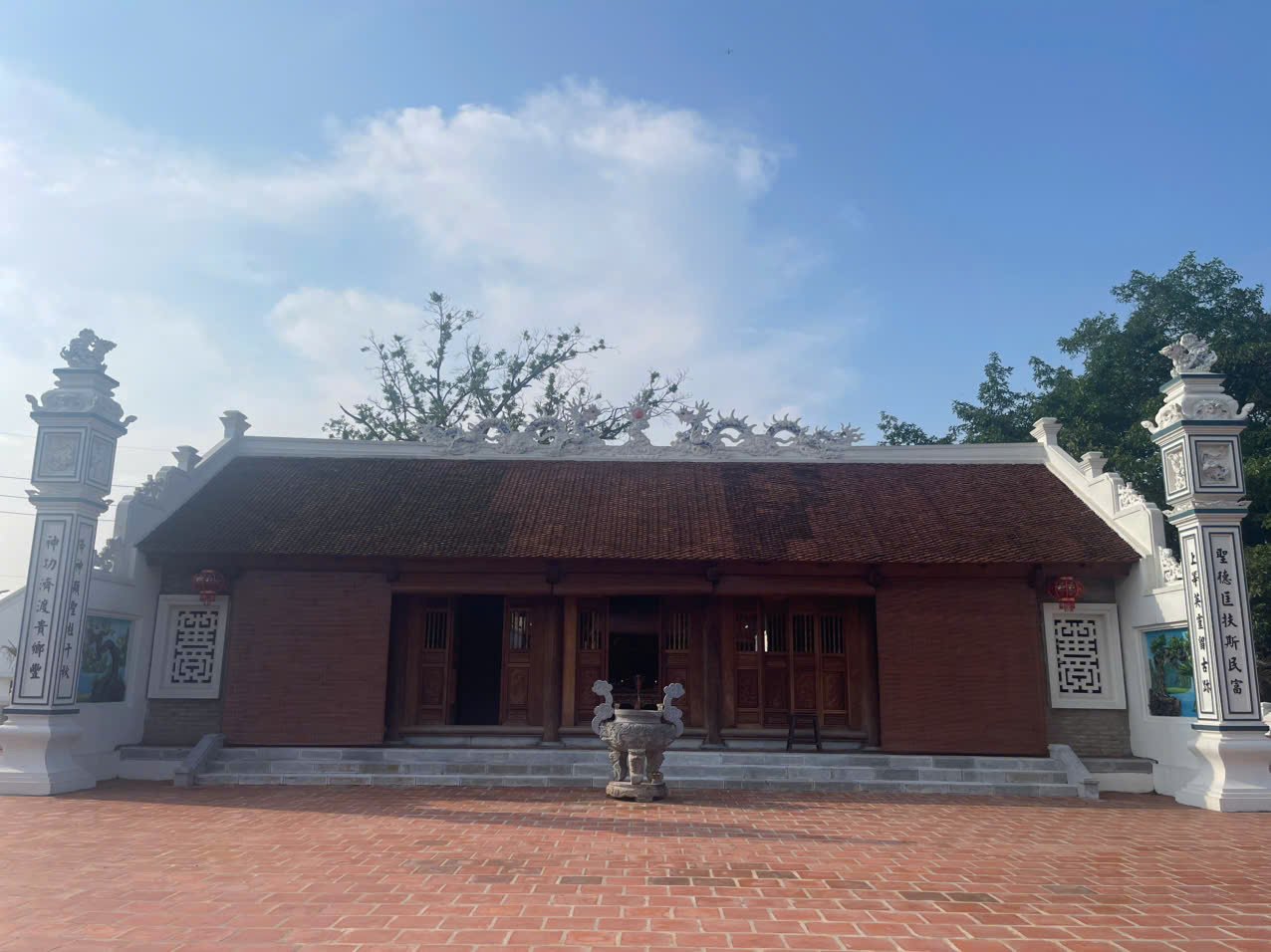
The An Phu Communal House relic was formerly called Tang Luc Communal House; it now belongs to Xuan Phu Hamlet, Phuc Loc Commune, Hanoi City.
An Phu Communal House is located on ancient land with a rich historical depth; the riverside villages in the area were all established early and all worship legendary and historical figures such as Tản Viên Sơn Thánh, Bạch Hạc Tam Giang, Ả Lã Nàng Đê, the Trung Sisters, Linh Lang, etc. According to the communal house's deity genealogy, respectfully compiled by a senior official of the Ministry of Rites who supervised the Le dynasty temple and copied from the deeds and divine titles at Hy Chuong Commune, Hung Vuong Temple, on 18/74, the 10th year of Khai Dinh's reign (1925), An Phu Communal House is dedicated to four generals from the Hung Kings period: Ngư Phù, Hổ Phù, Long Phù, and Kim Phù. These four deities were credited with commanding troops and generals to help King Hùng Duệ Vương defeat the Northern invaders.
The communal house previously faced northwest; in 1906 the villagers repaired it and turned it to face southeast. In 2025 the state paid attention to restoring and embellishing the relic. Its architecture includes the Nghi Mon Gate, Main Hall, Left Hall, Right Hall, rear sanctuary, and auxiliary works.
Over time, due to the effects of war and harsh natural conditions, the communal house's cultural and historical artifacts have also deteriorated. However, the communal house still preserves many artifacts from the 18th–20th centuries, including horizontal lacquered boards, couplets, and an eight-bearer palanquin; 01 worship niche and 04 red-lacquered and gold-gilded memorial tablets decorated with patterns bearing the artistic imprint of the 19th century. In addition, there are 6 Tho Ha ceramic incense burners from the 19th century; 01 stone stele (1723) about the devotion of followers who donated fields.
Every year, the people of An Phu Hamlet, now Xuan Phu Hamlet, organize a festival from the 8th to the 10th day of the first lunar month. On the 4th day of Tet, the elders gather young people who have come of age to go to the communal house to discuss organizing the three-day festival; everyone molds birds, storks, and animals from dough and dyes them in colors to sell to villagers and pilgrims from elsewhere coming to worship.
An Phu Communal House has existed for a long time and is closely associated with the development process and customs of an ancient Vietnamese community. The communal house is a memorial place for the four brothers of Mr. Ca Luoc, who were credited with fighting foreign invaders to protect the nation and the country during the Hung Kings period. On the other hand, the four men also contributed to building An Phu Village, giving the people land to develop the economy and bringing a livelihood to the villagers. Those miraculous contributions of the blessed deities are tied to the nation's struggle to build and defend the country. At the same time, they bring gratitude and pride to every An Phu resident.
An Phu Communal House was ranked as a national-level historical and cultural relic by Decision No. 2009VH/QĐ dated November 15, 1991, issued by the Ministry of Culture, Information, Sports and Tourism; it is a national-level ranked relic.



