
Historical and cultural relic of Võng Ngoại Communal House, Phúc Lộc Commune
Introduction
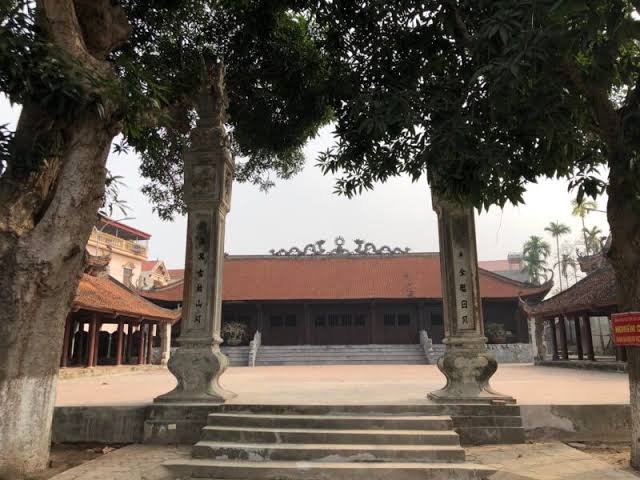
Historical and cultural relic of Võng Ngoại Communal House, Phúc Lộc Commune, Hanoi City
Võng Ngoại Communal House belongs to Phúc Lộc Commune, Hanoi City. Villagers recall that in the 16th century the village had only one hamlet; later, thanks to fishing and small trade, the population grew crowded until the Trịnh–Nguyễn civil war period, when in the 17th century the people of Võng Ngoại Village built the communal house at its present location.
Võng Ngoại Communal House is situated on an ancient, high and beautiful plot of land. The communal house worships the tutelary gods Bạch Hạc Tam Giang and Tản Viên Sơn Thánh.
The legend says that the three Tản Viên Sơn Thánh lords were Sùng Công, Hiển Công, and Tuấn Công, all intelligent beyond compare. At the age of 13 they were already proficient in literature and the six jia divine talismans, knowledgeable about astronomy above and geography below. When the three brothers were 18, their parents both passed away; the three brothers were extremely grieved, and afterward they went together up Mount Tản to become adopted children of the mountain goddess Ma Thị Cao Sơn. The goddess considered them filial children and made a testament granting all the mountains and forests, rivers and mountains, and fields to Tuấn Công, titled Tản Viên Sơn Thánh; Sùng Công at Non Mountain, titled Left Solid Deity; and Hiển Công at Lãng Mountain, titled Right Solid Deity. When King Thục brought troops to attack, King Duệ Vương ordered Sơn Thánh along with Sùng Công to advance and attack the enemy in the Hoan Châu waters. The enemy was utterly defeated, and the king issued an edict conferring on Sơn Thánh the title of Music Palace and Supreme Deity, on the Left Solid Deity the title Cao Sơn Đại Vương, and on the Right Solid Deity the title Quý Minh Đại Vương.
According to legend, Bạch Hạc Đại Vương was born on the 10th day of the third month in the Tân Hợi year, during the reign of Hậu Lý Nam Đế, in Hoan Châu. When he grew up, he learned immortal arts and traveled everywhere to heal and save people; later he returned and established a hermitage in Bạch Hạc village. On a day of rain, wind, thunder, and lightning, a golden cloud flew over from the west, with immortal boys and jade maidens playing flutes and zithers on both sides, and tigers and leopards kneeling in flocks before him; he went away with the cloud, on the 25th day of the ninth month. The local people knew he had attained the Way and asked someone to paint his image and carry it into the Tam Thanh shrine at Bạch Hạc for worship; from then on he often manifested spiritually to heal and save people, and the people's prayers were often answered.
During the reign of Emperor Đường Đức Tôn, the Đô Bà Côn Lôn enemy invaded and ravaged An Nam, and the emperor ordered Lý Thường Minh Công to go and suppress them. In only one day and night he reached Sơn Tây circuit. Minh Công then gathered and halted his troops at Võng Ngoại village; on the night of the 12th day of the second month, Minh Công dreamed of an old man in neat hat and robes, of huge stature, who said he was a descendant of the Hùng kings and the local tutelary god of Võng Ngoại Village, and now vowed to follow the officers and soldiers to fight the enemy and establish merit. After waking, Minh Công asked the people and learned that the village worshipped a deity at the sacred Bạch Hạc shrine. After that Minh Công raised troops to attack the Đô Bà Côn Lôn enemy, and a great battle put the enemy to flight. From then on the world was peaceful and the country secure. Minh Công submitted a memorial to the court saying that the early pacification of the Đô Bà enemy was also thanks to the support of invisible soldiers and the aid of the spirits. Upon hearing this, the king appointed Lý Thường Minh as governor of Phong Châu prefecture and sent an edict and the original divine title for worship: conferring him as the local tutelary god of the village, Thổ Lệnh Tam Giang Thống Chế Linh ứng Đại Vương; and bestowed the title Linh quang hộ quốc, bản cảnh hùng uy, khang dân phù vận Tá tự hiển linh Đại vương Thượng Đẳng Thần.
In the reign of King Trần Nhân Tông, the Mongol Yuan invaders came to invade our country. Hưng Đạo Đại Vương received the king's order to go and fight the enemy. Passing here, he was told in a dream by the deity, who asked for spiritual support to protect the country. After defeating the enemy, the court conferred on Bạch Hạc the title: Anh triết hiển hựu, trợ thắng Đại Vương Thượng Đẳng Thần.
In the reign of Lê Thái Tổ, he rose in uprising and defeated the Ming invaders to recover the mountains and rivers and the country; King Lê Thái Tổ additionally conferred the title: Phổ Tế cương nghị Anh linh tuấn kiệt Đại vương Thượng Đẳng Thần. An edict was granted to Võng Ngoại Village to restore the shrine and temple, to worship and join the whole country in celebration, establishing ceremonies forever.
The communal house worships the village tutelary gods: the three great lords Tản Viên Sơn Thánh and Đức Tam Giang Bạch Hạc - mountain deities among the four immortals of the Vietnamese people. The three Tản saints are historical figures associated with the period of struggle against foreign invaders in the early days of nation-building and defense of the Vietnamese people - the Hùng Vương period. They are also deities of water control, helping the people develop agriculture and teaching the people many sideline occupations. In folk consciousness, Tản Viên together with Cao Sơn and Quý Minh are cultural heroes and patron saints of the hundred crafts of the nation. When he transformed into the realm of immortality, in popular consciousness he became a tutelary god protecting the spiritual life of the people in many places. Võng Ngoại Communal House, like many other relics, honors and worships him to remind descendants to remember the heroic tradition of their ancestors and to educate love for the homeland and country for the generations growing up.
Võng Ngoại Communal House received royal conferrals through the dynasties:
1. Reign of King Lê Gia Tông (1672-1675): conferral in the third year of Đương Đức
2. Reign of King Lê Huy Tôn (1681-1705): conferral in the fourth year of Chính Hòa
3. Reign of King Minh Mệnh (1820-1840): conferral in the twenty-first year
4. Reign of King Thiệu Trị (1835-1841): conferral in the Lạc Niên year
5. Reign of King Tự Đức (1848-1883): conferral in the tenth year of Tân Niên
6. Reign of King Đồng Khánh (1886-1887): conferral in the second year
7. Reign of King Duy Tân (1907-1916): conferral in the ninth year
8. Reign of King Khải Định (1916-1925): conferral in the ninth year
In 1948, implementing the government's scorched-earth resistance policy, Võng Ngoại Communal House was burned to serve the resistance, leaving only a number of antiquities. In 1951, the people of Võng Ngoại resolved to donate labor and money to rebuild three rear sanctuary bays to worship the Saints and conduct traditional festival activities.
Võng Ngoại village communal house not only has value in spiritual culture but is also associated with historical events of the Vietnamese revolution; it was a place where the Party cell and the Việt Minh front met secretly to discuss plans to seize the puppet government and bring it into the people's hands.
At Võng Ngoại Communal House, in October 1946, Uncle Tôn Đức Thắng, former President of the Democratic Republic of Vietnam, came and spoke with cadres and people about the resistance to save the country. In 1956, comrade Phan Văn Khải, former Prime Minister, then working as a land reform cadre, came to meet with the people to implement the policy of Land to the tiller.
In September 2005, by Decision No. 3020/QĐ-UB of the Hà Tây Provincial People's Committee approving it, the people of Võng Ngoại Village were allowed to use socialized funds and local budget to restore and embellish the village communal house.
One of the highlights associated with Võng Ngoại Village Communal House is the traditional festival. Every year, at the beginning of the third lunar month, the people of Võng Ngoại Village eagerly await the festival. The village festival is held from the 10th to the 12th day of the third lunar month every year; during the festival, the most important ritual is carrying the Saint from the shrine down to the communal house for the people to make offerings according to the village's customs from ancient times to the present.
Võng Ngoại Communal House was decided by the Hà Tây Provincial People's Committee, now Hanoi City, to be classified as a provincial/municipal-level historical and cultural relic. In Decision No. 942/QĐ-UB dated September 23, 2004.



