
Mạch Lũng Temple Historical and Cultural Relic
Introduction
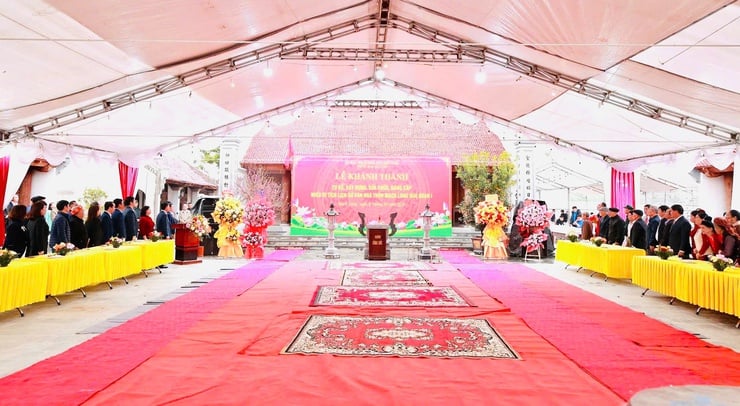
Mạch Lũng Temple Historical and Cultural Relic
Mạch Lũng Village lies on an ancient stretch of land along the Red River bank, a settlement area of ancient Vietnamese residents since the nation’s founding and defense. Mạch Lũng Temple is a place of worship for water deities from the Hùng Vương era, associated with the legend of three Long Hầu who helped the people fight natural disasters, defend the country, develop production, and teach the people to study, grow mulberries and raise silkworms, and expand the pottery craft. When the country was invaded by foreign enemies, the three were summoned by the king to help fight the invaders and won many victories; afterward they transformed and returned to the water palace, were conferred the title of superior deities, and had a temple built in Mạch Lũng Village.
Mạch Lũng Temple is located on a high mound by the Red River, with architecture in the shape of the character 'đinh', preserving many distinctive artistic patterns of the 17th–18th centuries. The relic also preserves many precious artifacts such as deity genealogies in Han characters, royal edicts from various dynasties, including the earliest edict dated to the Tự Đức reign in 1853 and the latest to the Khải Định reign in 1924, along with dragon thrones, memorial tablets, and ancient carved panels of historical, architectural, and fine-art value. With its outstanding values, Mạch Lũng Temple was ranked as a historical and cultural relic by the Ministry of Culture and Information in 1993.
Mạch Lũng Village Temple is a religious work and historical-cultural relic of important significance in the spiritual life and community activities of the local people.



