
National relic site Cung Son Pagoda (Hung Tho Tu), Phuc Tho Commune, Hanoi City
Introduction
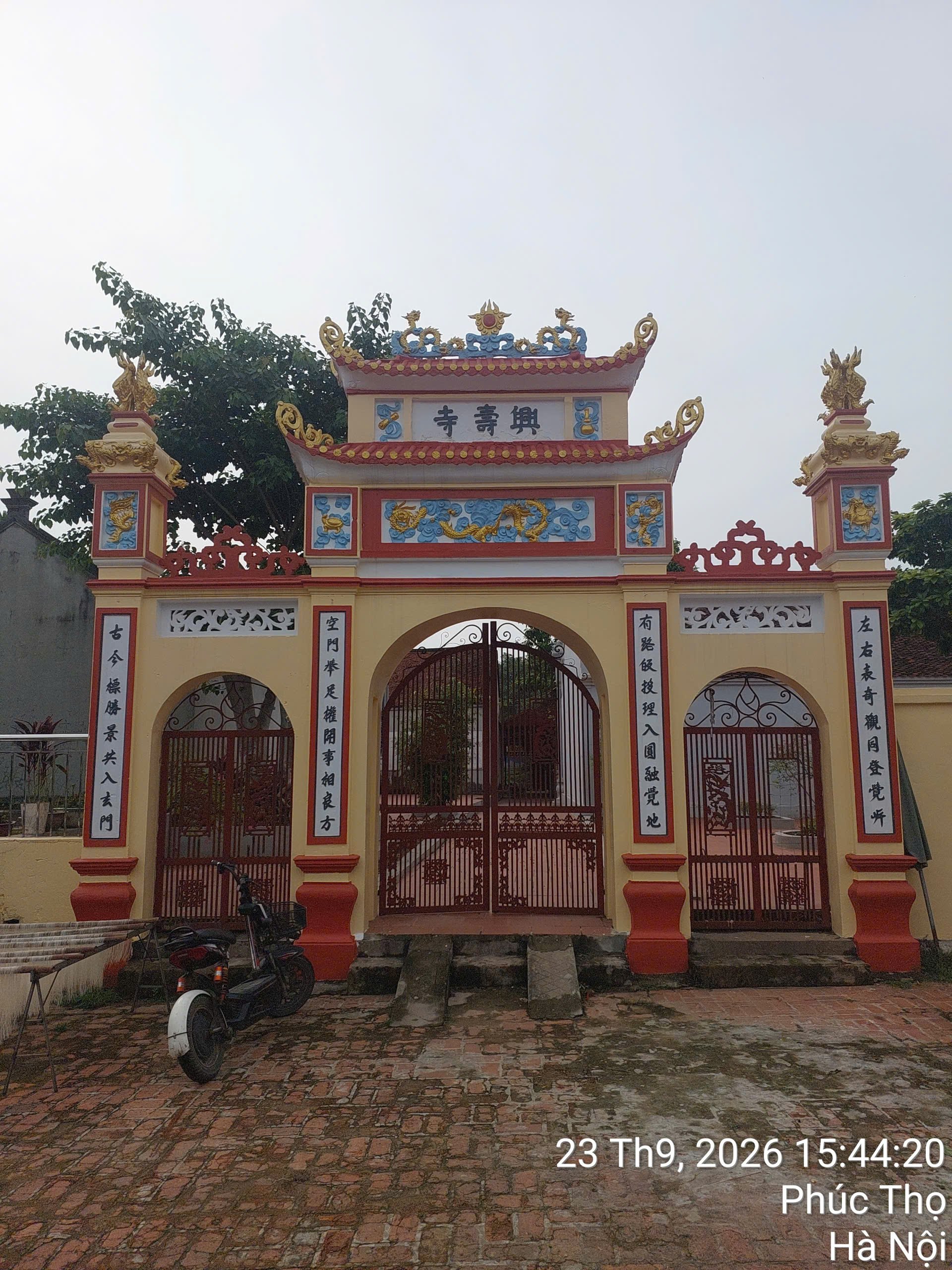
National relic site Cung Son Pagoda, Phuc Tho Commune, Hanoi City
Cung Son Pagoda has the literary name “Hung Tho Tu” and is located in Cung Son Hamlet, Phuc Tho Commune, Hanoi City.
According to the stories of the village elders, the pagoda has existed for a long time, and no one remembers exactly when. A survey of the system of stone steles and traces of ancient writings remaining shows that the pagoda underwent a major restoration during the Nguyen dynasty, in the 17th year of Minh Menh (1836), and since then it has gone through many restorations. Most recently, in 2024, Cung Son Pagoda received attention for the restoration and embellishment of two items: the Bell Tower and the Mother Goddess House, using the state budget.
The pagoda has the following items: Bell Tower, Three Jewels Hall, Mother Goddess House, guest house + nuns' house and a number of other items. The Three Jewels Hall (Buddha Hall) has a floor plan in the shape Dinh (丁) with closed gable walls, including the Front Hall and the Upper Hall. The Front Hall consists of 5 bays with 2 side wings, where Buddhist rituals are practiced. The Upper Hall is where the system of Buddha statues is placed. Unlike some pagodas, here the system of Patriarch statues includes 8 statues worshipped behind the Upper Hall (Buddha in front, Patriarchs behind). The statue system in Cung Son Pagoda has high artistic value, elaborately carved, lacquered and gilded.
Like many pagodas in the North, Cung Son Pagoda worships Buddha of the Mahayana tradition. In addition to worshipping Buddha, the pagoda also worships Patriarchs and Mother Goddesses - a form of folk belief of the ancient Vietnamese people that has been passed down and survives to this day. The different forms of worship at this relic site first of all aim to meet the spiritual and religious life of the local people, but at the same time also serve to unite the community, encourage good and deter evil, educate the tradition of remembering the source when drinking water, and guide people toward good and humane values, which are very worthy of respect and promotion.
Cung Son Pagoda was also a resistance base. The venerable Thich Dam Xe was a patriot who became aware of the revolution early and helped secret cadres stay in the area and guerrillas operate at the pagoda. There are also many secret tunnels and places to hide documents of cadres and guerrillas in the pagoda. This was also the place where porridge was cooked to relieve the hunger of the poor in 1945, the headquarters of the Viet Minh, the headquarters of the UBGP, and a place for organizing many political training classes for cadres and people. Cung Son Pagoda was a place storing the arsenal of the main force of Corps 264 during the resistance war against the French.
With outstanding historical, cultural, architectural and artistic values, Cung Son Pagoda was ranked as a national relic under Decision No. 74-VH/QD dated February 2, 1993 of the Ministry of Culture - Information (now the Ministry of Culture, Sports and Tourism)



