
Cổ Loa Special National Relic
Good to know
- You should arrive early for an open and airy experience
- Comfortable walking shoes are recommended
- Hat, umbrella, and sunscreen on hot sunny days
- Adult 30.000₫ · Student 15.000₫ · Children go free · Priority 15.000₫
- Bus, car/taxi, and motorbike; inside the site, sightseeing is mainly on foot.
Introduction
Touch the ancient traces of the Âu Lạc capital
The Cổ Loa Special National Relic Site in Đông Anh Commune, Hà Nội City, is one of Vietnam's typical historical and cultural heritages. This land is associated with the formation and development of the Âu Lạc state, with the legend of An Dương Vương, Cổ Loa Citadel, and valuable archaeological traces spanning many cultural periods.
On September 27, 2012, the Cổ Loa Historical, Architectural, Artistic, and Archaeological Relic was ranked as a Special National Relic by decision of the Prime Minister.
Contents
Story
01Don't miss
- Follow the earthen rampart circuit and look for traces of the ancient citadel structure
- Visit Thượng Temple , admire the bronze statue of An Dương Vương
- Stop beside Giếng Ngọc , a place associated with the story of Mỵ Châu - Trọng Thủy
- Visit Ngự Triều Di Quy Communal House and view the surviving carvings
02Cổ Loa Ramparts: traces of an ancient capital
Cổ Loa is known for its system of three concentric earthen ramparts and water moats, which was built, renovated, and used over a long period. The ramparts curve along the natural terrain and combine with the system of moats, rivers, and lagoons to create a structure that had both military value and close ties to the residential and productive life of the community. This is also one of the important traces that helps identify the scale and characteristics of a political, military, and residential center in the early period of Vietnamese history.
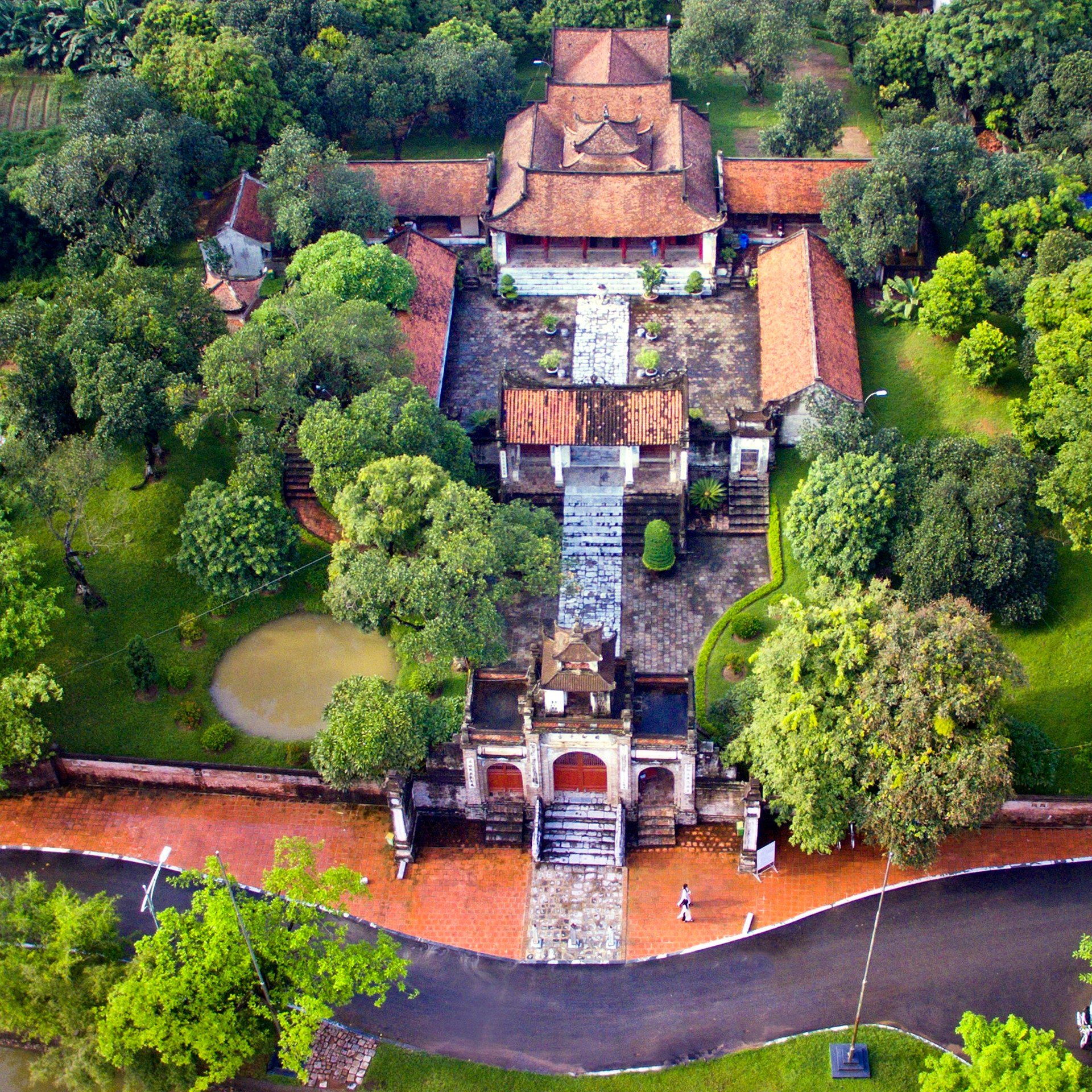
Cổ Loa currently retains three ramparts: Inner, Middle, and Outer. Collected photo
03Thượng Temple: the place of worship for King An Dương Vương
From the lake, you step up to the outer gate of Thượng Temple, built on a mound said to be the king's palace. Bend down to look at the pair of stone dragons on either side of the central entrance, carved in 1732. In 1893, villagers repaired the temple, excavated a cache of bronze, and used it to cast the An Dương Vương statue, completed in 1897; the statue is placed in the rear sanctuary and is now a National Treasure. On the 6th day of the first lunar month every year, the temple opens the main Cổ Loa Festival, a national intangible cultural heritage.
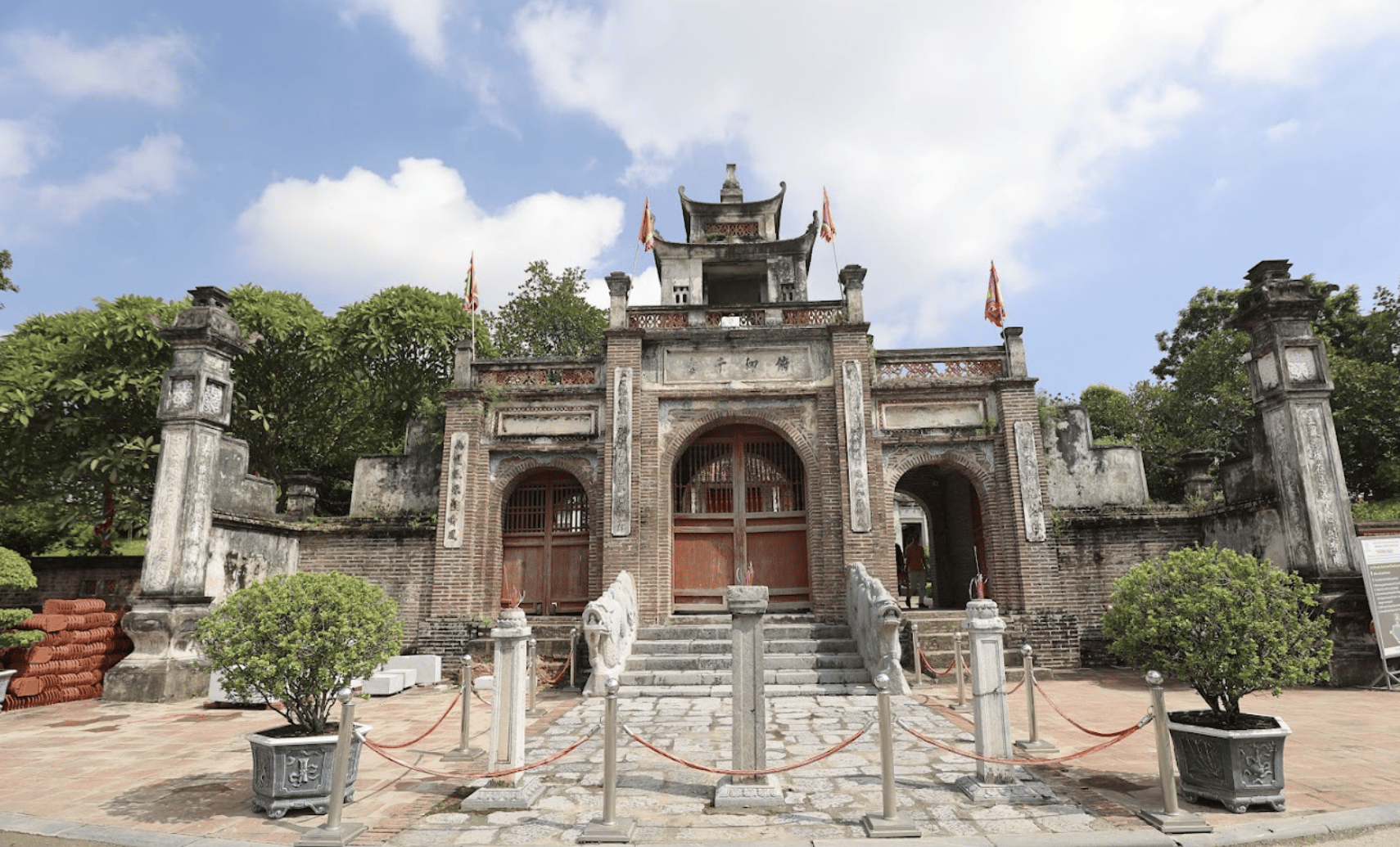
People in the past believed the temple stood on a "dragon's head", so the two small wells on either side of the courtyard were called "dragon's eyes".
04Giếng Ngọc: a story by the water
Directly in front of Thượng Temple is a lake with Giếng Ngọc in the middle, a site associated with the legend of Mỵ Châu – Trọng Thủy handed down through generations. During the Cổ Loa Festival, the palanquin procession often circles Giếng Ngọc before returning to Ngự Triều Communal House. In this area, quan họ singing on dragon boats also used to take place.
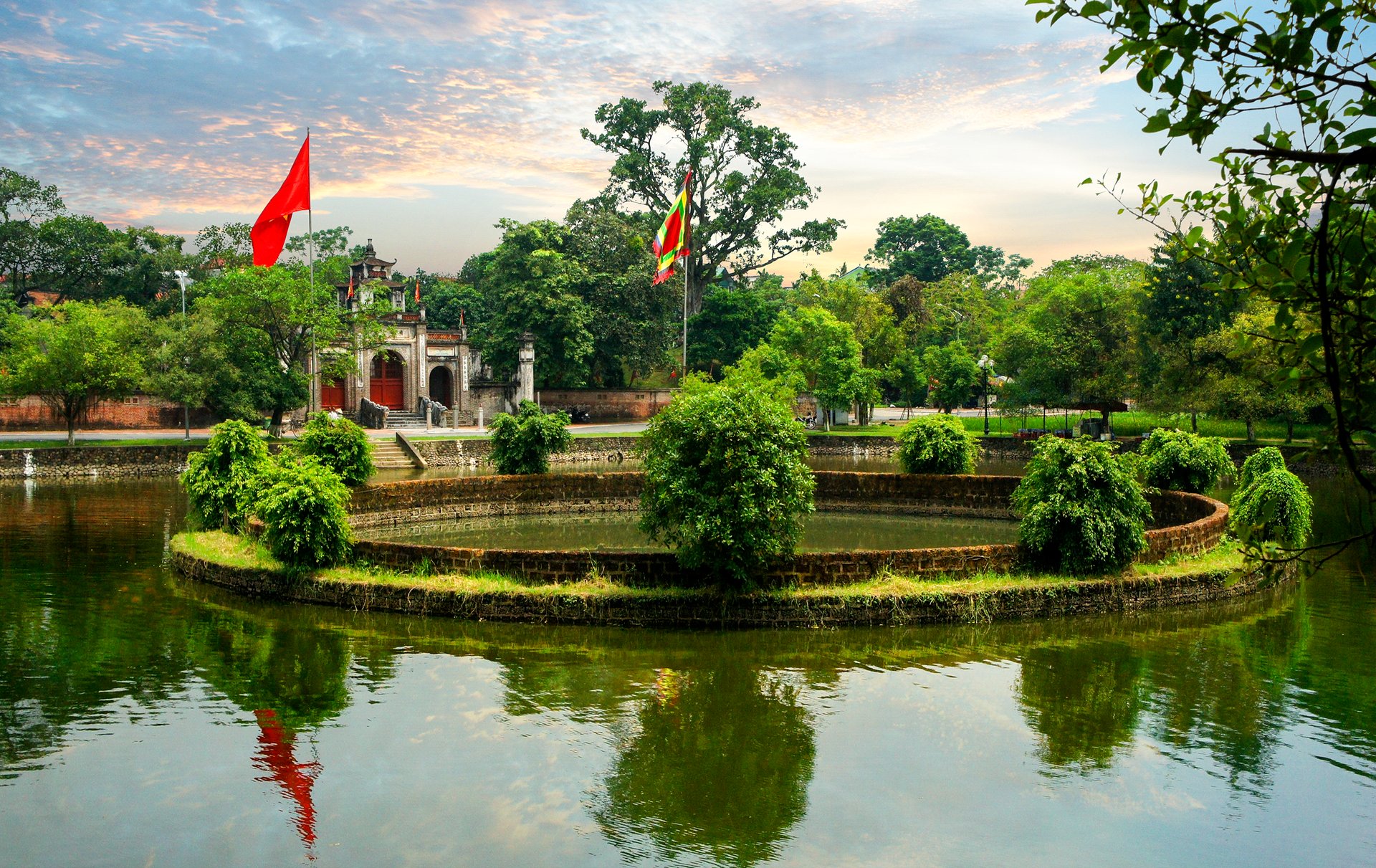
According to legend, the water of Giếng Ngọc is said to make pearls brighter. Collected photo
05Ngự Triều Di Quy Communal House: where the king once held court
Continuing into the Inner Citadel, Ngự Triều Di Quy Communal House appears as a link between the ancient citadel space and later cultural life. The building is associated with the former royal court hall and features a gate, ceremonial curtains, and carved panels on wooden structural elements.
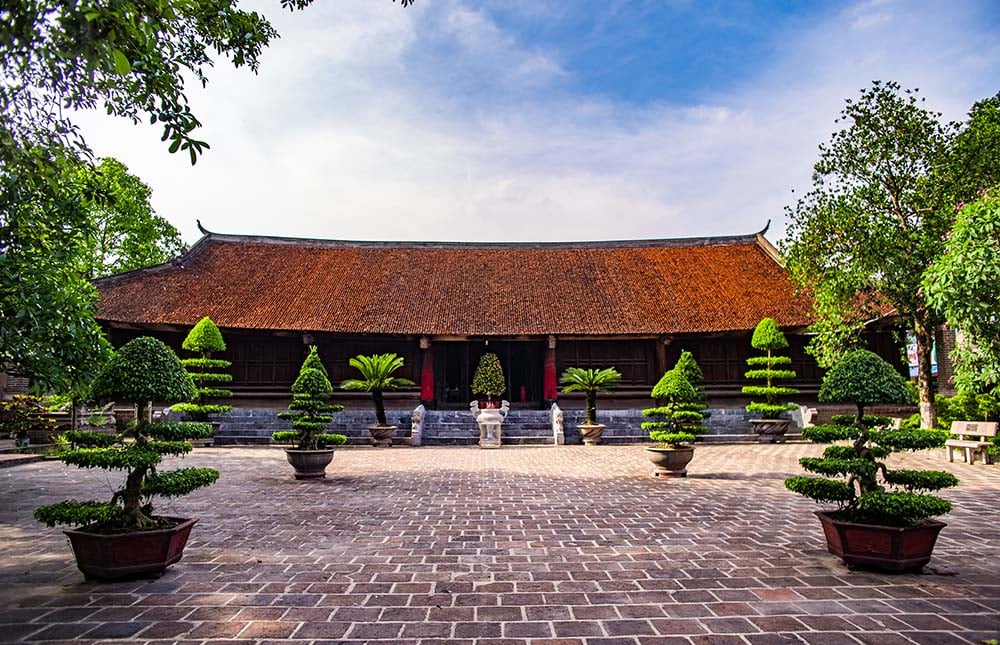
Ngự Triều Di Quy Communal House was built in 1907 on the foundation of Cổ Loa's former royal court hall
Alongside its tangible relic system, Cổ Loa also preserves many intangible cultural values maintained by the community through generations. The Cổ Loa Festival is a typical traditional cultural activity, expressing remembrance of An Dương Vương and the historical and cultural values associated with this land. Communal houses, temples, shrines, and small temples and community belief practices continue to create a rich cultural life for the relic site.
Today, the Cổ Loa Relic Site is a suitable destination for sightseeing, learning about history and culture, research, heritage education, and exploring traditional Vietnamese village space. From the earthen ramparts and water moats to temples, communal houses, shrines, small temples, and archaeological artifacts, each layer of heritage at Cổ Loa helps tell the story of a land that once held an important position in Vietnamese history.
More Other places
- Other placesVerified
Gioi Duc Pagoda (Hong An Temple)
Ung Hoa Commune
5.0Free  Other placesVerified
Hai Giac Pagoda
O Dien Commune
5.0Free Other placesVerified
Phuong Bang Pagoda (Hung Long)
Son Dong Commune
5.0Free Other placesVerified
Sung An Pagoda, also known as Sung Khang Pagoda (Dong Ba Pagoda)
Thượng Cát Ward
5.0Free
