
Quan Thanh Temple
Good to know
- You should arrive early for an open and airy experience
- Comfortable shoes suitable for walking
- Modest and respectful clothing
- Maintain order and respect the worship space
- Adult 10.000₫ · Child 5.000₫ · Priority 5.000₫
- Convenient to travel by taxi or bus. Sightseeing is mainly on foot
Introduction
One of the four places guarding the ancient Thang Long citadel, home to the famous black bronze Tran Vu statue
Located at the intersection of Quan Thanh Street and Thanh Nien Road, right next to West Lake and Truc Bach Lake, Quan Thanh Temple is one of the oldest and most sacred temples in Hanoi. Hidden behind rows of ancient trees is a solemn space, home to the black bronze statue of Huyen Thien Tran Vu, a masterpiece of Vietnamese bronze casting art. Every early year, Hanoians and visitors from near and far come here to offer incense and pray for family peace.
The temple's full name is Tran Vu Quan, dedicated to Huyen Thien Tran Vu, the deity guarding the North. The temple was built during the Ly dynasty and is associated with the formation of the Thang Long capital. Together with Bach Ma Temple, Voi Phuc Temple, and Kim Lien Temple, Quan Thanh Temple forms the "Four Guardian Temples of Thang Long," four sacred temples guarding the four directions of the citadel. After many restorations, in 1842 King Thieu Tri renamed the temple Chan Vu Quan and inscribed a bronze plaque that is still preserved today. In 1962, Quan Thanh Temple was recognized as a national-level historical relic.
Contents
Story
01Don't miss
- Admire the black bronze statue of Huyen Thien Tran Vu , a national treasure nearly 4m high and weighing about 4 tons.
- View the bronze bell cast in 1677 in the temple's bell tower.
- Read the system of ancient horizontal plaques and couplets , along with the plaque "Chan Vu Quan" inscribed by Emperor Thieu Tri.
- Attend a prayer ceremony at the beginning of spring , a cultural beauty of Hanoians when visiting the Four Guardian Temples of Thang Long.
- Stroll around Truc Bach Lake and West Lake , combining with a visit to nearby Tran Quoc Pagoda
02Tam Quan: gateway to the North Guardian
Passing through Tam Quan is a courtyard leading to the main worship area. In 1677, under King Le Hy Tong, Tran Vu Quan was rebuilt on a larger scale. The basic appearance of the temple today was formed after the restoration in 1893.
From the courtyard looking in, the words "Tran Vu Quan" stand out on the main hall. Successive roof layers are below wood carvings with dragons, phoenixes, and flowers and leaves.
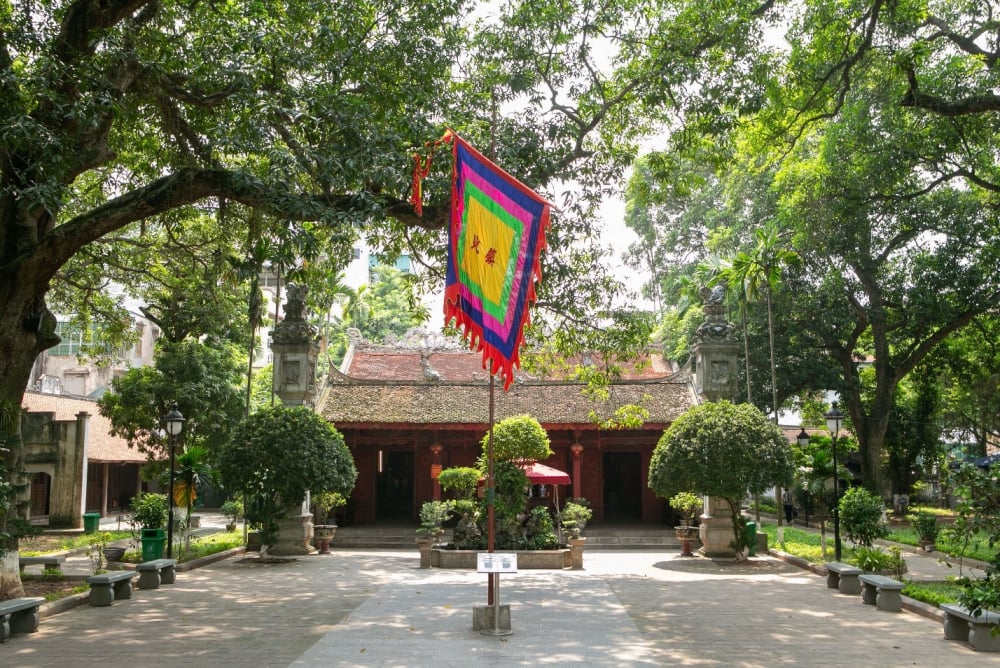
Tam Quan opens onto the main courtyard of Quan Thanh Temple. Collected photo
03Ceremonial gate and bell tower – entrance to the sacred place
The temple includes a ceremonial gate, bell tower, great worship hall, and rear sanctuary. Passing through the four-pillar ceremonial gate is a courtyard shaded by ancient trees, completely separated from the noisy life outside. The bell tower still preserves the bronze bell cast in the Dinh Ty year (1677), the same period as the Tran Vu statue.
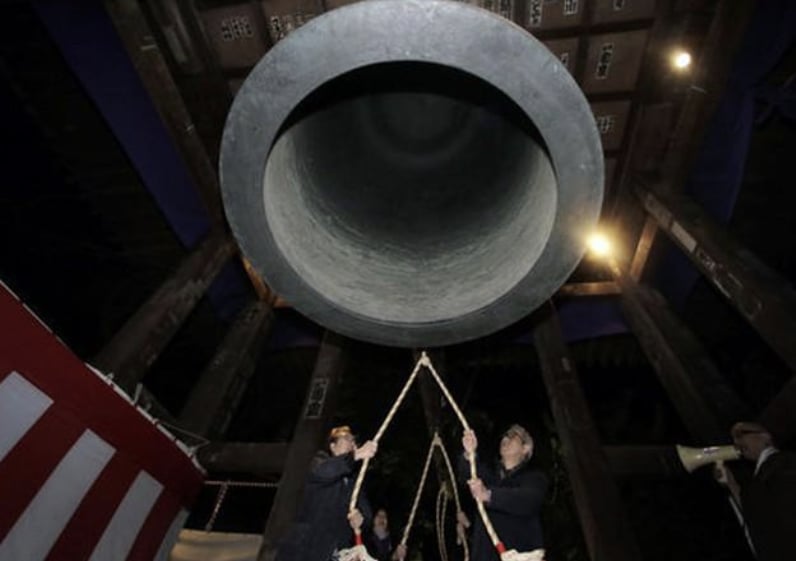
The bell is located on the Tam Quan tower and, together with the Tran Vu statue, forms a representative pair of bronze artifacts of Quan Thanh Temple. Collected photo
04Rear sanctuary - Tran Vu statue, a bronze deity over 350 years old
The highlight of the temple is the black bronze statue of Huyen Thien Tran Vu, cast in 1677 under King Le Hy Tong. The statue is 3.96m high, weighs about 4 tons, and was recognized as a national treasure in 2016. The deity sits on an octagonal pedestal, wears armor decorated with lotus flowers, rests his hand on a sword wrapped by a snake, with the sword tip placed on a turtle's back. This is one of the largest and most beautiful bronze statues in Vietnam.
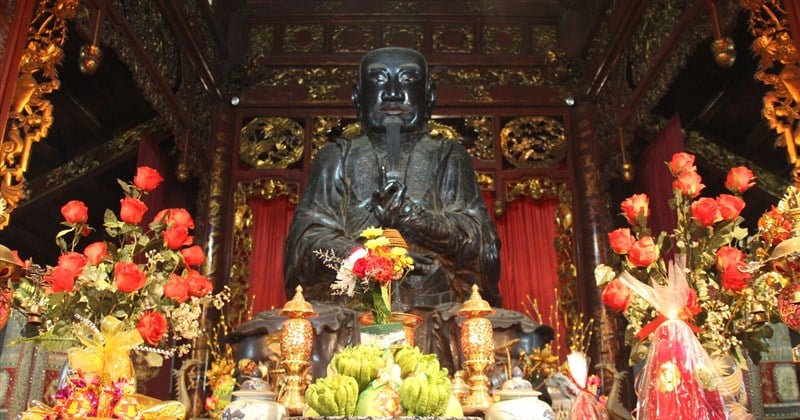
Famous black bronze statue of Huyen Thien Tran Vu. Collected photo
05Legend of Tran Vu deity and West Lake
According to legend, Tran Vu deity once helped An Duong Vuong expel demons when building Co Loa citadel. Folklore also tells that he killed the lake spirit in the Long Do area, linked to the formation of West Lake. Those stories, along with his position guarding the northern gate of the citadel, make a visit to the temple by West Lake more meaningful for tourists who want a deeper understanding of the spiritual culture of Thang Long.
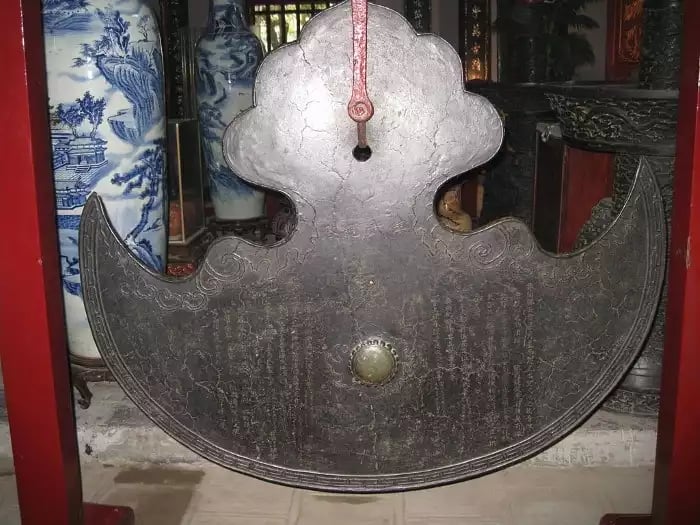
The bronze chime was cast in the 17th - 18th century. Collected photo
More Other places
- Other placesVerified
Gioi Duc Pagoda (Hong An Temple)
Ung Hoa Commune
5.0Free  Other placesVerified
Hai Giac Pagoda
O Dien Commune
5.0Free Other placesVerified
Phuong Bang Pagoda (Hung Long)
Son Dong Commune
5.0Free Other placesVerified
Sung An Pagoda, also known as Sung Khang Pagoda (Dong Ba Pagoda)
Thượng Cát Ward
5.0Free
