
Sen Chiểu Temple National Relic Site
5.0Free
5.0Free
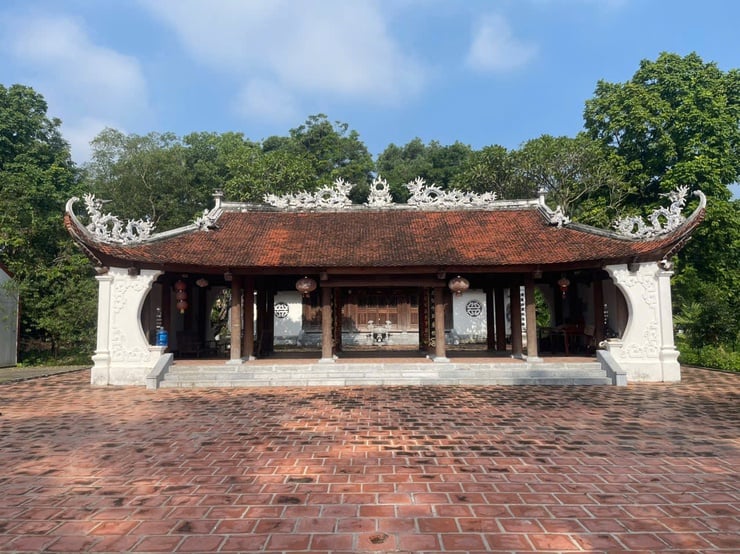
Sen Chiểu Temple is one of the typical religious structures in the traditional relic complex of Sen Chiểu Village. The temple has the Sino-Vietnamese name “Thần Mẫu Linh Từ”, associated with the worship of Bạch Ngọc Thánh Mẫu – a figure recorded in the village’s genealogical record. Together with Sen Chiểu Shrine and Phúc Tâm Pagoda, Sen Chiểu Temple forms a long-standing cultural and religious space closely tied to the spiritual life of the local community.
Sen Chiểu Temple, Shrine, and Phúc Tâm Pagoda currently belong to Sen Chiểu Village, Phúc Lộc Commune, Hà Nội City. According to historical documents, this area formerly belonged to Sen Chiểu Commune, Phúc Lộc District, Quảng Oai Prefecture, Sơn Tây Garrison; later the administrative boundaries changed many times. The relic complex is located on the south bank, near the foot of the Red River dike, about more than 40 km from the capital Hà Nội. The pagoda is at the beginning of the village, about 50 m from the foot of the dike; the Temple and Shrine are located near Phúc Tâm Pagoda.
According to the genealogical record “Chiêu ứng hộ quốc đại vương”, written in the second year of Hồng Đức (1471), the land of Sen Chiểu was formed and developed from the Hùng Vương era. The ancient village of Sen Chiểu then consisted of two hamlets, Phương Độ and Đông Bảo; later place names such as Lan Chiểu and Liên Chiểu emerged, followed by Sen Chiểu.
Also according to the genealogical record, Sen Chiểu was the birthplace of two famous figures of the Hùng dynasty: Bạch Ngọc Thánh Mẫu and Chiêu ứng Hộ quốc Đại vương. Because of their many merits in internal governance and resistance against foreign invaders, after their passing, the people established places of worship for them.
Bạch Nương was from Liên Chiểu, the daughter of the Lê family, and married Bùi Kiều, a man from Phương Độ hamlet. According to the legend recorded in the genealogical record, Bạch Nương had a special origin; after marrying Hùng Hạo – the Hưng Hóa tribal chief – she followed her husband to the official residence. She later gave birth to a son, Chiêu Sinh. When the child was small, she passed away on the Red River. Grieving for his wife, Hùng Hạo had the people of Lan Chiểu build a temple to worship her, honoring her as Lady Bạch Nương.
Hùng Chiêu, son of Hùng Hạo and Bạch Nương, was educated and trained from childhood and soon became proficient in martial arts and skilled in military strategy. After taking part in the talent selection examination organized by Hùng Duệ Vương, he passed and was appointed to the post of Thái bộc, with the title Nghi Thuận hầu.
After taking office, Hùng Chiêu was sent by the court to suppress banditry in the Đoài region. In Phúc Lộc District, he was credited with pacifying the people and bringing the bandits to submission. He was then appointed as the administrator of Hưng Hóa land, and the two hamlets of Phương Độ and Đông Bảo were granted to him as estate lands.
At the end of Hùng Duệ Vương’s reign, faced with invasion by northern enemies, Hùng Chiêu and Tản Viên Sơn Thánh twice commanded the Văn Lang army and defeated the invaders. After those victories, Hùng Chiêu was conferred the title Hộ quốc Đệ vương. In the second resistance against the northern invaders, he commanded the naval force and coordinated with the land force under Tản Viên Sơn Thánh, defeating the enemy in the Bạch Hạc area and pursuing them all the way to their capital. After the victory, Hùng Chiêu passed away at the riverbank in Xuân Mãn Commune, Yên Dũng District, Lạng Giang Prefecture.
When King Hùng learned the news, he was deeply grieved and ordered localities to worship him, conferring on Hùng Chiêu the title Chiêu ứng An dân Hộ quốc Đại vương and on his mother the title Bạch Ngọc Thánh Mẫu Công chúa. Among the 54 villages that worship them, Lan Chiểu – the homeland of the Holy Mother – is regarded as the main temple.
Sen Chiểu Temple currently stands on an elevated plot within the common grounds of the village’s traditional relic complex. The temple faces east, looking toward a lotus pond in front. The temple space includes main components such as the entrance gate, auxiliary shrine, and main temple, arranged centrally around a square brick courtyard.
The relic entrance gate has a simple structure made of pillar markers. The two central columns form the main entrance and have square cross-sections. Two smaller columns stand about 2 m from the main pillars. On top of each column is a nghê statue facing inward. On both sides are low parapet walls, whose outer faces bear relief images of military mandarins holding weapons, creating a solemn feeling and protecting the worship space.
Beyond the gate is a square brick courtyard. Two sides of the courtyard have low enclosing walls. Against the rear wall of the two central bays is a brick platform about 50 cm high for placing worship statues.
Although the architectural space of Sen Chiểu Temple no longer retains the large scale it once had, it still clearly shows the characteristics of a traditional religious structure, combining courtyard, gate, auxiliary shrine, and worship areas.
Sen Chiểu Temple currently preserves many valuable artifacts dating across the Lê, Tây Sơn, and Nguyễn periods. These include:
- A bronze bell from the Nguyễn period, 19th century.
- A bronze censer from the 19th century.
- A stone incense bowl carved with flanking dragons and cloud motifs.
- Two blue-and-white porcelain vases from the 19th century.
- A wooden altar carved with flanking dragons, phoenixes, and tiger symbols, dating to the 19th century, measuring 1.80 m x 1.35 m x 0.60 m.
- Two couplets and one horizontal plaque bearing the characters “Thần Mẫu Linh Từ”.
- Two royal edicts from the Nguyễn period.
- A deity genealogy written in the Hồng Đức period, 15th century, and copied in later periods.
These artifacts help reflect the long history of the relic’s existence and also provide valuable materials for research on local beliefs, history, and traditional art.
According to genealogical records, every year on the 8th day of the first lunar month – the birthday of Hùng Chiêu; the 15th day of the eighth lunar month – the birthday of the Holy Mother; the 12th day of the ninth lunar month and the 3rd day of the eleventh lunar month – the days of transformation, the local people hold solemn ceremonies.
In the rituals, it is stipulated that the tam sinh offering must use all-black animals such as black buffalo and black pig, and white, red, green, and purple are avoided. In the village's everyday language, there is also a taboo against using the three sacred names Chiêu, Bạch, and Mạo.
These rituals and customs reflect the community's reverence for the figures worshipped, and at the same time demonstrate the continuity of traditional belief practices handed down through many generations.
Sen Chiểu Temple is a religious site associated with the history of the formation and development of Sen Chiểu village. The relic preserves legendary stories, divine records, genealogical records, and a system of artifacts related to Bạch Ngọc Thánh Mẫu and Chiêu ứng Hộ quốc Đại vương.
The value of the relic is demonstrated not only in the architectural structure itself but also in the system of documents, antiquities, and customs and rituals preserved by the community. It is an important part of the traditional cultural space of rural villages in the Red River Delta.
Together with Sen Chiểu Shrine and Phúc Tâm Pagoda, Sen Chiểu Temple forms a complex of relics that connects the worship of deities with Buddhist life, contributing to reflecting the spiritual and cultural life of local residents through many periods.



