
Phuc Loc Communal House National Relic
5.0Free
5.0Free
Introduction
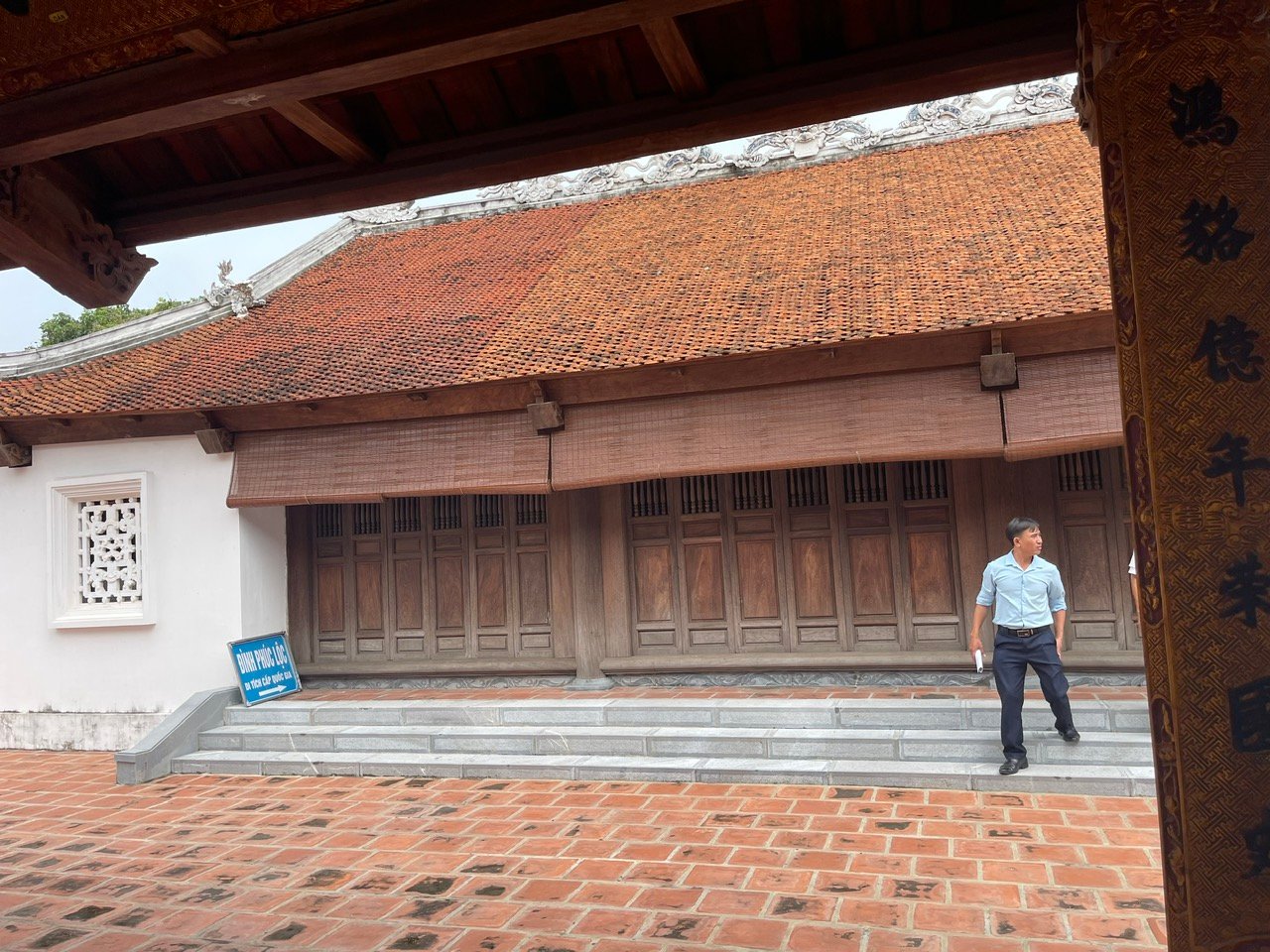
Among the 23 communes of Phuc Tho District, Phuong Do Commune is located in the northwest of the district and was formed and developed on the basis of the merger of three long-standing villages: Phuong Do, Phuc Loc, and Dong Huynh. Research in the book Cac tran tong xa danh bi lam shows that before the August Revolution of 1945, Phuong Do and Dong Huynh villages belonged to Phu Sa Canton, while Phuc Loc village belonged to Cuu Dinh Canton, all in Phuc Tho District, Son Tay Province. After the August Revolution of 1945, the old administrative apparatus changed greatly when district and canton levels were abolished. By late November 1946, under the direct direction of the Provisional Revolutionary Committee of Phuc Tho District, the three villages of Dong Huynh, Phuc Loc, and Phuong Do officially gathered into a single administrative unit, Phuong Do Commune. After July 1, 2026, implementing the policy of continuing to merge administrative units and implement a two-tier government, Phuc Loc Communal House now belongs to Phuong Do Village, Phuc Loc Commune, Hanoi City.
Through the turbulent flow of history, the administrative boundaries of what is now Phuc Loc Communal House in Phuong Do Village, Phuc Loc Commune, have also been tied to many changes in the provinces of the capital region. In 1965, Son Tay and Ha Dong Provinces merged into Ha Tay Province, and Phuong Do Commune belonged to Phuc Tho District of the new province. Then in 1976, Ha Tay Province merged with Hoa Binh to form Ha Son Binh Province, and Phuc Tho District at that time was under Ha Son Binh Province. In 1979, when a series of districts and towns such as Ba Vi, Son Tay, Thach That, Phuc Tho, Quoc Oai, and part of Chuong My District were merged into the capital, Phuong Do Commune belonged to Phuc Tho District, Hanoi City. In 1990, Ha Son Binh Province was split and re-established as two provinces, Ha Tay and Hoa Binh, and Phuc Tho District then returned to Ha Tay Province until July 31, 2008. August 1, 2008 marked an important milestone when Resolution No. 15/NQ-QH of the 12th National Assembly on expanding the capital administrative boundaries was implemented, and the entire province of Ha Tay, along with Me Linh District and four communes of Luong Son District, was merged into Hanoi. Since then, Phuong Do Commune has continued to be an administrative unit under Phuc Tho District of the capital Hanoi, and is now under Phuong Do Village, Phuc Loc Commune.
To travel to the relic, visitors can choose several convenient routes. Starting from the center of Hanoi at the Bo Ho Post Office area, visitors pass through streets such as Hang Bong, Cua Nam, Kham Thien, and De La Thanh to join National Highway 32 and travel to Phuc Tho Commune. There, visitors turn right toward Gach Crossroads along the intercommunal road up the Red River dike to Phuc Loc Commune; continuing about 1.5 km brings them to Phuong Do Village, where the communal house stands right at the village gateway. The complete road transport system makes travel by all types of vehicles very easy.
Based on the content of the Than pha document kept at the relic, a copy made in the 5th year of Khai Dinh (1920) from documents of the Cabinet of the Ministry of Personnel, following the old copy described in the 6th year of Vinh Huu (1740) and compiled by Dong Cac Grand Scholar Nguyen Binh in the 1st year of Hong Phuc (1752), combined with the system of relic texts and legends passed down through generations of village elders, Phuc Loc Communal House is a sacred place dedicated to Thien Duc Thuong Sy Dai Vuong. The divine legend recounts that during the reign of King Ly Thanh Tong (1044–1072), in Vi Hoang hamlet, Cao Loc District, Nam Sach Prefecture of the old Hai Duong region, there lived a Cao family that made a living by fishing; although poor, they always accumulated virtue and cherished life. Once, while fishing on the river, the couple happened to pick up twenty gold nuggets and became wealthy, but they still kept a kind heart and devoted themselves to good deeds. Although old and weak and without an heir, they prepared boats and offerings and went to Hat Giang estuary, then sought out the efficacious Sai Son Pagoda on the top of Sai Mountain to pray for a child.
That night, after praying and resting at the front shrine in the cave, at the end of the third watch, the couple dreamed that an elderly man granted them an auspicious sign of a child to continue the family line. As their boat returned past the Nhi Ha River, a storm arose, and the boat drifted to take shelter at an ancient shrine in Phuc Tho hamlet, now Phuc Loc Village. In a dream during the fourth watch there, the wife saw a person who called himself of the Hung family lineage, once abbot of Quang Minh Pagoda, who later cultivated and attained the Way, became king of the northern country, and transformed into the local tutelary god with the title Thien Duc; he now asked to obey the heavenly court and be reincarnated as the couple's child. Indeed, afterward she became pregnant and gave birth to a handsome, dignified son on the 12th day of the 3rd lunar month, named Thien Duc. When he grew up, he was accomplished in both civil and martial arts and learned in military texts, and people honored him as Thanh Dong. When his parents died, he observed mourning dutifully, then went to study in the imperial capital, quickly became famous, and was recommended and appointed as Thuong Sy.
When Tong-Chiem invaders joined forces with Champa troops and caused disturbances in the border region, the court summoned the ministers and appointed him Great General, bearing the vanguard seal, to patrol the Northwest region. He led his troops to Phuc Tho hamlet, established fortifications, won over the people, and was asked by the village elders to become their household patron deity. After performing the ceremony announcing to heaven and earth, he led his troops to attack Chau Kham Fort, defeated the enemy, recovered countless weapons and provisions, and brought peace to the country. When the mission was completed, he returned to court to pay his respects, was granted a banquet by the king, praised in verse, and given a fief in Son Tay region. Returning to his post and visiting Sai Son Cave again, he returned to Phuc Tho hamlet to entertain the household deities, distribute money to help the poor, and instruct on matters of worship. Immediately afterward, yellow clouds suddenly rose in heaven and earth, and a red silk ribbon appeared to carry him to heaven on the 2nd day of the 7th lunar month. The court was deeply grieved and bestowed on him the title of Thuong Dang Phuc Than with many noble titles. In later historical periods such as the Tran and Le dynasties, emperors continued to issue edicts and approve that the people of Phuc Tho hamlet should forever offer incense and worship the tutelary god who had rendered service to the country and the people.
Phuc Loc Communal House is located in an open, spacious area right in front of the village gate, facing southwest. In front of the relic is a large yard combined with ancient moss-covered trees that serve as a minh duong, behind it leans against the solid Red River dike as a rear support, to the left is a concrete road leading to the gate as the thanh long, and far to the right is a pond meaning bach ho, creating a very favorable land position of ngoa ho tang long. Through many historical ups and downs, having been scorched-earth destroyed during the resistance in 1948 and undergoing relocation and restoration in 1952, 1980, 1991, 1992, and 2004, Phuc Loc Communal House now stands within spacious grounds with a total planned area of nearly 3,000 square meters of stable, clearly defined land.
The main architectural items of the relic are arranged harmoniously and skillfully. The gateway system stands out with pillars decorated with four phoenixes, lantern panels decorated with the four sacred creatures, combined with low walls in relief showing pairs of war horses and a two-tiered, eight-curved-roof gate cluster covered with fish-scale tiles. Passing through the outer space is the Fore Hall, a horizontal house with three bays and two wings and four curved roofs, using a solid load-bearing structure of the thuong gia chieng ke ngoi, ha ke bay type on a foundation of eight main columns and sixteen secondary columns carefully planed and fitted. Adjacent across an open yard is the Great Hall, a three-bay, two-wing house parallel to the Fore Hall, notable for its ridge decorated with two dragons flanking a moon against a tiger-symbol background and its elegant folding panel doors. Tightly connected to the central bay of the Great Hall at the rear is the Rear Sanctuary in a Dinh-shaped plan; this is a solemn space with closed gable walls, inside which is a sacred elevated niche housing the statue of the village tutelary god. In addition, the relic grounds also include the Left Wing and an altar space for the carpentry trade ancestors, which the people have brought in for joint worship, increasing the rich traditional cultural value of the communal house.
The Phuc Loc communal house festival is a distinctive spiritual and cultural activity, held from the 9th to the 13th day of the 2nd lunar month every year, with the main festival day on the 12th. The series of events begins with the flag-raising ceremony on the morning of the 9th day of the 2nd lunar month, when young men raise the five-color flag to announce the new festival season. Next are solemn rituals such as the Van Procession, which recognizes the cultural tradition of the Tu Van Association in drafting ritual invocations for ceremonies. One of the most unique and grand rituals is the Water Procession on the afternoon of the 11th day of the 2nd lunar month. The procession, with a palanquin of flowers and fruit, a palanquin carrying a water jar, and dozens of young men, goes to the Red River bank and performs a ritual asking permission from the water deity to scoop the purest water and bring it back to the communal house for the moc duc ceremony, while also expressing the wish for favorable rain and wind and an abundant harvest.
On the night of the 11th day of the 2nd lunar month, the ritual committee and the people conduct the Cao Te ceremony to report to the tutelary god about the rituals of the main festival day and to pray for peace and blessings for the villagers. After the exact midnight hour, the nghinh goi ritual is performed with the pure water already brought back. On the morning of the 12th day of the 2nd lunar month, the incense-offering ceremony takes place to remember the great merits of the heroic general, following the tradition of remembering the source when drinking water. Immediately afterward is the solemn Te Than ceremony with the full participation of the village ritual committee and assistant celebrants from the long-standing twinned villages of Phuc Trach and Phu Sa. In particular, the Hop Te ceremony, expressing the close brotherly bond between Phuc Loc and Phuc Trach villages, takes place on the 13th day of the 2nd lunar month based on their historically sworn friendship, closing the bustling village festival days before the ceremony to close the communal house. In addition, every year on the 2nd day of the 7th lunar month, the death anniversary of the village tutelary god, the people solemnly organize ceremonies, fly mourning flags, and absolutely do not sing or make merry, to express their reverence and gratitude.
With its outstanding values as a historical and artistic relic, Phuc Loc Communal House was ranked as a national-level relic under Decision No. 952/QD-BVHTT and TT dated March 17, 2016, by the Ministry of Culture, Information and Tourism.



