
Thanh Chiểu Shrine National Relic
5.0Free
5.0Free
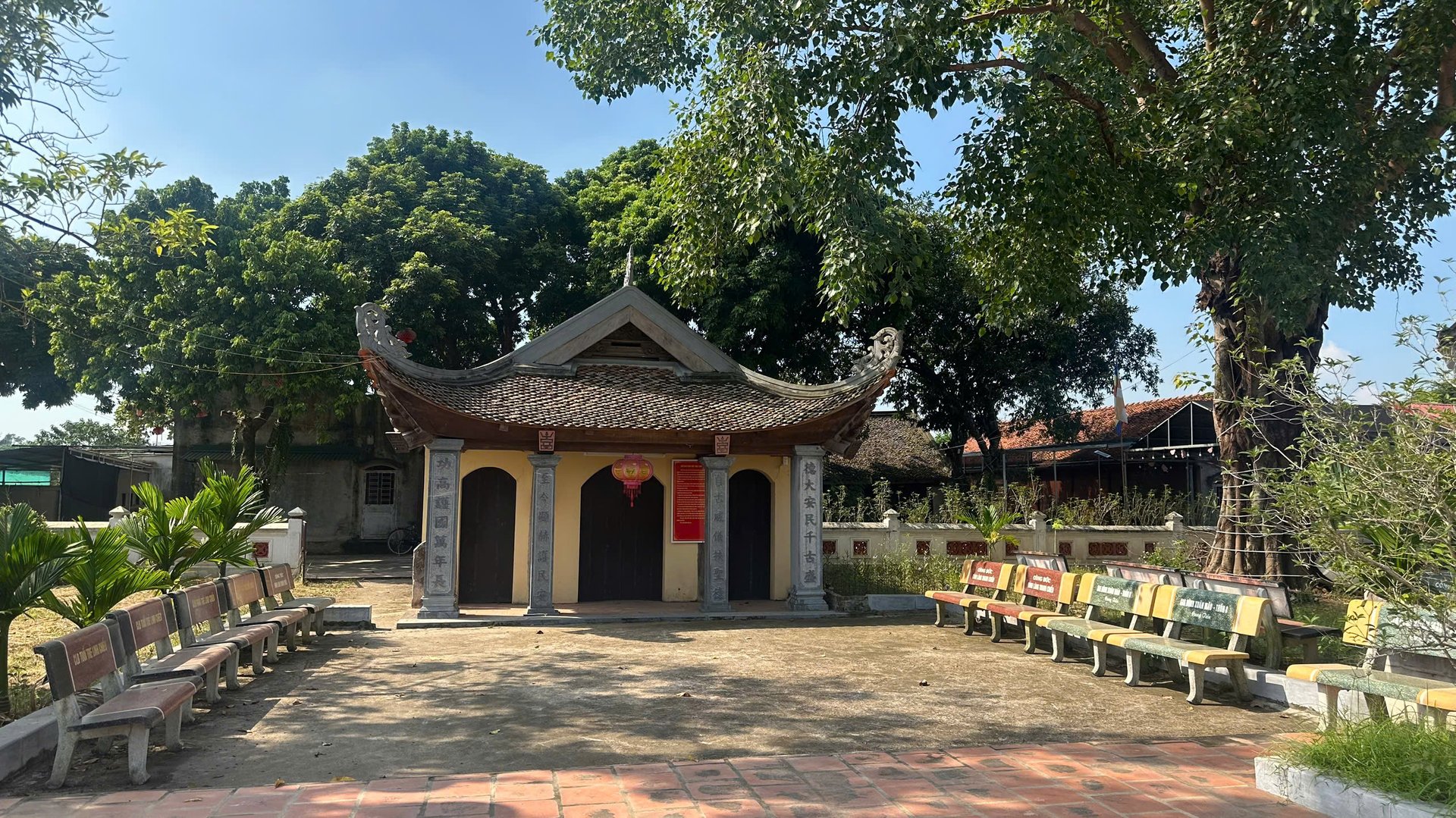
Thanh Chiểu Shrine is an important religious structure in the complex of Thanh Chiểu Communal House – Shrine and Cổ Linh Pagoda. If the communal house serves the function of community cultural activities, the shrine is the regular residence of the village tutelary deity. During festival days, the village organizes a solemn procession to bring the tutelary deity from the shrine to the communal house for offerings; after the festival ends, the deity is escorted back to the shrine.
Thanh Chiểu Shrine currently belongs to Linh Chiểu Village, Phúc Lộc Commune, Hà Nội City. Historically, the place name Thanh Chiểu was once Lịnh Chiểu and underwent many changes in administrative boundaries.
The shrine is located in a large plot in the middle of the fields, to the left of Cổ Linh Pagoda, while the communal house is to the right of the pagoda yard. The structures are arranged in a concentrated manner, surrounded by wide gardens that create a harmonious landscape for the relic complex.
Thanh Chiểu Shrine is associated with the worship of the village's deities, including the three Mountain Deities on Tản Viên Mountain and District Chief Cổ Đỗ Văn Minh.
According to the village genealogy of Thanh Chiểu Village recorded by Nguyễn Bính in the first year of Hồng Phúc (1572), the three Tản deities originated from three sons: Sùng Công, Hiền Công, and Nguyễn Tuấn.
Nguyễn Tuấn was later conferred the title Tản Viên Sơn Thánh, Nguyễn Sùng governed Nội Sơn, and Nguyễn Hiền governed Lãng Sơn. The three were recognized for their merits and are associated with important legends of the Hùng Vương era.
According to legend, Tản Viên Sơn Thánh and his two younger brothers joined the fight against Thủy Tinh when this deity raised floods and, together with aquatic monsters, attacked Tản Viên Mountain. Tản Viên Sơn Thánh and a large number of people pushed back the floods and disasters caused by the water deity.
By the end of the Hùng dynasty, the three continued to lead soldiers and people to defeat northern invaders. After those victories, worship of the Mountain Deities was practiced in many localities. Thục An Dương Vương allowed villages near where Tản Viên lived to build communal houses and shrines for worship.
Another historical figure worshipped at Thanh Chiểu Communal House and Shrine is District Chief Cổ Đỗ Văn Minh, leader of the insurgent army against French colonial rule in the late 19th century.
District Chief Cổ's real name was Phùng Văn Minh, a native of the Hà Nam Ninh region. Because his family was poor, he went to Thanh Chiểu to become the godson of Mr. Đỗ Văn Kiên and therefore changed his surname to Đỗ.
When he was young, he served as a colonial soldier for the French to learn how to use weapons. In 1879, when the French captured Sơn Tây Citadel, Đỗ Văn Minh recruited insurgent soldiers to fight the enemy. He advocated seizing the enemy's weapons to equip the insurgent forces and once infiltrated the French garrison at Phù Sa Communal House to obtain guns and ammunition.
From 1882 to 1887, the insurgents actively attacked many French military posts. At the end of 1887, the French organized several military campaigns to encircle the insurgents.
In 1889, District Chief Cổ established a base in Vật Lại Village, Ba Vì. On February 10, 1889, he was killed by French troops while investigating and observing the enemy's defensive arrangements.
After his death, local people honored him as the village tutelary deity and worshipped him alongside the Mountain Deities.
In the structure of a traditional northern Vietnamese village, the communal house and shrine have different functions but are closely linked.
The communal house is where community cultural activities and important rituals during the village festival take place. Meanwhile, the shrine is where the village tutelary deity regularly resides.
On festival days, the people organize a solemn procession to bring the deity from the shrine to the communal house for offerings. When the ceremony ends, the deity is escorted back to the shrine. The distance between Thanh Chiểu Communal House and Shrine is arranged to suit the performance of procession rituals during the festival.
This arrangement expresses the close relationship between worship space and community life, while also reflecting the religious characteristics of traditional northern Vietnamese villages.
Thanh Chiểu Shrine has a small architectural scale, consisting of a single three-bay longitudinal building.
The front of the structure has a small gable roof with upturned curved corners; the rear has a closed gable wall. The enclosing wall bricks are large and left exposed, giving the structure an ancient appearance.
The shrine floor is about 40 cm above the yard. The front opens with paneled doors; inside, a raised brick platform is built as the place of worship.
The roof-supporting frame of the shrine is quite sturdy, consisting of four identical roof trusses in the style chồng giường giá chiêng. On the trusses, the horizontal beams supporting the giường are placed directly on the two enclosing walls.
Each truss consists of two rows of feet, with a roof in the upper-four, lower-five arrangement. The columns are large and dragon-shaped; the column bases are made in two layers, the upper layer round with a diameter of about 42 cm, and the lower layer square about 60 x 60 cm.
The gable roof section has two curved braces mortised into the main columns and veranda columns. The main truss adjacent to the gable roof has stacked giường tightly together to form decorative panels.
A notable point in the shrine's decorative art is that the outer surfaces of the giường beams are fully covered with cloud and plant motifs. The lines are large, thick, and in relief, creating a distinctive beauty for the architectural frame.
Thanh Chiểu Shrine is an inseparable part of the village's communal house–shrine–pagoda complex.
The value of the Shrine lies first of all in its religious function: it is a place where the village tutelary god is regularly worshipped and the starting and returning point of the deity procession rituals during the festival.
The Shrine also preserves the historical memory of the mountain deities of Tản Mountain – figures of important standing in Vietnamese folk beliefs – and of Quận Cổ Đỗ Văn Minh, a man remembered by the people of Thanh Chiểu for his anti-French colonial activities at the end of the 19th century.
In terms of architecture, although small in scale, the Shrine still retains its traditional structure with a three-bay house, closed gable walls, a high foundation, a system of stacked trusses and frames, and decorative details of cloud and plant motifs.
Those elements contribute to the historical, cultural and artistic value of Thanh Chiểu Shrine, while also reflecting the characteristics of the religious architecture of northern rural villages.



