
Nam Hong Resistance Tunnels
5.0Free
5.0Free
Introduction
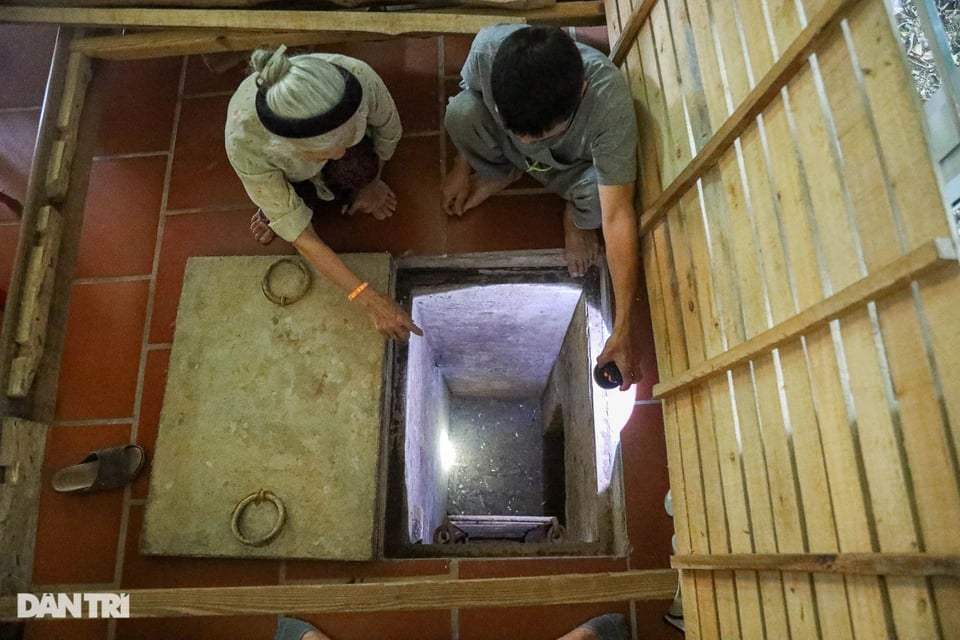
During the resistance war against the French (1946-1954), a famous place in the former Nam Hong Commune, now Phuc Thinh Commune, entered history as a glorious milestone, marking a page of heroic, steadfast struggle and countless hardships and sacrifices. It was the Nam Hong Tunnels - a model tunnel system in northern Vietnam during the most fierce years of the resistance "by the whole people, comprehensive, long-term and protracted resistance".
The Nam Hong Tunnels are located about 20 km northwest of central Hanoi. They belong to Ve Hamlet, former Nam Hong Commune, now Phuc Thinh Commune, Hanoi. This is a midland area of the Red River Delta, a border area between our forces and the enemy, from the Viet Bac base to the enemy's headquarters in the Red River Delta, so Nam Hong has its own characteristics.
During the war to defend the country, this place was a resistance village with glorious combat achievements. On January 29, 1996, former Nam Hong Commune was honored to be awarded the noble title Hero of the People's Armed Forces by the President.
According to the accounts of some elderly people, this place was formerly called a resistance village, surrounded by bamboo ramparts like walls. There was only one unique road into the village. During the resistance war against the French, in the face of enemy sweeps, our ancestors chose this place as a revolutionary base. The tunnel system at that time was nearly 11 km long.
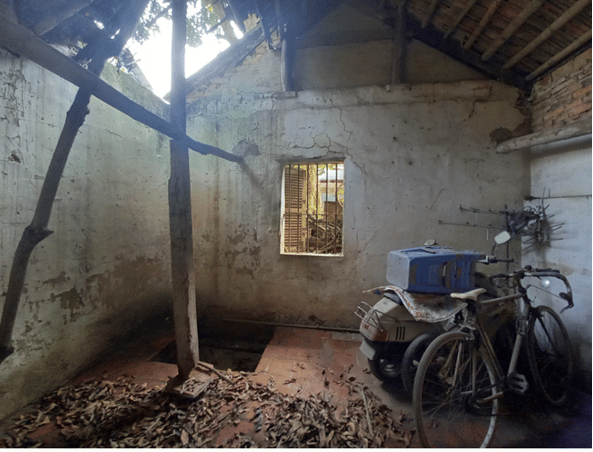
Starting point of the tunnel at Mr. Pham Van Doc's house, Ve Hamlet
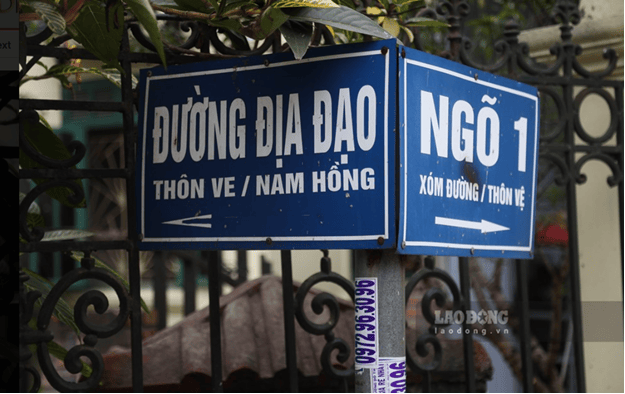
The tunnel route passing through
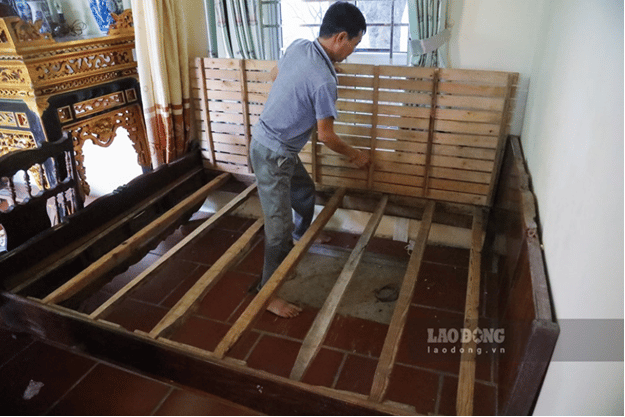
A tunnel entrance located under the bed of Ms. Pham Thi Lai's family
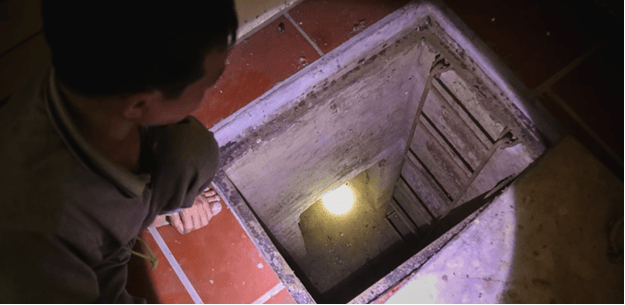
Tunnel entrance
Currently, the tunnel is only about 67 m long and runs underground through 4 families: Mr. Pham Van Doc's family, Mr. Pham Van Can's family, Mrs. Phien's family, and Mrs. Le's family. One entrance to the tunnel opens into the room of Mr. Doc's house - where martyr Tran Kien fought the enemy steadfastly and died heroically. The tunnel runs in a zigzag, winding manner; each section has a dead-end branch for temporary shelter or an entrance leading up to the ground or to another tunnel section. On the surface, ventilation holes are discreetly and cleverly concealed with natural available cover such as culvert lids, tree roots, walls, etc.
Outside the tunnels, Nam Hong also had a surrounding wide moat system, thick bamboo ramparts, secret shelters, and combat positions. During the resistance war against the French colonialists, Nam Hong fought a total of 308 battles; 113 martyrs died and 2,017 houses were destroyed by the French.
To protect the tunnel relic, in 1980, the Capital Military Region installed ceilings and both sides of the tunnel with concrete panels to prevent collapse, with the ceiling-to-ground thickness from 60 to 80 cm. Therefore, today's tunnel is higher than the old one and has a fixed rectangular shape.
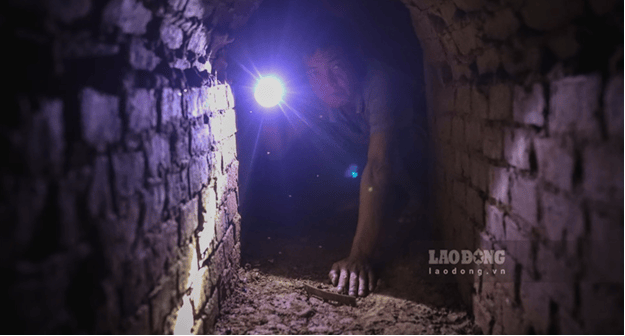
The tunnels were usually round or elliptical, dug small enough for a person to move by crawling, half-crawling and half-sitting, hollowed out in the earth.
The Nam Hong Tunnels are a heroic vestige of clinging to the land and defending the village, fighting the enemy directly, of the people of Nam Hong. This is one of the first tunnels of the protracted, arduous resistance war against the French, a place that highly promoted the wisdom and creativity of our Party and people. The Nam Hong Tunnels record the persistent struggle of the local people in particular and of our army and people in general. On May 26, 1995, General Vo Nguyen Giap, when visiting the Commune, wrote: "The Nam Hong tunnel system is a unique historical relic in the Red River Delta during the resistance war against the French colonialists. I see this as a very valuable historical relic that greatly needs protection and restoration to educate young generations about tradition..."
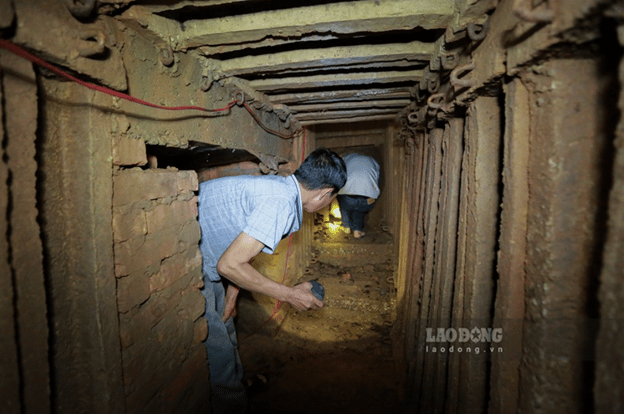
To protect the tunnel relic, in 1980, the Capital Military Region installed ceilings and both sides of the tunnel with concrete panels to prevent collapse and subsidence, with the ceiling-to-ground thickness from 60 to 80 cm. Therefore, today's tunnel is higher than the old one and has a fixed rectangular shape.
After peace was restored, Nam Hong was honored to be awarded many orders and medals of various types by the State, and many examples of heroic individuals and collectives were recognized.
The Nam Hong Tunnels have entered national history as evidence of the arduous, fierce but extremely heroic struggle of the people of the resistance village. The Nam Hong Resistance Tunnel Relic deserves to be a "red address" for present and future generations to respect and be proud of, in educating the patriotic and revolutionary tradition of Phuc Thinh in particular and of Hanoi capital in general.
The relic was recognized by the Ministry of Culture and Information as a national-level historical relic under Decision No. 310-QD/BT/1996 dated February 13, 1996. In 2005, the Hanoi City People's Committee issued a decision to install the Event Commemorative Relic plaque.



