
An Cu Communal House
Introduction
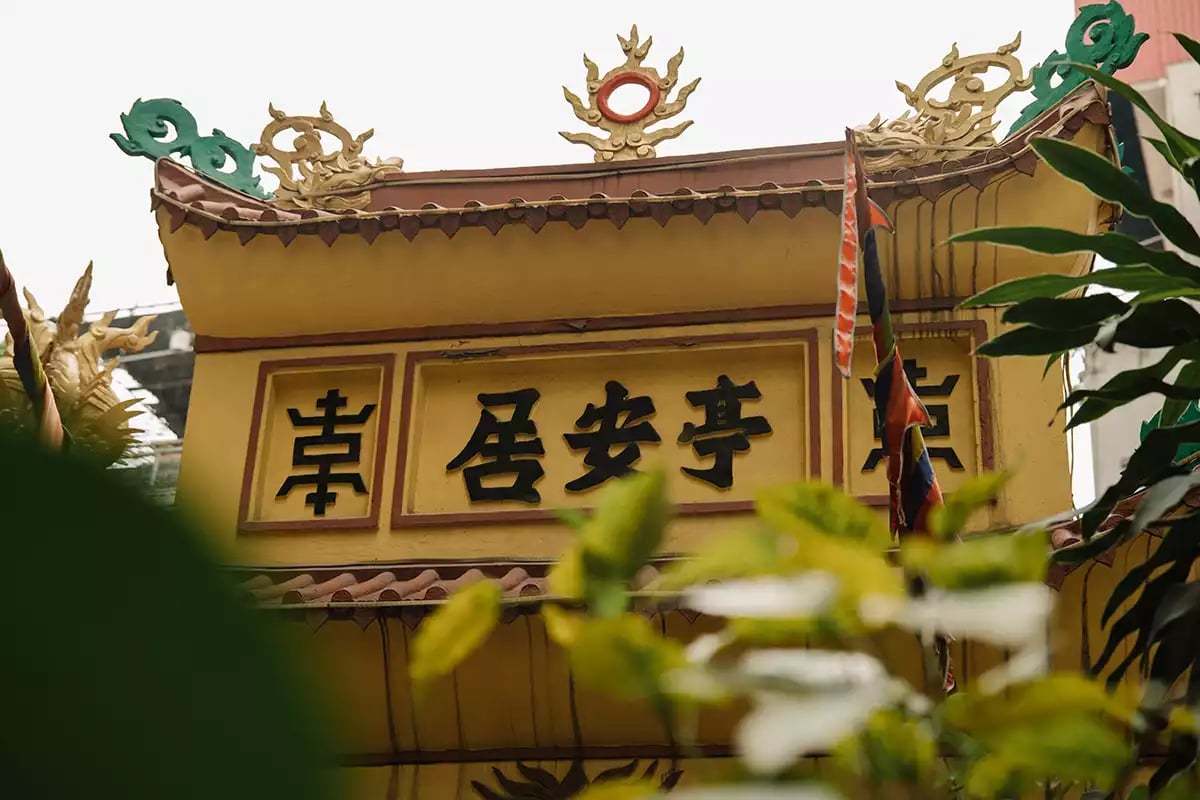
An Cu Communal House is located at 281 Tran Khat Chan Alley, Bach Mai Ward, Hanoi. The communal house worships Linh Lang Dai Vuong and jointly worships two Le-era dukes who contributed to establishing the land and founding the village, namely Quan Dong Dai Vuong and Quan Hien Dai Vuong. After the two died, the local people built the communal house for worship. Formerly, the communal house was a place for cultural and religious activities of the people of An Cu village; it was also a place for villagers to meet and discuss village affairs. The communal house was initially built in the Nguyen dynasty. During the resistance wars against the French colonialists and American imperialists, the old communal house collapsed. Before 1990, the people of Thanh Nhan village donated funds to rebuild the communal house. Through the changes of time, the communal house seriously deteriorated, showing signs of sinking and tilting, many large cracks appeared in the walls, and some old wooden beams were damaged by termites and at risk of breaking and collapsing; it needed to be renovated, repaired and upgraded. In 2017, to ensure safety for people's religious activities, An Cu Communal House was restored and rebuilt as it is today. The communal house has a cong-character-shaped layout including: Tien te (forehall), ong muong (tube corridor), and hau cung (rear hall), facing southwest. The communal house grounds are shared with An Cu Temple and are located to the right of An Cu Temple. The nghi mon is built as an entrance gate, made of brick, with arched doors, and a two-tier roof with eight roof sections and curved corners. Tien te consists of 3 bays with a single roof tier covered in traditional tiles, built with closed gable walls; the ridge is decorated with dragons facing the sun. Ong muong consists of 1 bay built with a gable wall and a diagonal roof. Hau cung consists of 3 bays with a single tier of traditional tile roof, built with closed gable walls. Currently, the communal house still preserves a system of carved wooden artifacts of artistic value, such as dragon thrones, horizontal plaques, parallel sentences, ceremonial curtains, etc.
An Cu Communal House is a cultural and religious work built to worship the village's tutelary god; it is a place for community activities of the village and commune, and a place to educate all classes of local people in cultural traditions.



