
Đào Thục Pagoda (Thánh Phúc Tự), Đào Thục Village, Thư Lâm Commune, Hà Nội City
Good to know
- You should arrive early for an open and airy experience
- Free
- Convenient access by taxi or bus.
Introduction
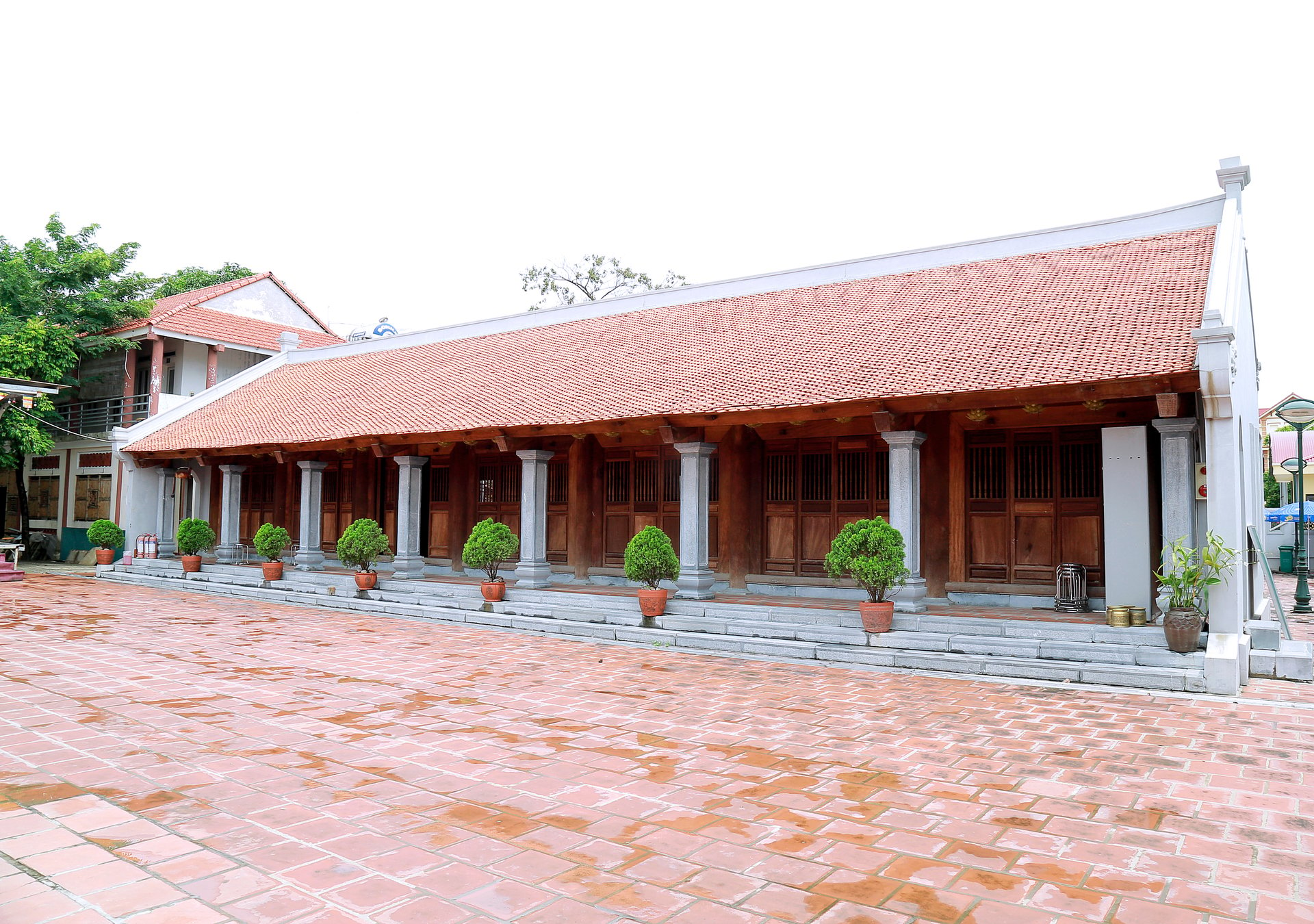
ĐÀO THỤC PAGODA – THÁNH PHÚC TỰ
Story
01Đào Thục Village, Thư Lâm Commune, Hà Nội City
Đào Thục Pagoda, whose Sino-Vietnamese name is Thánh Phúc Tự (Thánh Phúc Pagoda), located in Đào Thục Village, Thư Lâm Commune, Hà Nội City. This is a religious work with a long history, closely associated with the cultural, belief, and spiritual life of the local people.
Đào Thục is an ancient land, formerly belonging to Trang Đào Xá, Tổng Hương La, Yên Phong District, Thuận An Prefecture, Kinh Bắc Region. Later, Đào Thục merged with Thụy Lôi and Thư Lâm to form Tổng Thư Lâm. Through changes in administrative boundaries, today Đào Thục Pagoda belongs to Đào Thục Village, Thư Lâm Commune, Hà Nội City.
Unlike religious works worshipping the village tutelary god, Đào Thục Pagoda functions as a Buddhist pagoda, a place where local people entrust their spiritual life, guiding people toward compassion, charity, goodness, and the good values in life.
The pagoda was built quite early. The documents, stone steles, and traces still preserved show that the work has existed for many centuries. In particular, the pagoda currently has a fairly rich system of stone steles. The earliest dated stele records the restoration of the pagoda and repair of the Buddha hall in the year 1674, the first year of the Đức Nguyên era and the year 1675, the second year of the Đức Nguyên era. The content of the stele records donations of money and fields to repair the pagoda. Two steles dated to the Cảnh Hưng era in 1743 continue to record the restoration and donations of those who participated in the construction. Later there are also steles dated Gia Long, Duy Tân... This shows that during its existence, Đào Thục Pagoda was many times cared for, restored, repaired, and preserved by the people.
The pagoda is located on a high, spacious plot of land. The main pagoda is built on a foundation nearly 1m higher than the garden surface and has a ground plan in the form of the Dinh character. The front hall is built with four rows of columns, with a roof truss of the giá chiêng type, chống rường con nhị, and kẻ chuyền. The two porch gables have two square decorative pillars; the tops of the pillars and the lantern panels are decorated with architecture.
The front hall is built in the đầu hồi bít đốc, tay ngai style. In the middle of the roof ridge, three Chinese characters are embossed “Thánh Phúc Tự”. The pagoda roof is tiled, including many ancient mũi hài tiles. Inside the front hall are preserved carvings featuring the four sacred animals and four precious plants with graceful lines. On the quá giang beams, câu đầu, and đầu kẻ, there are also cloud-and-leaf motifs characteristic of traditional art.
One of the notable points in the pagoda's architecture is the cửa võng screen with the great inscription “Thánh Phúc Tự” carved in relief. The carved lines forming dragons and sun rays are rendered softly, bearing the artistic imprint of the 18th century.
The upper hall is a four-bay longitudinal building connected to the front hall, enclosed by walls. Running along the Buddha hall is a system of altars where Buddha statues are enshrined. On both sides of the Buddha hall walls, a rich system of statues is arranged.
Behind the main pagoda area are two corridors, seven bays on each side. In the corridors are placed hậu steles dating from the Lê Trung Hưng period to the Nguyễn period. Between the two corridors is a large courtyard leading to the rear hall, surrounded by fruit trees and flowers, creating a serene space.
The rear hall consists of five bays. Here are altars to Đức Thánh Trấn Vũ, Đức Ông, and Đức Thánh Tăng. Next to the rear hall is a five-bay building called by local people “Lưu Ly Điện”, where the Mother Goddess of the temple and the Tam Tòa Thánh Mẫu are worshipped. In front of the Mother Goddess worship area there is also a large lotus pond near the side gate to the pagoda.
The outstanding value of Đào Thục Pagoda is also shown through its rich system of worship statues with nearly 50 statues, including Buddhist statues and statues belonging to traditional folk beliefs. Notably, the Tam Thế Phật set, dating artistically to the 18th century; the A Di Đà Tam Tôn set with the A Di Đà statue together with Quan Thế Âm and Đại Thế Chí; the statue Quan Âm Thiên Thủ Thiên Nhãn; together with the statue set Shakyamuni with Ananda – Mahakasyapa were elaborately crafted.
In addition, the pagoda also keeps many statues such as the Ten Courts set, the Four Heavenly Kings, Guanyin seated on a mountain, Saint Tran Vu… Besides the system of round statues, Thanh Phuc Pagoda also preserves 9 stone steles, dating from Duc Nguyen to Duy Tan, along with ceremonial gates, y-mon, horizontal plaques, parallel couplets and many valuable artifacts. These relics are an important source of material contributing to the understanding of the history, culture, traditional architectural and sculptural art of the Dao Thuc land.
Over many centuries, with the upheavals of history and war, Dao Thuc Pagoda had periods of degradation and damage. However, with the attention and contributions of effort and money from local people, the pagoda has gradually been restored and preserved. Through many renovations, the architectural and sculptural imprints and the system of precious relics have still been preserved.
Today, Dao Thuc Pagoda – Thanh Phuc Tu is not only a place for the people's religious and spiritual activities but also a work that preserves many historical, cultural, architectural and traditional artistic values. Together with the distinctive cultural values of the Dao Thuc land, the pagoda contributes to enriching the cultural heritage system of Thu Lam commune, Hanoi city, a destination for local people and visitors to learn about history, Buddhist architecture and the traditional cultural beauty of the locality.
More Other places
- Other placesVerified
Gioi Duc Pagoda (Hong An Temple)
Ung Hoa Commune
5.0Free  Other placesVerified
Hai Giac Pagoda
O Dien Commune
5.0Free Other placesVerified
Phuong Bang Pagoda (Hung Long)
Son Dong Commune
5.0Free Other placesVerified
Sung An Pagoda, also known as Sung Khang Pagoda (Dong Ba Pagoda)
Thượng Cát Ward
5.0Free
