
Quan Tinh Communal House and Pagoda
Good to know
- You should arrive early for an open and airy experience
- Free
- Convenient access by taxi or bus.
Introduction
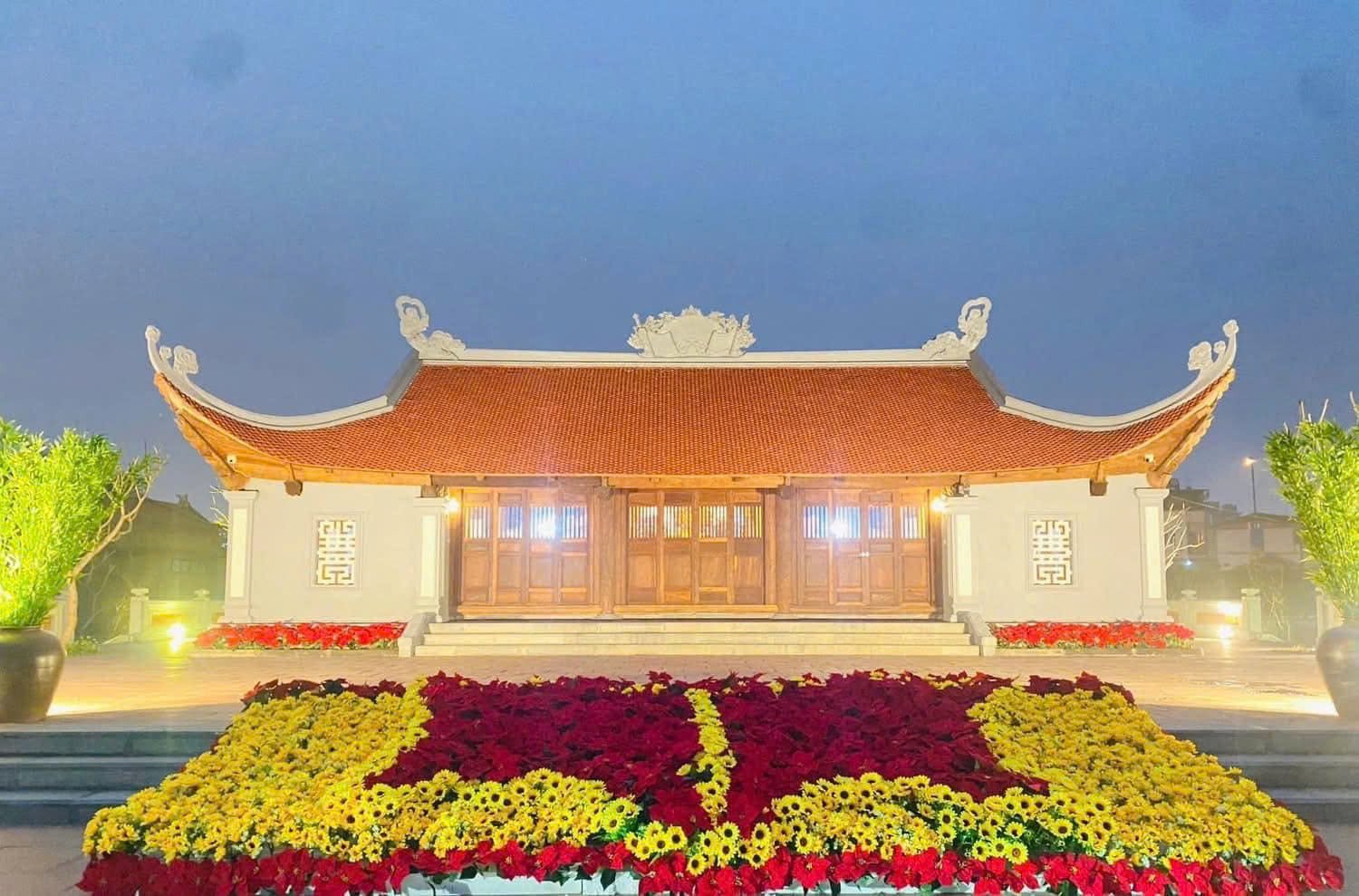
In the past, Quan Tinh village had the vernacular name Ke Tanh. Villagers still tell the story of the Quan Tanh legend. That year, heavy rain and strong winds lasted for months, causing major flooding; the capital Thang Long was flooded by meters of water, and surrounding areas were also flooded. People suffered greatly from the rain and floods. At that time, Princess Ngoc Han, on her way through this area, stopped at a shop at the entrance of the village to take shelter from the rain until it cleared, and the name Ke Tanh was given to the village by Princess Ngoc Han to express her affection for the local people.
In the past, Quan Tinh village lay inside the dike; the village had upper and lower hamlets. In 1956, the upper and lower hamlets were renamed Dong Tam and Dong Thanh. The village also had a small hamlet outside the dike called Hoa Binh. From 1969 to 1973, the whole village moved to its present location. The village has three main clans: Vu, Nguyen, and Tran. Quan Tinh formerly had the craft of growing jute and weaving hammocks. Quan Tinh hammocks were favored by people in many places. Through thousands of years of history, the people of Giang Bien won glorious victories in the struggle against foreign invaders, defended and built their homeland, wrote glorious traditional pages of local history, and helped add luster to the glorious tradition of the capital.Quan Tinh Communal House worships General Nguyen Non, a warlord who rose up against the court at the end of the Ly dynasty and the beginning of the Tran dynasty in Vietnamese history. He was from Phu Duc commune (Tien Du district), now Phu Dong commune. According to Dai Viet Su Luoc, Nguyen Non was a warlord who rose up against the court at the end of the Ly dynasty and the beginning of the Tran dynasty in Vietnamese history. Nguyen Non had a handsome face, was tolerant, and had a calm and serene nature. According to the Nguyen clan genealogy, he was a fifth-generation descendant of Dinh Quoc Cong Nguyen Bac of the Dinh dynasty.
The communal house was built in the 17th century and still preserves valuable relics, including the Hau Than stele dated to the 40th year of Canh Hung, i.e., 1779, and 10 royal edicts from various dynasties. In addition, within the relic complex there are traces of the Van Chi area, which worshipped those who passed high examinations and those who contributed to building and developing the village.
The relic was ranked by the Hanoi People's Committee as a city-level artistic relic under Decision No. 2131/QD-UBND dated March 14, 2013. The festival is held from the 7th to the 9th day of the second lunar month.
Quan Tinh Pagoda is a spiritual architectural work of the entire local people. The relic is named after the administrative place name. In addition, the pagoda also has the Sino-Vietnamese name 'Thai Linh Quan Tu' or Thai Linh Quan. Thai Linh means very sacred, while Quan means a way of looking, a viewpoint, and also a Taoist temple. It is possible that Quan Tinh Pagoda developed from a Taoist temple, or possibly in the 17th century, in the context of endless civil wars: Trinh-Mac and Trinh-Nguyen conflicts, people were anxious, Confucianism was no longer enough as a spiritual support, and some Confucian scholars who retired to live in seclusion brought Laoist thought into the pagoda. This is evidenced in the content of the stele at the pagoda dated the 3rd year of Thinh Duc (1655), which records one of the people who donated to repair the pagoda. That was the abbot and Taoist priest Le Van Thai, whose courtesy name was Huyen Canh. Thus, Quan Tinh Pagoda (Thai Linh Quan) was both a temple and its monk was also a Taoist priest.
Quan Tinh Pagoda is a place to worship Buddha and those who contributed to spreading Buddhism, and to worship the Mother Goddess. Currently, the pagoda still preserves relics dated:
The Hau Than stele inscription records the rituals at the altars; it was erected on the left side as a place for offerings on death anniversary days; if there is rain or wind, the shrine and communal house are used for ceremonies. The stele was erected on the 1st day of the 1st month of the 44th year of Canh Hung (1779).
The 'Hau Than Bi' stele was erected on a good day in the third month of the Tan Mui year, the 10th year of King Gia Long's reign (1811).
The stele erected in the 3rd year of Thinh Duc (1655) records the restoration and repair of the Tam Bao hall and praises the beauty of the pagoda.
The diverse cultural activities and festivals at Quan Tinh Pagoda are not only a place for people to place their faith but also an occasion for the community to gather and preserve traditional cultural identity. Every year, the pagoda organizes the following ceremonies:
First lunar month: Thuong Nguyen Festival (15th day of the first lunar month).
Second lunar month: Festival of Buddha Shakyamuni's renunciation (8th day), Festival of Buddha Shakyamuni's entry into nirvana (15th day), Festival of Guanyin Bodhisattva (19th day), Festival of Samantabhadra Bodhisattva (21st day).
Third lunar month: Festival of Cundi Guanyin Bodhisattva (16th day).
Fourth lunar month: Bodhisattva festival (4th day), Festival of Buddha Shakyamuni's birth (Buddha's Birthday) (15th day).
Sixth lunar month: Festival of Guanyin Bodhisattva's attainment of enlightenment.
Seventh lunar month: Festival of Mahasthamaprapta Bodhisattva, Vu Lan Festival of filial piety (15th day), Festival of Ksitigarbha Bodhisattva (30th day).
Ninth lunar month: Festival of Avalokitesvara Bodhisattva's renunciation (19th day).
Eleventh lunar month: Celebration of Amitabha Buddha's birthday (17th day).
Twelfth lunar month: Festival of Shakyamuni Buddha's practice of the Dharma (8th day).
Van Chi: Quan Tinh - Giang Bien Van Chi, Viet Hung Ward, Hanoi, is a place to worship those who passed high examinations and those who contributed to building and developing the village. The Van Chi is located within the Quan Tinh Communal House and Pagoda relic complex, expressing the local people's tradition of valuing education, respecting teachers, and honoring predecessors who contributed to the village and country.
More Other places
- Other placesVerified
Gioi Duc Pagoda (Hong An Temple)
Ung Hoa Commune
5.0Free  Other placesVerified
Hai Giac Pagoda
O Dien Commune
5.0Free Other placesVerified
Phuong Bang Pagoda (Hung Long)
Son Dong Commune
5.0Free Other placesVerified
Sung An Pagoda, also known as Sung Khang Pagoda (Dong Ba Pagoda)
Thượng Cát Ward
5.0Free
