
DAO THUC COMMUNAL HOUSE
Introduction
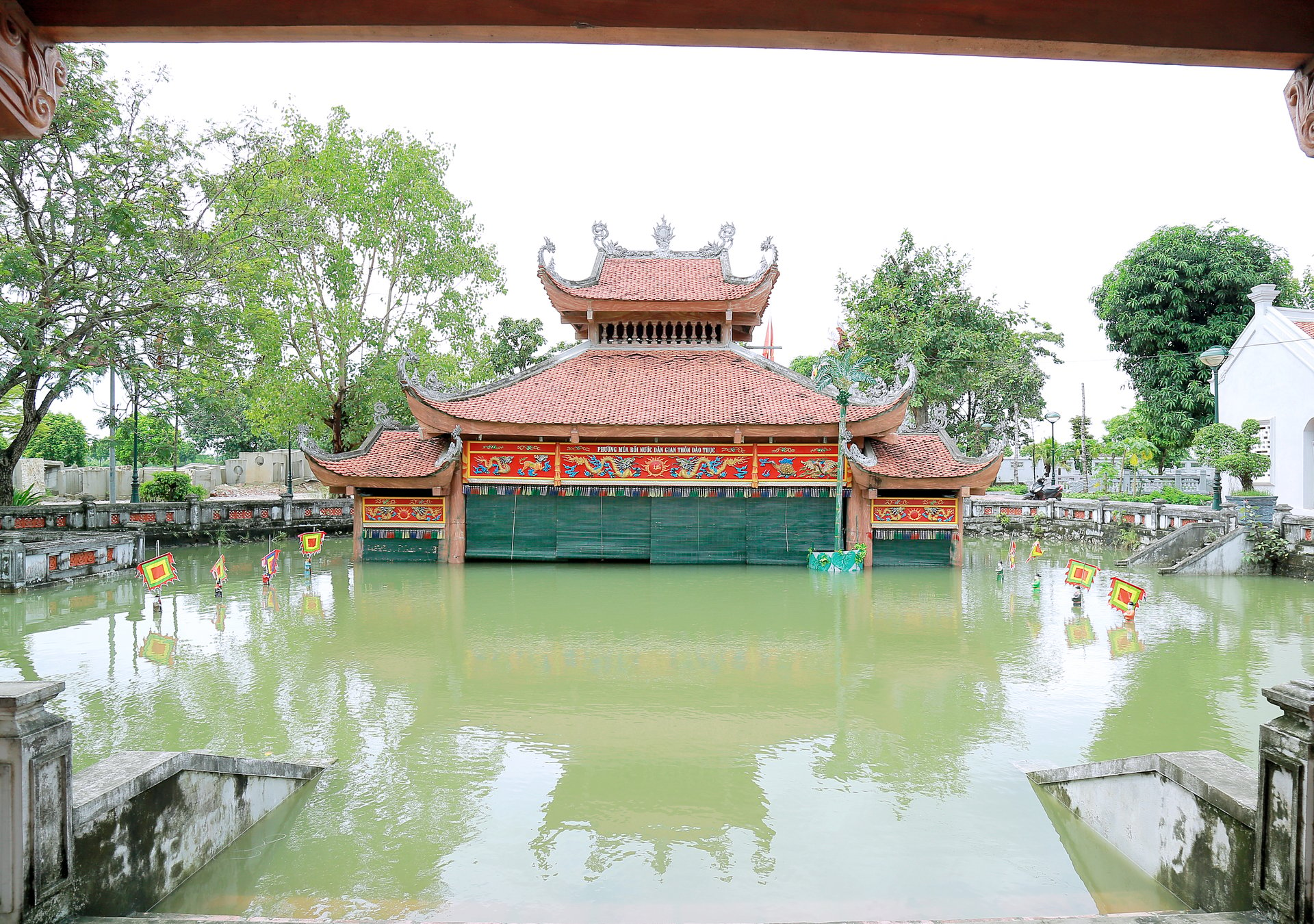
DAO THUC COMMUNAL HOUSE
Đào Thục Village, Thư Lâm Commune, Hà Nội City
Dao Thuc Communal House is located in Dao Thuc Village, Thu Lam Commune, Hanoi City, and is a relic of outstanding historical, cultural, architectural, and artistic value for the locality. The communal house stands on the ancient land of Dao Thuc, formerly Dao Xa hamlet, an area deeply marked by Kinh Bac culture and famous for its long-standing water puppetry tradition.
Dao Thuc Communal House worships Duc Thanh Tam Giang – Truong Hong and Truong Hat; Duong Giang Dai Vuong and Phi Nuong Hoang Hau. These are figures associated with legends, deity records, and the history of national founding and defense.
According to surviving documents, Duc Thanh Tam Giang refers to the two brothers Truong Hong and Truong Hat, generals associated with the time of Trieu Viet Vuong. The tradition about the two is also linked to the resistance war against the Song army and the poem “Nam quoc son ha” on the Nhu Nguyet River defense line.
The communal house also worships Duong Giang Dai Vuong and Phi Nuong Hoang Hau. According to the village's deity records, Duong Giang was a man talented in both letters and martial arts, who helped the country and defeated enemies. On his journey to carry out the king's command, he once halted his troops at Dao Xa hamlet, accepted local young men into the guard force, and established a post there. After he died, the people established a place of worship and honored him as the village tutelary god. Phi Nuong Hoang Hau was worshipped alongside him and is associated with the legend of her spiritual assistance to Duong Giang in fighting the enemy.
Dao Thuc Communal House was built quite early, around the late 16th century – early 17th century. Remaining architectural traces, ancient bricks, and the stele system show that the communal house underwent several repairs and embellishments. In particular, the stele dated to the first year of Canh Hung (1740) records the restoration and the merits of those who contributed to the communal house, serving as a valuable source for researching the relic's history.
The communal house space bears the characteristics of traditional Northern Delta village communal house architecture. In front of the communal house is a lotus pond, creating a harmonious and intimate landscape. The main hall is built on a high foundation, with a roof system, wooden structure, and decorative details in the traditional artistic style. Many carved panels depict familiar themes such as dragon, ly, turtle, phoenix, flowers and leaves, and folk motifs.
Inside the main hall there are also lacquered and gilded incense tables, large horizontal boards, ceremonial curtains, couplets, and many valuable worship objects. The rear hall is the space for worshipping the village tutelary god, in which Duong Giang Dai Vuong and Phi Nuong Hoang Hau are worshipped in solemn positions. The thrones, spirit tablets, and wooden worship objects are elaborately carved, demonstrating traditional crafting techniques and art.
Dao Thuc Communal House currently preserves many precious artifacts such as wooden tutelary god statues, dragon-carved thrones, palanquins, sets of eight weapons, ceremonial curtains, incense tables, deity records, stone steles, horizontal boards, couplets, and especially a system of royal edicts from various dynasties. These artifacts not only have artistic value but are also important historical sources for understanding the history, beliefs, and cultural life of the Dao Thuc community across generations.
Every year, traditional ceremonies at the communal house are an occasion for the people to remember the merits of the deities worshipped, while also creating a space for community cultural activities and exchange with localities sharing the same deity worship. According to the relic's documents, the traditional festival is held from the 11th to the 15th day of the 11th lunar month.
Dao Thuc Communal House also has special significance as it is located in a countryside famous for traditional water puppetry. Dao Thuc has long been one of the typical places of water puppetry in the Kinh Bac region. Therefore, the communal house is not only associated with the people's religious life but also exists in a distinctive village cultural space, where heritage values, customs, and traditional folk art have been preserved across generations.
Over hundreds of years of existence amid historical changes, Dao Thuc Communal House still preserves many architectural, artistic, and precious artifact traces. Its value lies not only in the ancient architectural work or the system of artifacts but also in its role in connecting the community, preserving village memories, and passing traditional cultural values to present and future generations.
Today, Dao Thuc Communal House in Dao Thuc Village, Thu Lam Commune, Hanoi City is a destination rich in historical and cultural value, contributing to enriching the heritage system of Thu Lam Commune. Visiting Dao Thuc, visitors can learn about the traditional village communal house space, explore the historical and religious stories of the land, and connect the experience with Dao Thuc water puppetry – a distinctive cultural feature that the local community has preserved and passed down through generations.



