
Duc Dien Communal House
Introduction
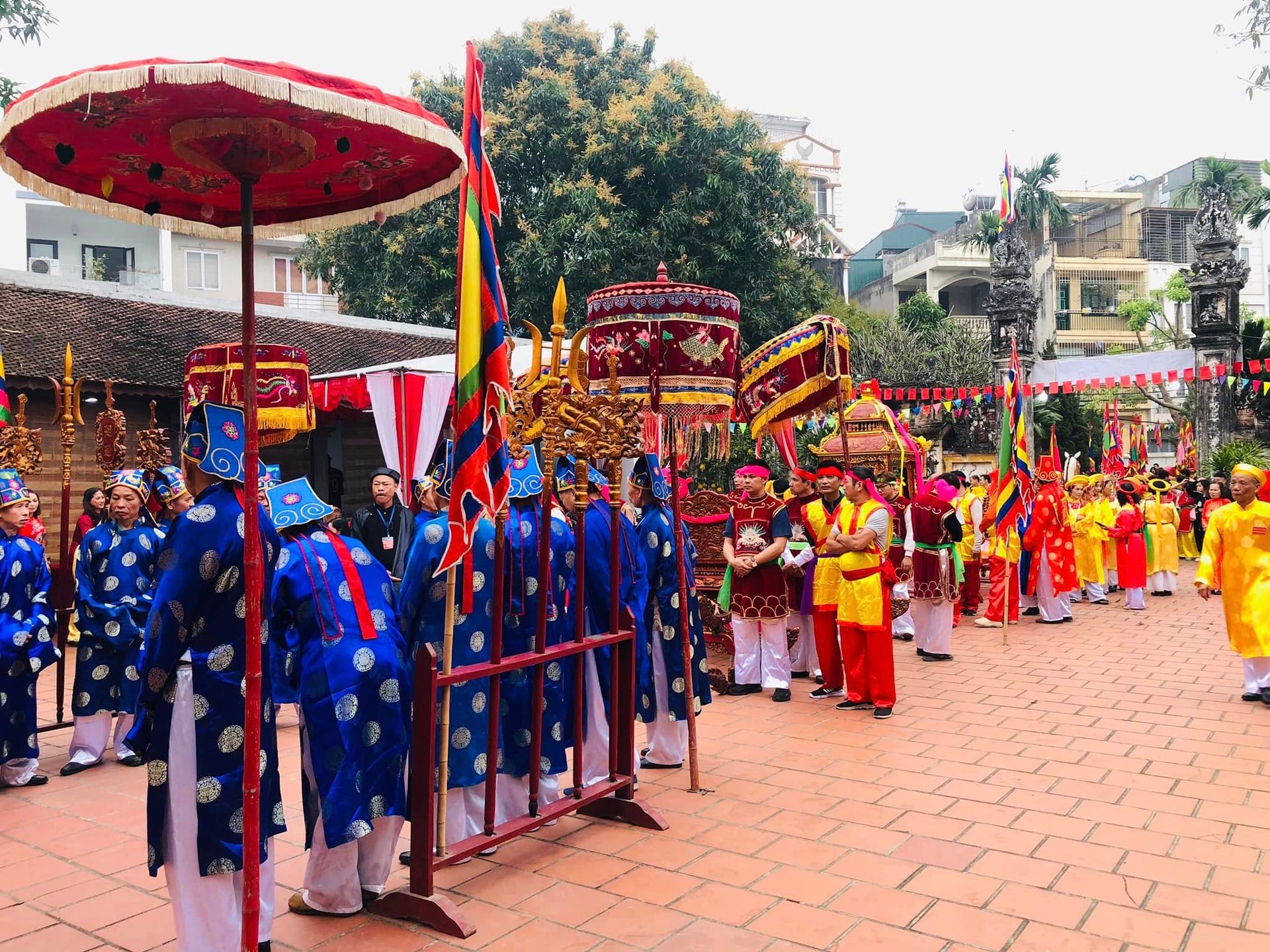
Duc Dien Communal House: A Spiritual Destination and the Cultural Beauty of a Northern Vietnamese Village
If someone is looking for a peaceful pause right in the heart of bustling Hanoi, where wind chimes blend with the rich scent of pomelo and thousand-year-old legends still whisper through every moss-covered roof tile, come back to the ancient village of Duc Dien, in Phu Dien Ward, Hanoi City. Nestled peacefully beside the gentle Nhue River, about 12 km west of the capital’s center, Duc Dien not only preserves a “spiritual heart” in its thousand-year-old, efficacious communal house but is also the birthplace of the famous Dien Pomelo brand of the Trang An land.
Stepping into Duc Dien, visitors feel as if they are opening each green page of the history of an ancient land rich in tradition. Archaeological excavations have proven that this area was once a settlement of ancient Vietnamese people from 3,000 to 4,000 years ago. Legend has it that from the reign of the 18th Hung King, the renowned deity Bach Hac Tam Giang, namely General Dao Truong—a talented general who had fought in hundreds of battles to protect the frontiers—chose this land to stop and build a royal residence. After he passed away, the local people built a communal house to worship him as the village tutelary deity with the honorific title Tho Lenh Quoc Thong Dai Vuong. Through many historical ups and downs, by the end of the 19th century, Bachelor Vuong Duy Trinh, when visiting his homeland, took the character “Duc” as the root to rename the village Duc Dien, expressing the wish that descendants for generations would keep the virtuous and gentle way of life.
Located on a high, dry mound surrounded by ancient trees spreading cool shade, Duc Dien Communal House appears majestic yet very intimate. Right from the Nghi Mon Ceremonial Gate, one already feels a tranquil space, fragrant with flowers and stirred by birds flitting among the branches. Stepping inside the Great Worship Hall and the Rear Sanctuary, anyone must marvel at the skillful craftsmanship of folk artisans of the Nguyen dynasty. Every carved panel of the Four Sacred Creatures—Dragon, Unicorn, Turtle, and Phoenix—and the images of swirling clouds, flowers, and leaves on the crossbeams and roof trusses appear vividly, containing profound humanistic philosophy. Not only that, Duc Dien Communal House still preserves many priceless antiquities such as royal edicts from feudal dynasties, ancient palanquins, horizontal lacquered boards, and parallel couplets brightly lacquered and gilded—precious historical evidence of the thousand-year civilized land of Thang Long.
In particular, if visiting Duc Dien in spring, from the 10th to the 13th day of the second lunar month, visitors will be immersed in the bustling atmosphere of the Duc Dien Communal House Festival—one of the most distinctive folk festivals in the outskirts of Hanoi. The most impressive part of the festival is the unique water procession ritual, when the solemn procession moves from the communal house to the Doan Mound area to scoop cool, fresh water into precious ceramic jars and carry it back to the communal house for offering, expressing the age-old wish of agricultural residents for favorable weather and abundant harvests. Unlike many other rural areas, the offerings to the tutelary deity of Duc Dien village must include banh day, banh cuon, and fresh sugarcane—rustic products representing the sweetness and juiciness of heaven and earth. Amid the resounding five-linked festival drums, sweet quan ho singing slanting over the boat sides, and lively folk games, people’s hearts seem to return to the primordial spring festival of their homeland.
The journey to Duc Dien would not be complete without tasting the Dien Pomelo specialty right in its native land. It is told that in the past, Mr. Ly Nam of Duc Dien village obtained a precious Doan Hung pomelo variety to plant. Thanks to the fertile alluvial soil of the Nhue River and the diligent care of the people, pomelos grown in Duc Dien produce golden, plump fruit with very thin peel, dry, deeply sweet pulp segments, and a long-lasting intense fragrance. Especially in the last days of the year, visiting Duc Dien village, visitors will be amazed as if lost in a golden paradise, where ancient pomelo orchards heavy with fruit spread their rich fragrance through every alley.
Duc Dien Communal House is not only a valuable historical and architectural-artistic relic but also a sacred bridge between traditional beauty and the rhythm of modern life. Through all the rise and fall of time, the ancient communal house beside the Nhue River still stands there as a historical witness, embracing the peaceful, ancient soul of the countryside and the sweet fragrance and colors of the land of the capital.



