
Giap Nhi Communal House
5.0Free
5.0Free
Introduction
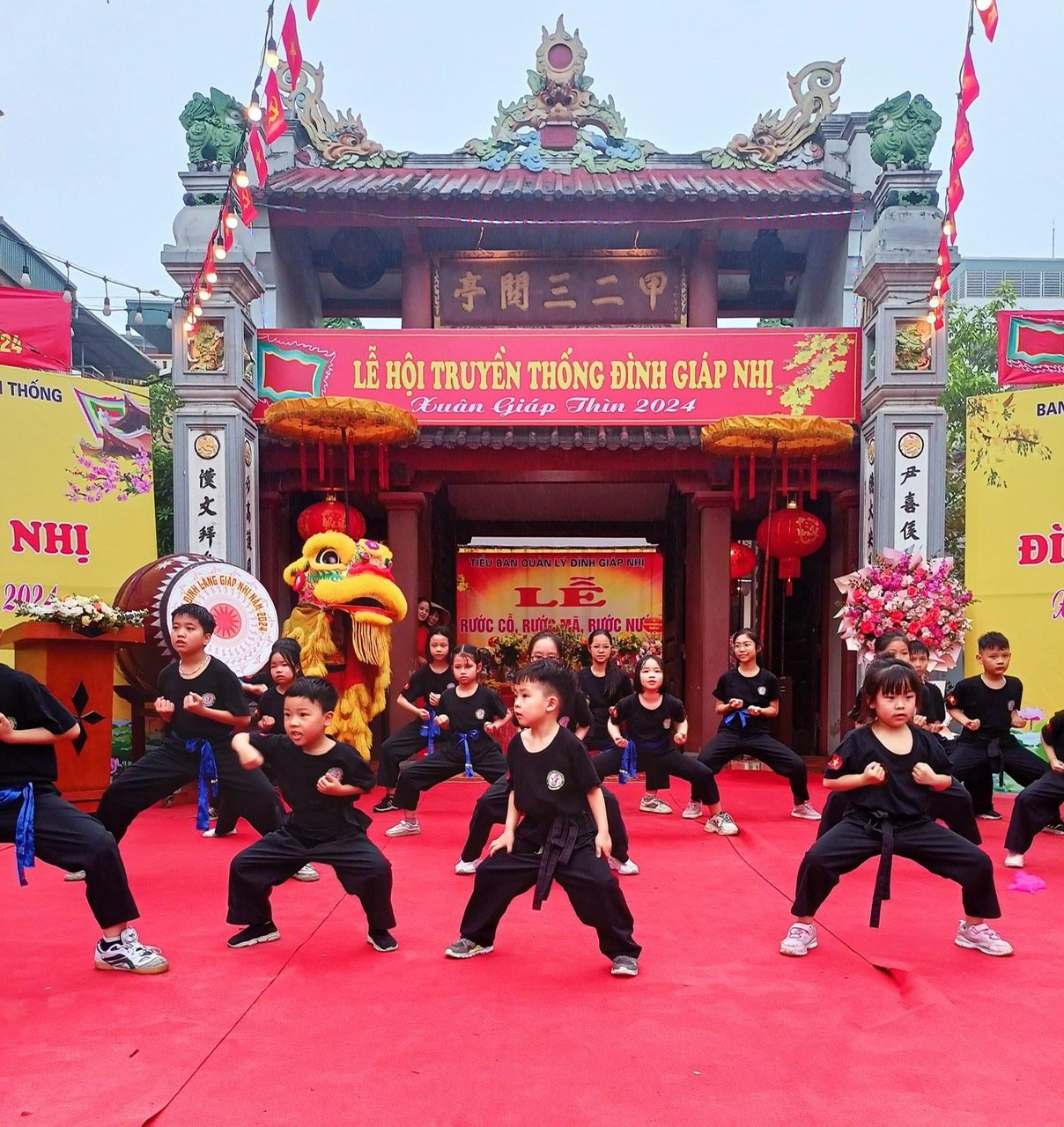
Giap Nhi Communal House is a relic of historical and architectural art at city level, ranked according to Decision No. 1185/QĐ-UB dated 07/02/2002. The relic has a total area of 1,569m², including the communal house area of 963m² and the well area of 606m².
The communal house originated from a temple dedicated to the Earth God. Through the development of the belief in worshipping the Village Tutelary God, the communal house was expanded and became a place for worship, ritual organization, and community cultural activities. According to documents from the French School of the Far East in 1938, the communal house was repaired in the year the 26th year of Tu Duc (1874). The relic continued to be restored, including a major renovation of the Main Hall in 1996, restoration of the communal house gate in 2000, and overall restoration and embellishment in the period 2024–2025.
The communal house is associated with the figure Bui Huy Bich, who passed the Hoang Giap examination in the Ky Suu examination (1769) and once served as the Governor of Nghe An. According to local tradition, he had the tablet of Thai Thuong Lao Quan brought from Nghe An to be worshipped at the communal house.
Every year, the Giap Nhi Communal House Festival is held in the second lunar month, with many traditional rituals such as cleaning of offerings, the bathing ceremony, procession of offerings and paper offerings, water procession, and the thanksgiving ceremony. Among them, the procession of offerings and paper offerings on the 14th day of the second lunar month and the water procession on the 15th day of the second lunar month are typical activities, attracting the participation of elders and a large number of local people.
With its values in history, architecture, beliefs, and festivals, Giap Nhi Communal House is an important cultural space of the community, contributing to preserving the customs, historical memory, and traditional cultural identity of the local ward when visiting.



