
Hoe Thi Communal House
Introduction
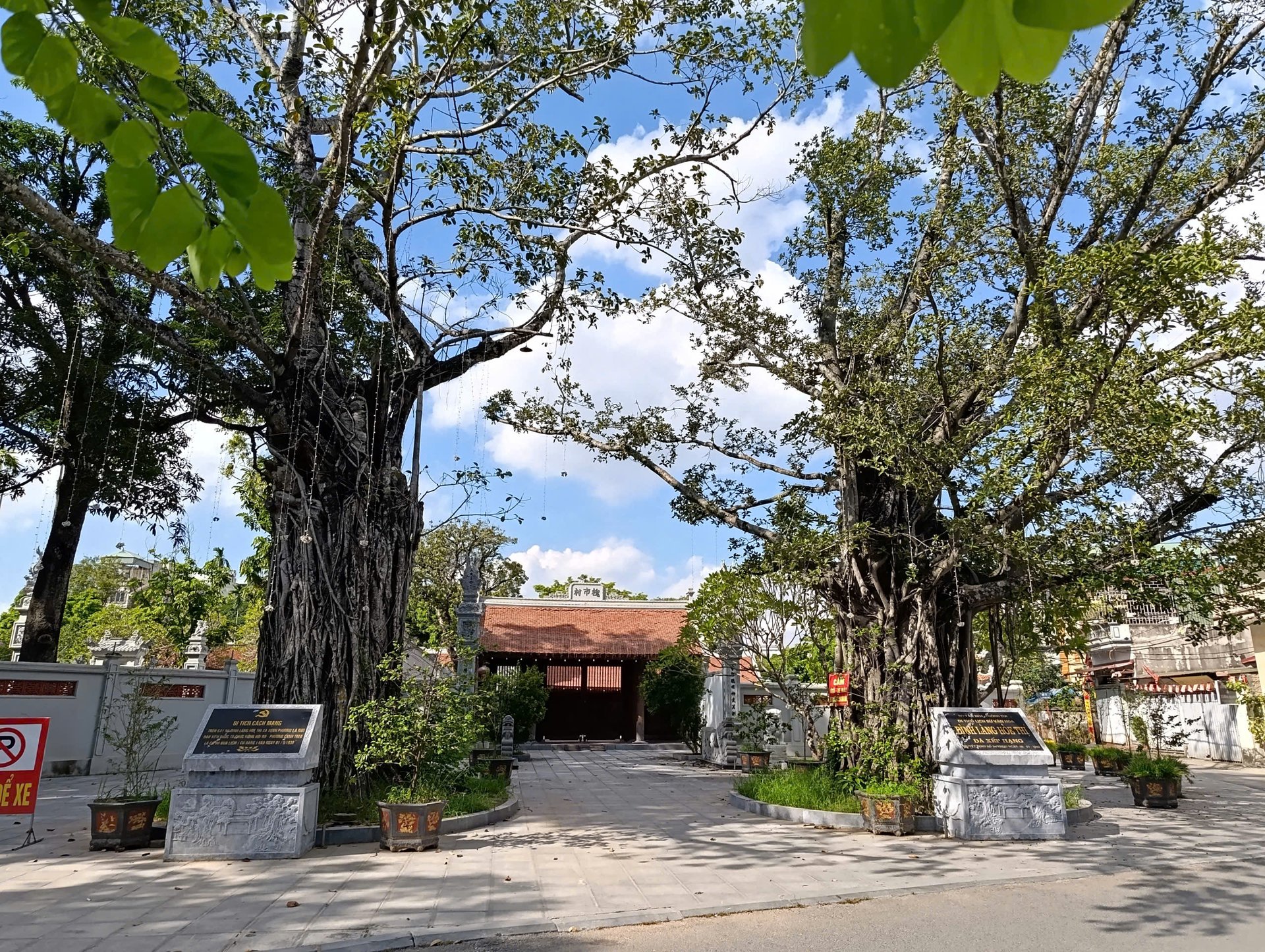
Hoe Thi Communal House is dedicated to Phan Tay Nhac Dai Vuong and Hoa Dung Princess, his third wife.
According to the legend, Phan Tay Nhac lived during the reign of Hung Due Vuong, the eighteenth Hung King. He was from Ha Trung, Chau Ai, in present-day Thanh Hoa, and was famous for his extraordinary strength, mastery of letters and martial arts, and skill in military affairs.
Legend says that he went to Tan Vien Mountain, gained the trust of Tan Vien Son Thanh, and together they helped the Hung King quell rebellions. Thanks to his talent for organizing soldiers, training troops, and managing logistics, he achieved many merits and was conferred the title Tay Nhac Dai Vuong.
In those campaigns, Hoa Dung Princess also played an important role. When Phan Tay Nhac led the army to fight the enemy, she was assigned to stay behind and guard the citadel, handle supplies, and prepare military provisions. Her image was therefore associated not only with the role of a wife but also with a figure who directly participated in rear-support work.
After the victory, legend says that Phan Tay Nhac returned to the Phuong Canh area, established a headquarters, and brought his family to settle there. Hoe Thi Communal House is said to be where his central army was once stationed. When he died, the local people established an altar tablet, honored him as the village tutelary god, and worshipped Hoa Dung Princess alongside him.
Those stories belong to the realm of legend, interweaving historical memory with legendary elements. However, they clearly show how the people of Hoe Thi imagined the two deities worshipped: one a military general who contributed to defending the country, the other a woman who contributed to guarding the citadel, caring for logistics, and helping the soldiers.
For this reason, Phan Tay Nhac and Hoa Dung Princess are not only present on the altar but also become the center of the festival, the processions, and the ritual friendship relations between Hoe Thi and villages sharing the same belief.
On January 9, 1990, the Ministry of Culture issued Decision No. 34-VH/QD, ranking Hoe Thi Communal House – Pagoda as a national historical and artistic architectural relic.
The Hoe Thi Communal House festival is held in the second lunar month, an occasion for the community to commemorate Phan Tay Nhac Dai Vuong and the deities worshipped alongside him.
One of the notable rituals is the water processionAccording to ancient custom, the procession starts from the communal house, passes through the hamlets of the village to collect water from a sacred well, and then returns for the ceremony. The water is brought into the communal house for use in the ritual of worshipping the village tutelary god, symbolizing purity and prayers for favorable harvests and peaceful life.
A special feature of the Hoe Thi festival lies in its ritual friendship relationship with Thi Cam villageBoth villages worship Phan Tay Nhac, so for a long time they have had the custom of carrying the deity in procession to each other’s communal houses.
During the festival, the Thi Cam procession brings the deity to Hoe Thi Communal House for the ritual friendship ceremony. Afterward, the Hoe Thi procession goes to Thi Cam Communal House. The people of the two villages organize welcomes, carry palanquins together, offer incense, and perform the rituals.
The processions usually include festival flags, drums, palanquins, ceremonial objects, a ritual team, and a large number of local people. A distinctive festive feature still preserved is “con di danh bong” – men dressed as women, wearing small drums in front of their bellies and dancing to the rhythm in the procession.
More importantly, the festival is not only a memorial to the village tutelary god. The two villages going to each other’s communal houses to make offerings is the community’s way of reaffirming a long-standing relationship, a shared system of legends, and the joint preservation of memories of the Phuong Canh area.
Therefore, the Hoe Thi festival has both religious meaning and serves as a form of community bonding. Through each festival season, the Hoe Thi – Thi Cam relationship continues to be maintained through very specific rituals: palanquin processions, incense offerings, welcoming the deity, and joint ceremonies before the village communal houses.



