
Hội Xá Communal House
Good to know
- You should arrive early for an open and airy experience
- Free
- Convenient access by taxi or bus.
Introduction
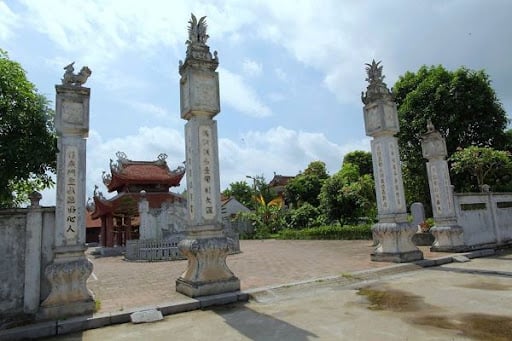
Hội Xá Communal House is located on the south bank of the Đuống River, in Group 1, Phúc Lợi Ward, Hà Nội. Hội Xá has a history of establishment and development dating back very far. Over time, the land of Hội Xá has witnessed many important events in the historical process of our forefathers' nation-building and national defense. Sources such as divine genealogies, royal edicts… and local folk memories indicate that Hội Xá Communal House worships Saint Gióng along with General Hoàng Hổ, a military commander in the army of Hội Xá Village who followed Phù Đổng to fight the Ân invaders, and General Nguyễn Nộn at the end of the Lý Dynasty. These figures are now recorded in legend as having been closely attached to the local community and as having initiated the fine cultural traditions of the people of Hội Xá Village.Since ancient times, on the 8th day of the 4th lunar month, the people of five villages—Phù Đổng, Phù Dực, Hội Xá, Đổng Viên, and Đổng Xuyên (Gióng Mốt)—have together solemnly organized a festival commemorating the hero of Gióng Village. The Hội Xá Village festival still preserves many folk rituals and performances, most notably the ceremony of pulling the general, deploying troops and waving flags, and reenacting the legend of Saint Gióng defeating the invaders. This is a festival rich in symbolism and with much historical and cultural significance for Hà Nội and the nation.
During the procession, Hội Xá Village organizes the Tùng Choạc association, also called the Ải Lao singing troupe; without this association, the procession is considered unsuccessful. The Tùng Choạc association has about 20–30 strong men wearing traditional clothing, neatly belted, walking with dignity, and singing and dancing in praise of the Saint. On the festival days, the Ải Lao singing troupe includes: the head, 1 person beating a small drum, 1 person holding a crossbow (the hunter), 1 person holding a fishing rod (the fisherman), 2 people holding reed flags (buffalo-herding children), 1 person dressed as a tiger, and 12 people holding xênh phách (it is said that when Gióng went into battle, the buffalo-herding children of Hội Xá followed him, attracting both the hunter and the fisherman). The troupe walks while dancing and singing, and the musicians walk while beating their instruments to add merriment to the festival…
More Other places
- Other placesVerified
Gioi Duc Pagoda (Hong An Temple)
Ung Hoa Commune
5.0Free  Other placesVerified
Hai Giac Pagoda
O Dien Commune
5.0Free Other placesVerified
Phuong Bang Pagoda (Hung Long)
Son Dong Commune
5.0Free Other placesVerified
Sung An Pagoda, also known as Sung Khang Pagoda (Dong Ba Pagoda)
Thượng Cát Ward
5.0Free
